

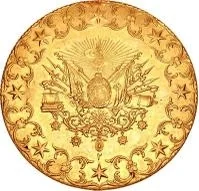
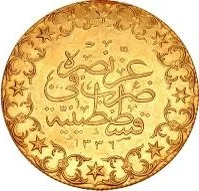
500 kurush – Ottoman Empire
Add to wishlist
Turkey
Context
Year: 1918
Islamic (Hijri) Year:: 1336
Country: Turkey
Issuer: Ottoman Empire
Ruler: Mehmed VI Vahideddin
Currency:
(1844—1923)
Demonetized: Yes
Material
References
KM: #
Numista: #143203
Value
Bullion value: $4938.58
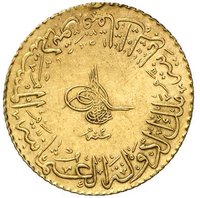
Obverse
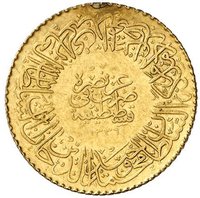
Reverse
Edge
Mints
| Name | Mark |
|---|---|
| Constantinople | — |
Mintings
| Year | Mint Mark | Mintage | Quality | Collection |
|---|---|---|---|---|
| 1918 | — | — |
Historical background
By 1918, the Ottoman Empire's currency system was in a state of severe crisis, a direct consequence of its prolonged and disastrous involvement in the First World War. The empire had abandoned the gold standard in 1914, suspending the convertibility of its paper money, the kaime, into gold. To finance the war effort, the government resorted to massive deficit spending, primarily by printing money with little to no backing. This led to rampant inflation, as the money supply increased more than fifteen-fold while agricultural and industrial production collapsed. The value of the paper lira plummeted, and a vast gap emerged between its official and black-market rates.
The monetary landscape was further fragmented by the circulation of a multitude of foreign and alternative currencies. In various regions, particularly those under Allied occupation or influence, the Ottoman kaime competed with and was often rejected in favor of more stable currencies like the British pound sterling, the French franc, and the Egyptian pound. Even within the empire, gold coins (lira) and German banknotes circulated more readily than the discredited government paper. This loss of monetary sovereignty was a clear indicator of the collapsing authority of the central state and the disintegration of a unified economic space.
Ultimately, the hyperinflation and currency chaos of 1918 inflicted catastrophic hardship on the Ottoman population, especially in urban centers. Salaries and fixed incomes became worthless, leading to widespread famine and social unrest. The financial collapse was both a symptom and a cause of the empire's terminal decline, leaving the postwar Turkish Republic with a legacy of monetary disorder that would take years to stabilize. The situation was so dire that it necessitated a complete currency reform in the 1920s under the new republican government.
The monetary landscape was further fragmented by the circulation of a multitude of foreign and alternative currencies. In various regions, particularly those under Allied occupation or influence, the Ottoman kaime competed with and was often rejected in favor of more stable currencies like the British pound sterling, the French franc, and the Egyptian pound. Even within the empire, gold coins (lira) and German banknotes circulated more readily than the discredited government paper. This loss of monetary sovereignty was a clear indicator of the collapsing authority of the central state and the disintegration of a unified economic space.
Ultimately, the hyperinflation and currency chaos of 1918 inflicted catastrophic hardship on the Ottoman population, especially in urban centers. Salaries and fixed incomes became worthless, leading to widespread famine and social unrest. The financial collapse was both a symptom and a cause of the empire's terminal decline, leaving the postwar Turkish Republic with a legacy of monetary disorder that would take years to stabilize. The situation was so dire that it necessitated a complete currency reform in the 1920s under the new republican government.
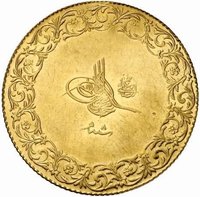
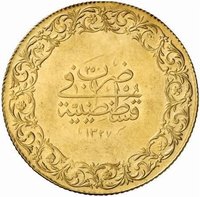
✨ Legendary