

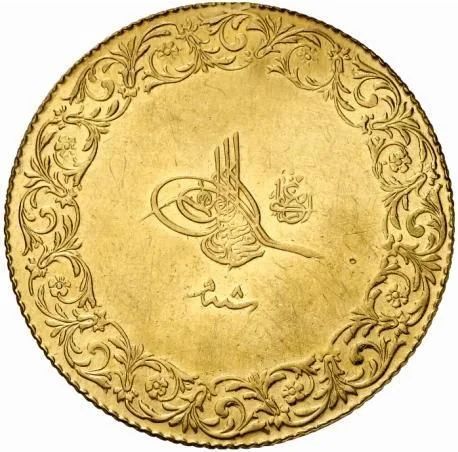
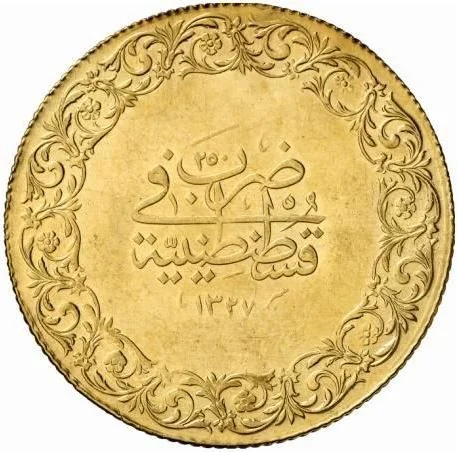
250 kurush – Ottoman Empire
Add to wishlist
Turkey
Context
Year: 1916
Islamic (Hijri) Year:: 1327
Country: Turkey
Issuer: Ottoman Empire
Ruler: Mehmed V Reşâd
Currency:
(1844—1923)
Demonetized: Yes
Total mintage: 3,107
Material
References
KM: #
Numista: #143149
Value
Bullion value: $2469.29
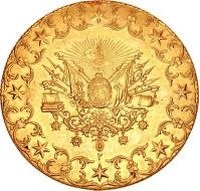
Obverse
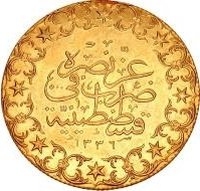
Reverse
Edge
Mints
| Name | Mark |
|---|---|
| Constantinople | — |
Mintings
| Year | Mint Mark | Mintage | Quality | Collection |
|---|---|---|---|---|
| 1916 | — | 3,107 |
Historical background
By 1916, the Ottoman Empire's currency situation was one of severe crisis and devaluation, directly stemming from the immense pressures of the First World War. The Empire had abandoned the gold standard in 1914, severing the direct convertibility of its paper money, the kaime, into gold. To finance its massive war expenditures, the government resorted to printing money with little to no backing, leading to rampant inflation. The German-made printing presses, known as the "hollow note" presses, operated almost continuously in the basement of the Ottoman Debt Administration building, churning out banknotes that rapidly lost purchasing power.
The monetary landscape was chaotic and fragmented. Alongside the devaluing Ottoman paper currency, a multitude of foreign coins—especially gold British sovereigns, French francs, and Austrian crowns—circulated as trusted stores of value, creating a dual system where goods were often priced in gold. Furthermore, the government issued temporary paper bonds and even allowed local military commanders to print their own emergency notes to pay troops and procure supplies, further eroding confidence in the central currency. This hyperinflationary environment devastated the civilian economy, causing severe hardship as prices for basic necessities soared while salaries lagged far behind.
Internationally, the Empire's financial standing was crippled. Pre-war, the Ottoman finances had been under the supervision of the Ottoman Public Debt Administration (OPDA), a European-controlled entity that collected specific revenues to service foreign debt. The war temporarily suspended this external oversight, but it also cut off access to international capital markets. The currency crisis of 1916 was therefore a critical symptom of the Empire's collapsing wartime economy, reflecting a state financing a total war through monetary expansion rather than taxation or sustainable borrowing, which ultimately eroded its economic foundations long before its military defeat.
The monetary landscape was chaotic and fragmented. Alongside the devaluing Ottoman paper currency, a multitude of foreign coins—especially gold British sovereigns, French francs, and Austrian crowns—circulated as trusted stores of value, creating a dual system where goods were often priced in gold. Furthermore, the government issued temporary paper bonds and even allowed local military commanders to print their own emergency notes to pay troops and procure supplies, further eroding confidence in the central currency. This hyperinflationary environment devastated the civilian economy, causing severe hardship as prices for basic necessities soared while salaries lagged far behind.
Internationally, the Empire's financial standing was crippled. Pre-war, the Ottoman finances had been under the supervision of the Ottoman Public Debt Administration (OPDA), a European-controlled entity that collected specific revenues to service foreign debt. The war temporarily suspended this external oversight, but it also cut off access to international capital markets. The currency crisis of 1916 was therefore a critical symptom of the Empire's collapsing wartime economy, reflecting a state financing a total war through monetary expansion rather than taxation or sustainable borrowing, which ultimately eroded its economic foundations long before its military defeat.
✨ Legendary