

1 sol – Peru
Add to wishlist
Circulating commemorative coins
Commemoration: José Manuel Valdés
Peru
Context
Year: 2023
Issuer: Peru
Issuing organization: Central Reserve Bank of Peru
Period:
(since 1822)
Total mintage: 10,000,000
Material
Diameter: 25.5 mm
Weight: 7.32 g
Thickness: 2 mm
Shape: Round
Composition: Nickel brass
Magnetic: No
Technique: Milled
Alignment: Coin alignment
flip
References
KM: #
Numista: #391688
Value
Exchange value: 1 PEN
Obverse
Description:
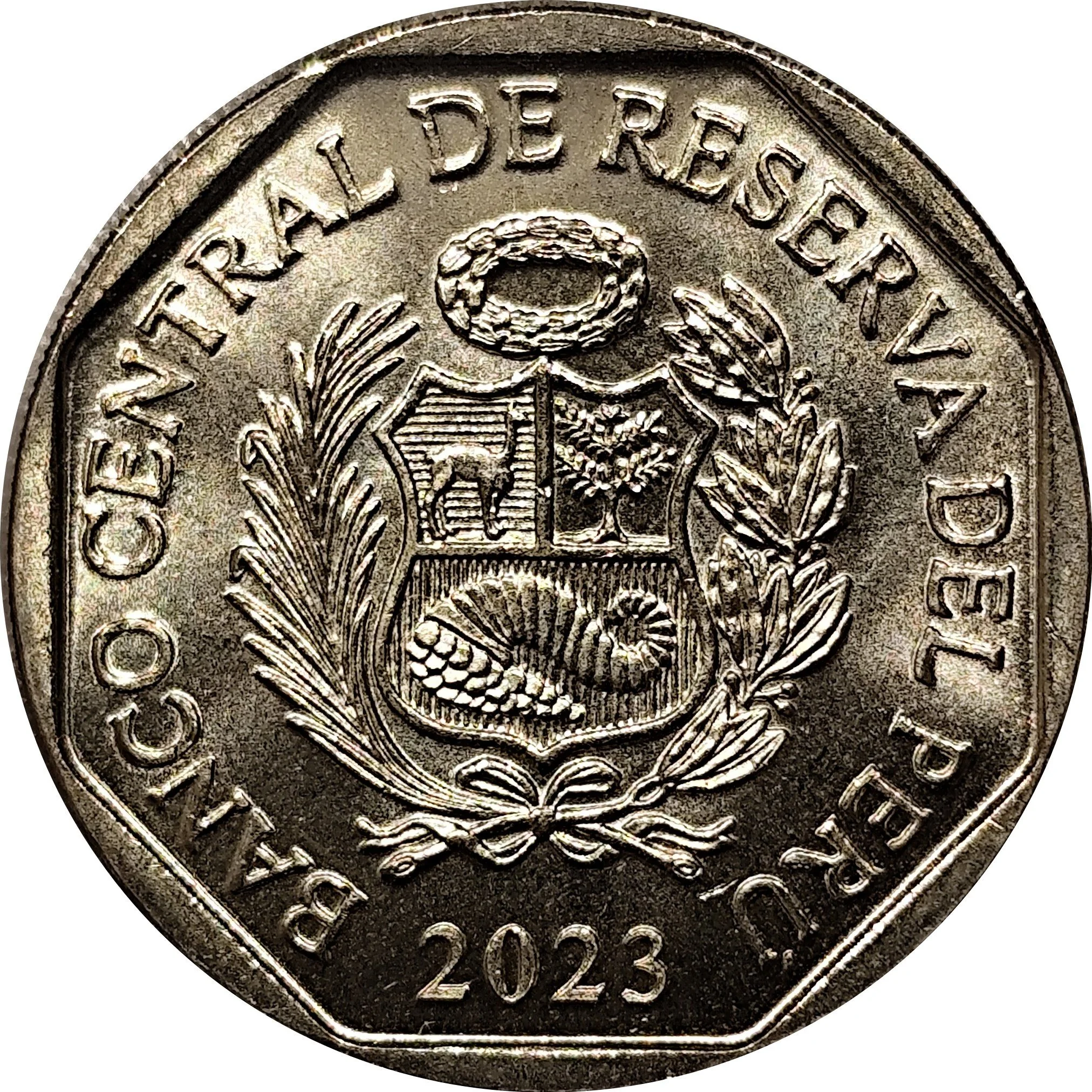
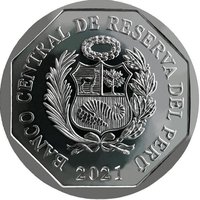
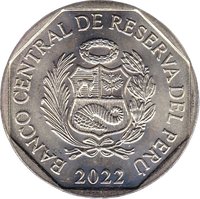
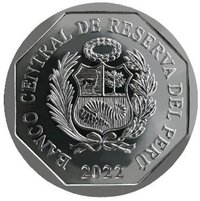
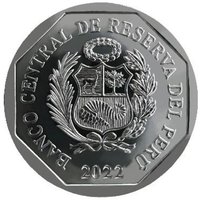
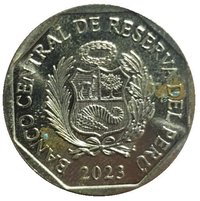
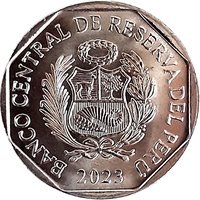
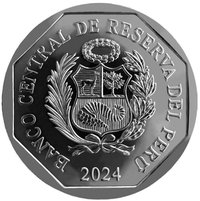
Peru's coat of arms, encircled by the legend, mint year, and an eight-sided inscribed polygon forming the coin's edge.
Inscription:
BANCO CENTRAL DE RESERVA DEL PERÚ
2023
2023
Translation:
Central Reserve Bank of Peru
2023
2023
Script: Latin
Language: Spanish
Engraver: Eduardo Paredes Medina
Designer: Ernesto Gutiérrez Gamarra
Reverse
Description:
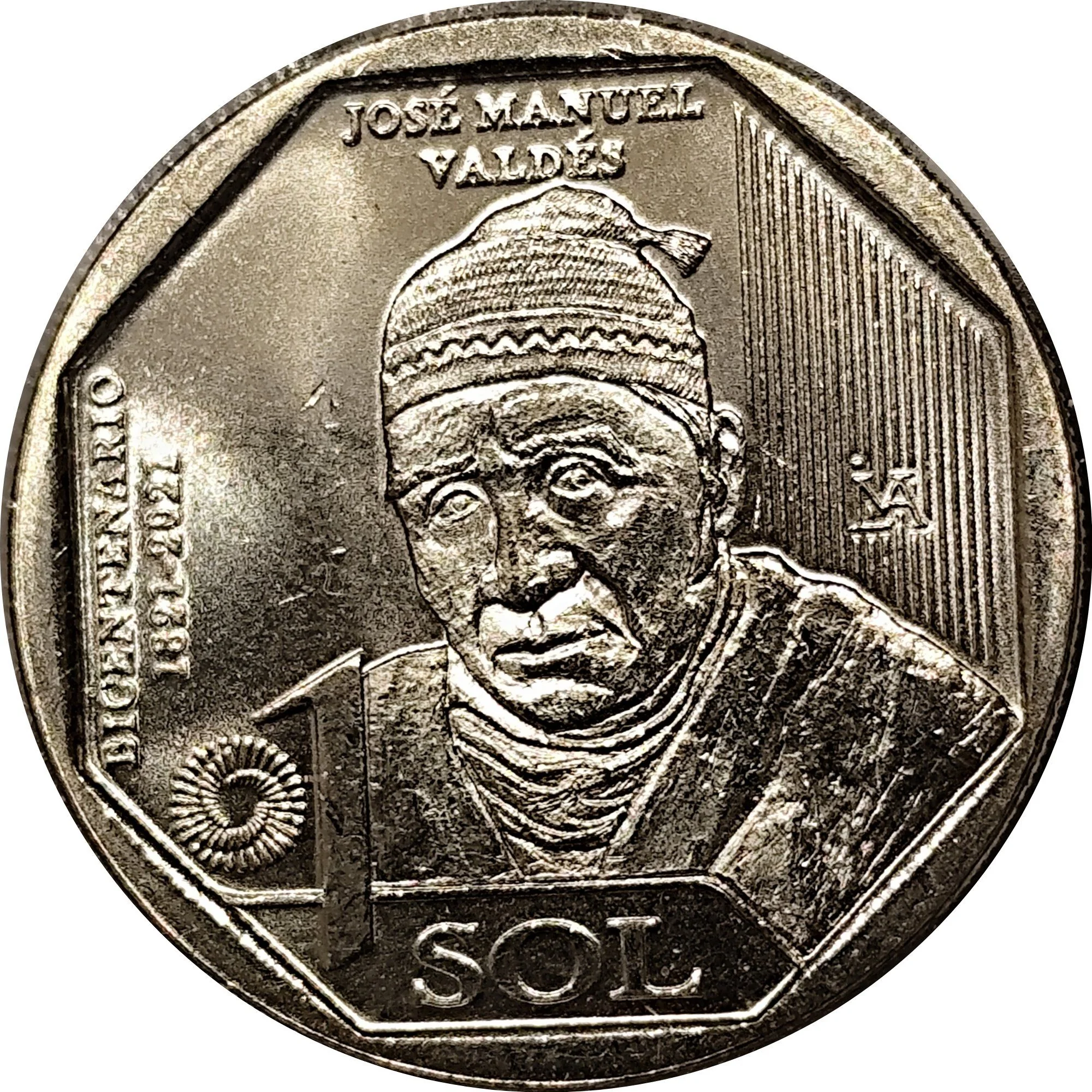
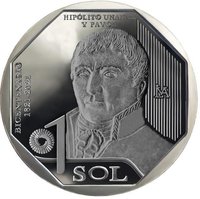
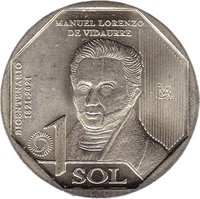
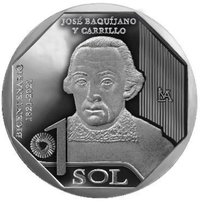
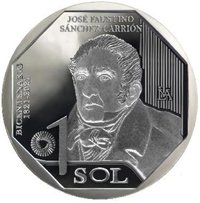
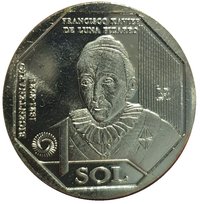
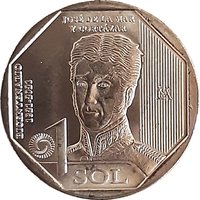
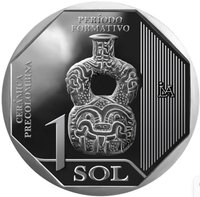
Central portrait of José Manuel Valdés in 3/4 view, with a geometric vertical line design and the National Mint mark. To the left are the event description, denomination, and currency name, alongside the Bicentennial series logo. The personality's name appears at the top.
Inscription:
JOSÉ MANUEL VALDÉS
BICENTENARIO 1821-2021
1 SOL
BICENTENARIO 1821-2021
1 SOL
Translation:
JOSÉ MANUEL VALDÉS
BICENTENNIAL 1821-2021
1 SOL
BICENTENNIAL 1821-2021
1 SOL
Script: Latin
Language: Spanish
Engraver: Eduardo Paredes Medina
Designer: Ernesto Gutiérrez Gamarra
Edge
Reeded
Categories
| Animal> Camel |
| Event> Independence |
| Person> Military leader |
| Person> Politician |
| Symbols> Coat of Arms |
| Symbol> Cornucopia |
| Symbol> Wreath |
Mints
| Name | Mark |
|---|---|
| Lima | Lima |
Mintings
| Year | Mint Mark | Mintage | Quality | Collection |
|---|---|---|---|---|
| 2023 | LIMA | 10,000,000 |
Historical background
In 2023, Peru's currency, the sol (PEN), demonstrated notable resilience despite a year of significant political turbulence and a technical recession. The currency experienced moderate depreciation pressure, weakening from approximately 3.81 to the US dollar at the start of the year to around 3.78 by year's end, after having touched a record low near 3.87 in October. This relative stability was largely attributed to the proactive monetary policy of Peru's Central Reserve Bank (BCRP), which maintained a high benchmark interest rate of 7.75% for much of the year to combat persistent inflation. High interest rates, coupled with Peru's strong position in mineral exports, helped attract foreign capital and provided a floor for the currency.
The primary challenges to the sol stemmed from domestic political instability and social unrest. The year began amid a severe political crisis following the ousting of President Pedro Castillo in late 2022, which triggered widespread protests that disrupted key mining corridors and economic activity. This climate of uncertainty weighed on investor sentiment and domestic demand, contributing to an economic contraction. Furthermore, the El Niño climate phenomenon posed a significant threat, raising concerns about agricultural output, infrastructure damage, and potential inflationary shocks from food prices, which kept the BCRP in a cautious, hawkish stance.
Overall, the 2023 currency narrative was one of managed stability in the face of adverse domestic conditions. The BCRP's credibility and its substantial foreign exchange reserves (exceeding $70 billion) served as critical buffers, allowing it to intervene in the forex market to smooth volatility. While inflation decelerated from its 2022 peak, it remained above the target range, keeping pressure on monetary policy. Consequently, the sol ended the year with minimal net movement, a testament to institutional strength counterbalancing a year marked by recession and political uncertainty.
The primary challenges to the sol stemmed from domestic political instability and social unrest. The year began amid a severe political crisis following the ousting of President Pedro Castillo in late 2022, which triggered widespread protests that disrupted key mining corridors and economic activity. This climate of uncertainty weighed on investor sentiment and domestic demand, contributing to an economic contraction. Furthermore, the El Niño climate phenomenon posed a significant threat, raising concerns about agricultural output, infrastructure damage, and potential inflationary shocks from food prices, which kept the BCRP in a cautious, hawkish stance.
Overall, the 2023 currency narrative was one of managed stability in the face of adverse domestic conditions. The BCRP's credibility and its substantial foreign exchange reserves (exceeding $70 billion) served as critical buffers, allowing it to intervene in the forex market to smooth volatility. While inflation decelerated from its 2022 peak, it remained above the target range, keeping pressure on monetary policy. Consequently, the sol ended the year with minimal net movement, a testament to institutional strength counterbalancing a year marked by recession and political uncertainty.
🌱 Fairly Common