

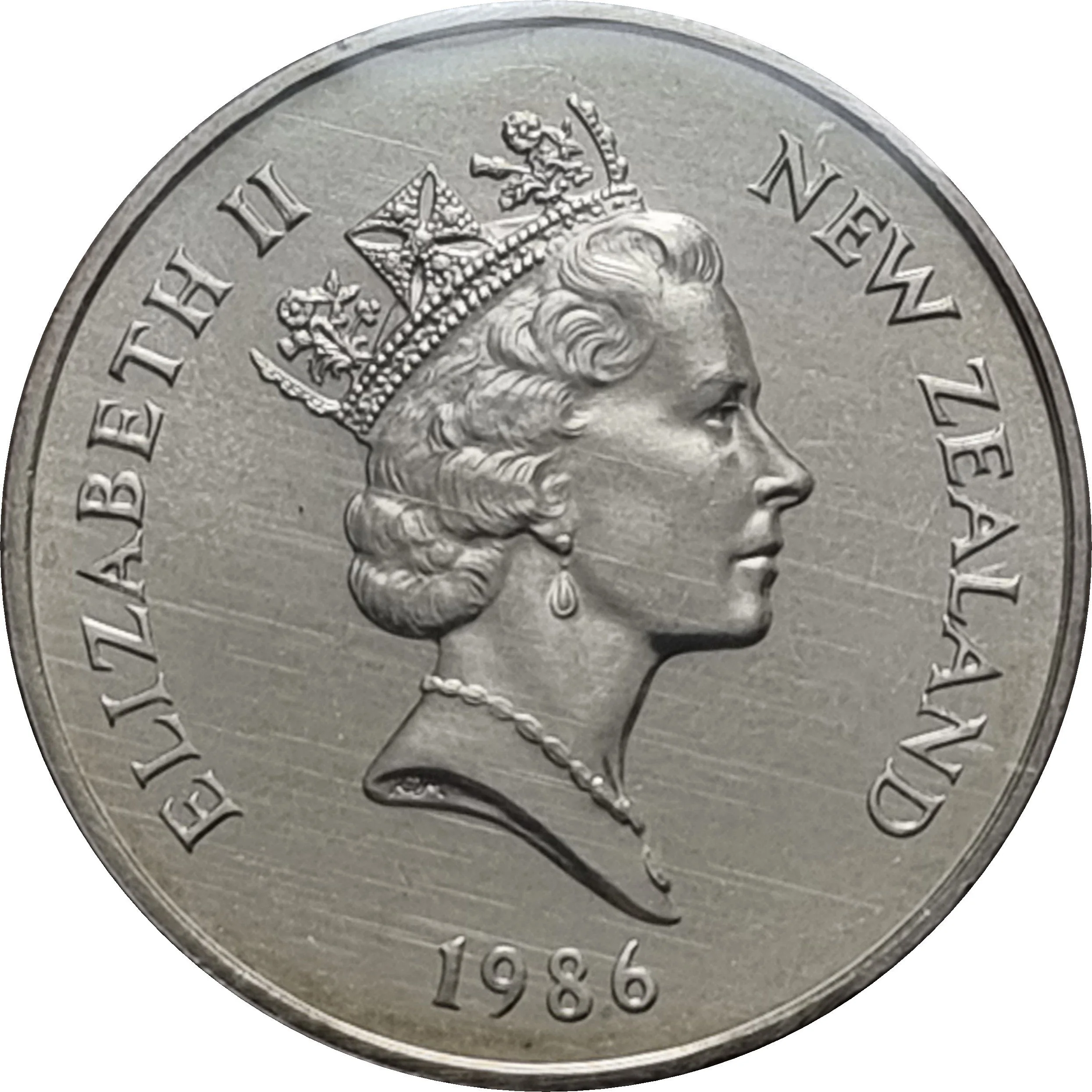

20 cents – New Zealand
Add to wishlist
New Zealand
Context
Years: 1986–1989
Issuer: New Zealand
Ruler: Elizabeth II
Currency:
(since 1967)
Demonetization: 1 November 2006
Total mintage: 44,103,100
Material
Diameter: 28.58 mm
Weight: 11.31 g
Thickness: 2.22 mm
Shape: Round
Composition: Copper-nickel
Technique: Milled
Alignment: Medal alignment
flip
References
KM: #
Numista: #3914
Value
Exchange value: 0.20 NZD
Inflation-adjusted value: 0.63 NZD
Obverse
Description:
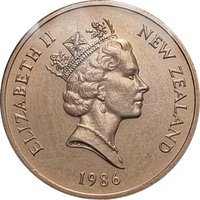
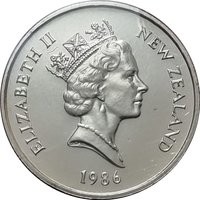
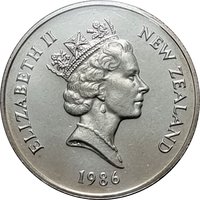
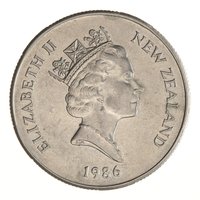
Queen Elizabeth III crowned portrait right, wearing King George IV State Diadem.
Inscription:
ELIZABETH II NEW ZEALAND
RDM
1986
RDM
1986
Script: Latin
Designer: Raphael David Maklouf
Reverse
Edge
Reeded
Mints
| Name | Mark |
|---|---|
| Royal Australian Mint | — |
| Royal Mint | — |
Mintings
| Year | Mint Mark | Mintage | Quality | Collection |
|---|---|---|---|---|
| 1986 | — | 18,000 | BU | |
| 1986 | — | 12,500,000 | ||
| 1986 | — | 10,000 | Proof | |
| 1987 | — | 18,000 | BU | |
| 1987 | — | 14,000,000 | ||
| 1987 | — | 10,000 | Proof | |
| 1988 | — | 9,000 | Proof | |
| 1988 | — | 12,500,000 | ||
| 1988 | — | 15,000 | BU | |
| 1989 | — | 14,600 | BU | |
| 1989 | — | 5,000,000 | ||
| 1989 | — | 8,500 | Proof |
Historical background
In 1986, New Zealand was in the midst of a radical and comprehensive economic reform program known as "Rogernomics," named after Finance Minister Roger Douglas. The country was moving decisively away from a highly regulated, protectionist economy with fixed exchange rates and extensive controls. A pivotal step had been taken in March 1985 when the New Zealand dollar was floated, meaning its value was now determined by the foreign exchange market rather than being set by the government. By 1986, the currency was experiencing the full volatility and scrutiny of this new regime, with its value swinging significantly based on commodity prices, interest rate differentials, and investor sentiment.
The currency situation in 1986 was characterized by a sharp and controversial depreciation. The NZ dollar fell dramatically after the float, losing about 20% of its value against major trading partner currencies within the first year. This decline was driven by a combination of factors: a large current account deficit, falling prices for key export commodities like dairy and wool, and the initial market assessment that the currency had been overvalued under the previous controlled system. While a lower dollar helped exporters by making their goods cheaper on the world market, it also stoked imported inflation, complicating the Reserve Bank's efforts to control price rises.
This volatile currency environment occurred within a broader context of dismantling economic controls. In 1986, the government was also removing subsidies, lowering tariffs, and deregulating financial markets. The falling dollar, therefore, was both a symptom and a driver of this painful economic transition. It exposed New Zealand industries to intense international competition while simultaneously adjusting the country's external accounts. The situation underscored the government's commitment to market-led solutions, accepting short-term volatility and inflationary pressure as the necessary cost of long-term economic restructuring and integration into the global economy.
The currency situation in 1986 was characterized by a sharp and controversial depreciation. The NZ dollar fell dramatically after the float, losing about 20% of its value against major trading partner currencies within the first year. This decline was driven by a combination of factors: a large current account deficit, falling prices for key export commodities like dairy and wool, and the initial market assessment that the currency had been overvalued under the previous controlled system. While a lower dollar helped exporters by making their goods cheaper on the world market, it also stoked imported inflation, complicating the Reserve Bank's efforts to control price rises.
This volatile currency environment occurred within a broader context of dismantling economic controls. In 1986, the government was also removing subsidies, lowering tariffs, and deregulating financial markets. The falling dollar, therefore, was both a symptom and a driver of this painful economic transition. It exposed New Zealand industries to intense international competition while simultaneously adjusting the country's external accounts. The situation underscored the government's commitment to market-led solutions, accepting short-term volatility and inflationary pressure as the necessary cost of long-term economic restructuring and integration into the global economy.


🌱 Very Common