

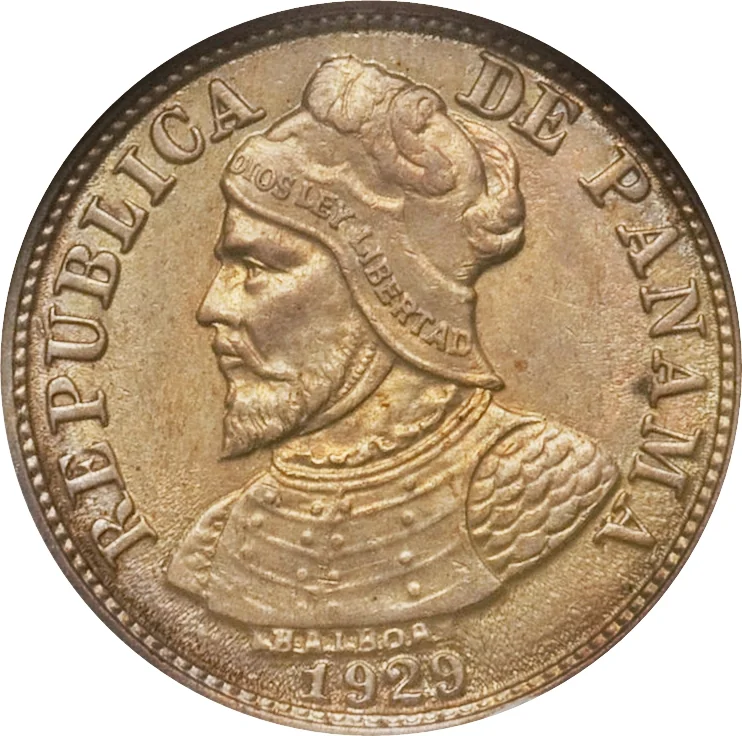
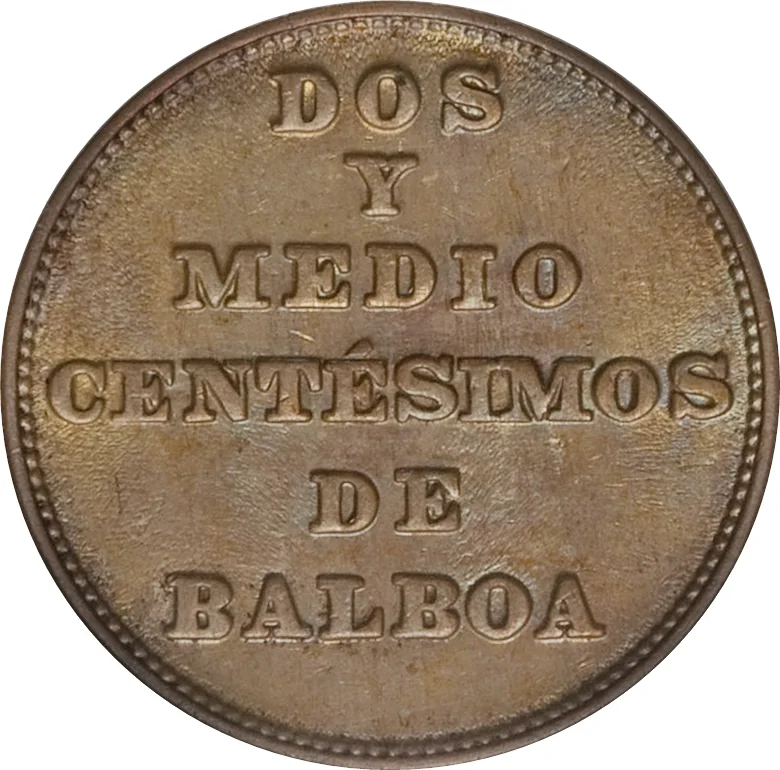
2½ Centesimos – Panama
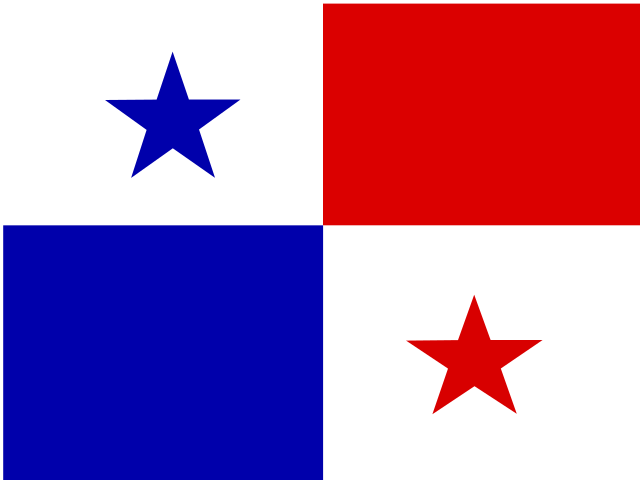
Panama
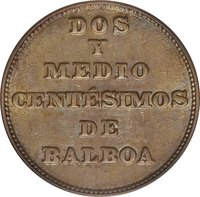
Obverse
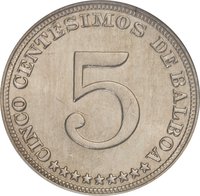
Reverse
Edge
Plain
Categories
| Person> Explorer |
| Mustache/Beard |
Mints
| Name | Mark |
|---|---|
| United States Mint of Philadelphia | — |
Mintings
| Year | Mint Mark | Mintage | Quality | Collection |
|---|---|---|---|---|
| 1929 | — | 1,000,000 | ||
| 1929 | — | — | Proof |
Historical background
Panama’s currency situation in 1929 was unique and stable, defined by its long-standing and exclusive use of the United States dollar as legal tender. Since the country's independence in 1903, Panama had operated under a monetary agreement with the U.S., formalized in the 1904 Monetary Convention. This system, known as "dollarization," meant Panama did not issue its own paper currency. Instead, U.S. banknotes circulated freely, while Panama minted its own subsidiary coins—the balboa and centésimos—which were equal in size, weight, and value to their U.S. counterparts. This arrangement provided Panama with a strong and credible currency, deeply integrated with its most important economic partner.
The year 1929 found Panama insulated from the immediate domestic currency crises that would soon afflict many nations following the Wall Street Crash. As a fully dollarized economy, Panama had no independent monetary policy and could not devalue its currency to gain trade advantages or print money to finance deficits. This imposed significant fiscal discipline on the government, as it could not resort to inflationary financing. The stability of the dollar provided confidence for foreign investment, particularly crucial for the economy centered on the U.S.-administered Panama Canal Zone and related services.
However, this system also meant Panama was entirely vulnerable to the monetary policy decisions made by the U.S. Federal Reserve. As the Great Depression began to unfold globally in late 1929, Panama would feel the secondary effects through a tightening of U.S. credit and a contraction in world trade. The lack of a central bank or a lender of last resort left the Panamanian banking system exposed to liquidity crises, and the fixed link to the dollar meant the country would import the deflationary pressures soon to grip the United States. Thus, while Panama entered the depression without a currency crisis, its dollarized regime would channel and amplify the external economic shocks of the coming decade.
The year 1929 found Panama insulated from the immediate domestic currency crises that would soon afflict many nations following the Wall Street Crash. As a fully dollarized economy, Panama had no independent monetary policy and could not devalue its currency to gain trade advantages or print money to finance deficits. This imposed significant fiscal discipline on the government, as it could not resort to inflationary financing. The stability of the dollar provided confidence for foreign investment, particularly crucial for the economy centered on the U.S.-administered Panama Canal Zone and related services.
However, this system also meant Panama was entirely vulnerable to the monetary policy decisions made by the U.S. Federal Reserve. As the Great Depression began to unfold globally in late 1929, Panama would feel the secondary effects through a tightening of U.S. credit and a contraction in world trade. The lack of a central bank or a lender of last resort left the Panamanian banking system exposed to liquidity crises, and the fixed link to the dollar meant the country would import the deflationary pressures soon to grip the United States. Thus, while Panama entered the depression without a currency crisis, its dollarized regime would channel and amplify the external economic shocks of the coming decade.
🌱 Common