

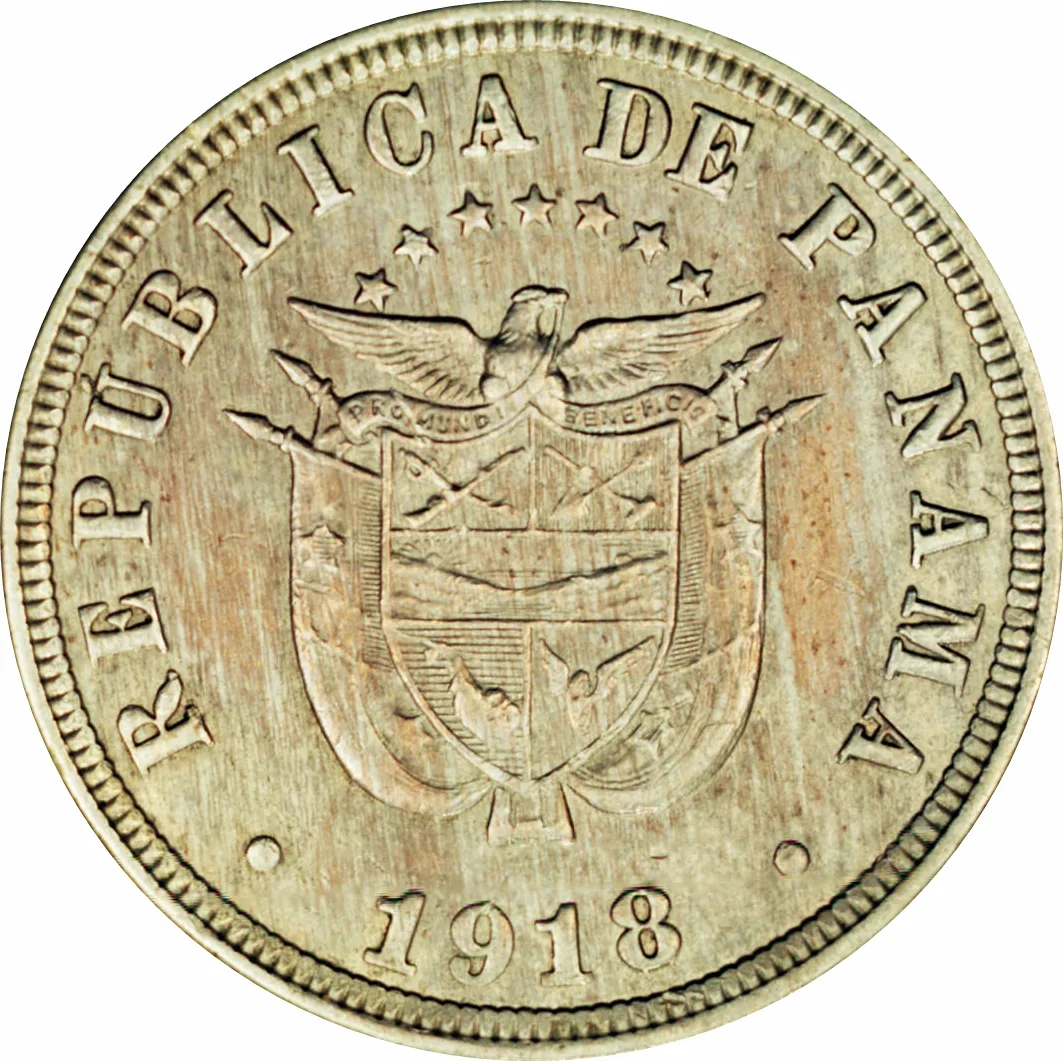
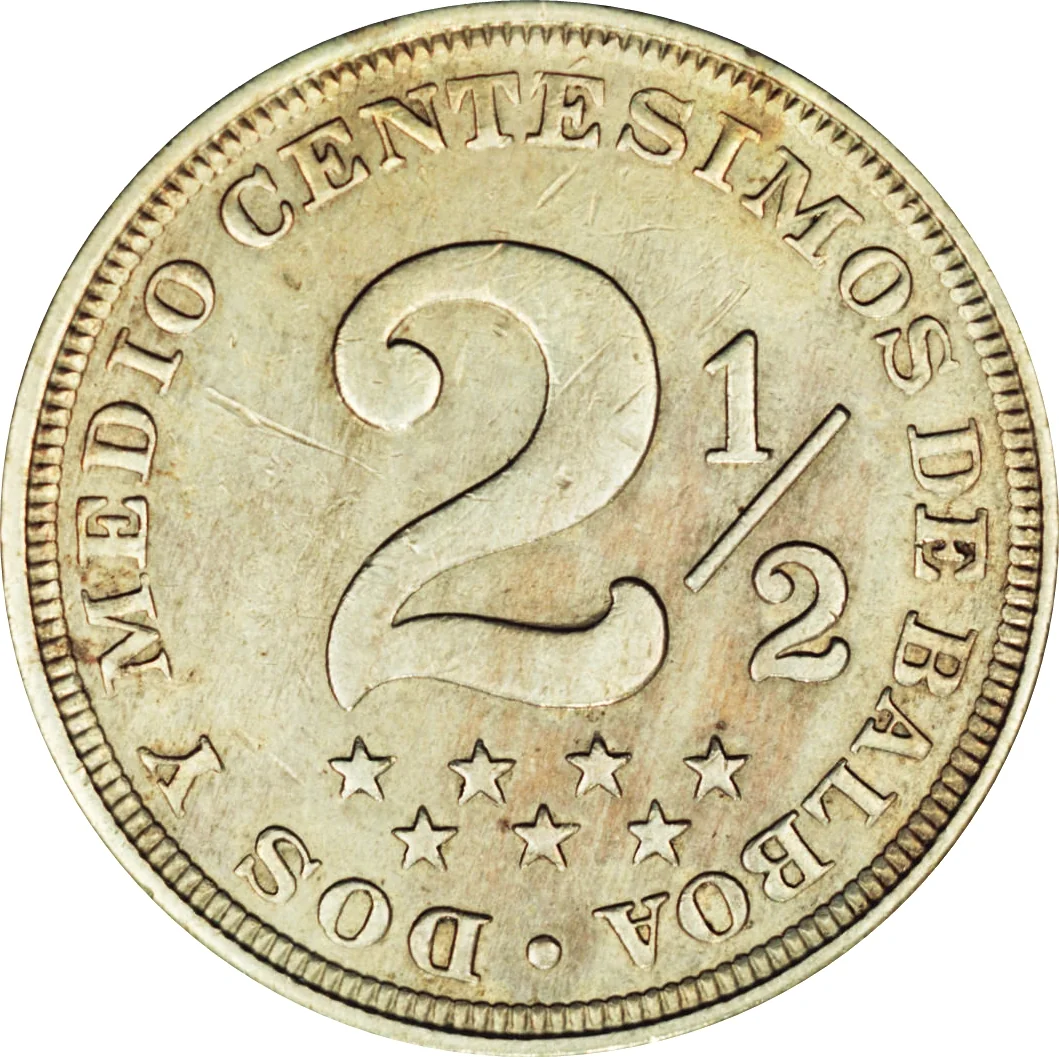
2½ Centesimos – Panama
Panama
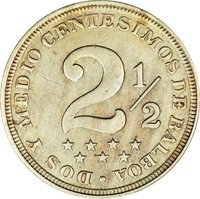
Obverse
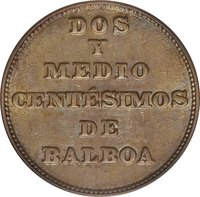
Reverse
Edge
Plain
Categories
| Symbols> Coat of Arms |
Mints
| Name | Mark |
|---|---|
| United States Mint of Philadelphia | — |
Mintings
| Year | Mint Mark | Mintage | Quality | Collection |
|---|---|---|---|---|
| 1907 | — | 800,000 | ||
| 1916 | — | 800,000 | ||
| 1918 | — | 7 |
Historical background
Panama’s currency situation in 1907 was defined by a pivotal transition following the country’s independence from Colombia in 1903. At that time, the monetary landscape was chaotic, with a variety of coins from Colombia, Peru, the United States, and other Latin American nations circulating at fluctuating values. This instability hindered commerce and government finance, creating an urgent need for a standardized and reliable monetary system to support the nascent republic and its major undertaking: the construction of the Panama Canal.
The solution was implemented with the passage of the Monetary Conversion Law in 1904, which formally adopted the US dollar as Panama’s official currency. By 1907, this process was fully consolidated. The US dollar became the sole legal tender for all transactions, while Panama introduced its own fractional coinage, the balboa, which was pegged at par with the dollar. These distinctive Panamanian coins (initially silver centésimos) circulated alongside US banknotes and coins, establishing a practical and stable bimetallic system without a central bank or paper currency of its own.
Thus, by 1907, Panama had achieved a unique and enduring monetary framework. The country effectively dollarized its economy, leveraging the stability and credibility of the United States' currency to attract foreign investment and facilitate the massive Canal project. This move not only ended the prior monetary confusion but also forged a permanent financial link with the US, laying a foundation for economic stability that has characterized Panama’s financial system for over a century.
The solution was implemented with the passage of the Monetary Conversion Law in 1904, which formally adopted the US dollar as Panama’s official currency. By 1907, this process was fully consolidated. The US dollar became the sole legal tender for all transactions, while Panama introduced its own fractional coinage, the balboa, which was pegged at par with the dollar. These distinctive Panamanian coins (initially silver centésimos) circulated alongside US banknotes and coins, establishing a practical and stable bimetallic system without a central bank or paper currency of its own.
Thus, by 1907, Panama had achieved a unique and enduring monetary framework. The country effectively dollarized its economy, leveraging the stability and credibility of the United States' currency to attract foreign investment and facilitate the massive Canal project. This move not only ended the prior monetary confusion but also forged a permanent financial link with the US, laying a foundation for economic stability that has characterized Panama’s financial system for over a century.
🌱 Common