

50 Centimos – Costa Rica
Costa Rica
Context
Years: 1917–1918
Issuer: Costa Rica 
Period:
(1848—1948)
Currency:
(since 1896)
Demonetization: 19 January 1924
Total mintage: 39,400
Material
References
KM: #Click to copy to clipboard150
Numista: #390006
Value
Exchange value: 0.50 CRC
Bullion value: $14.07
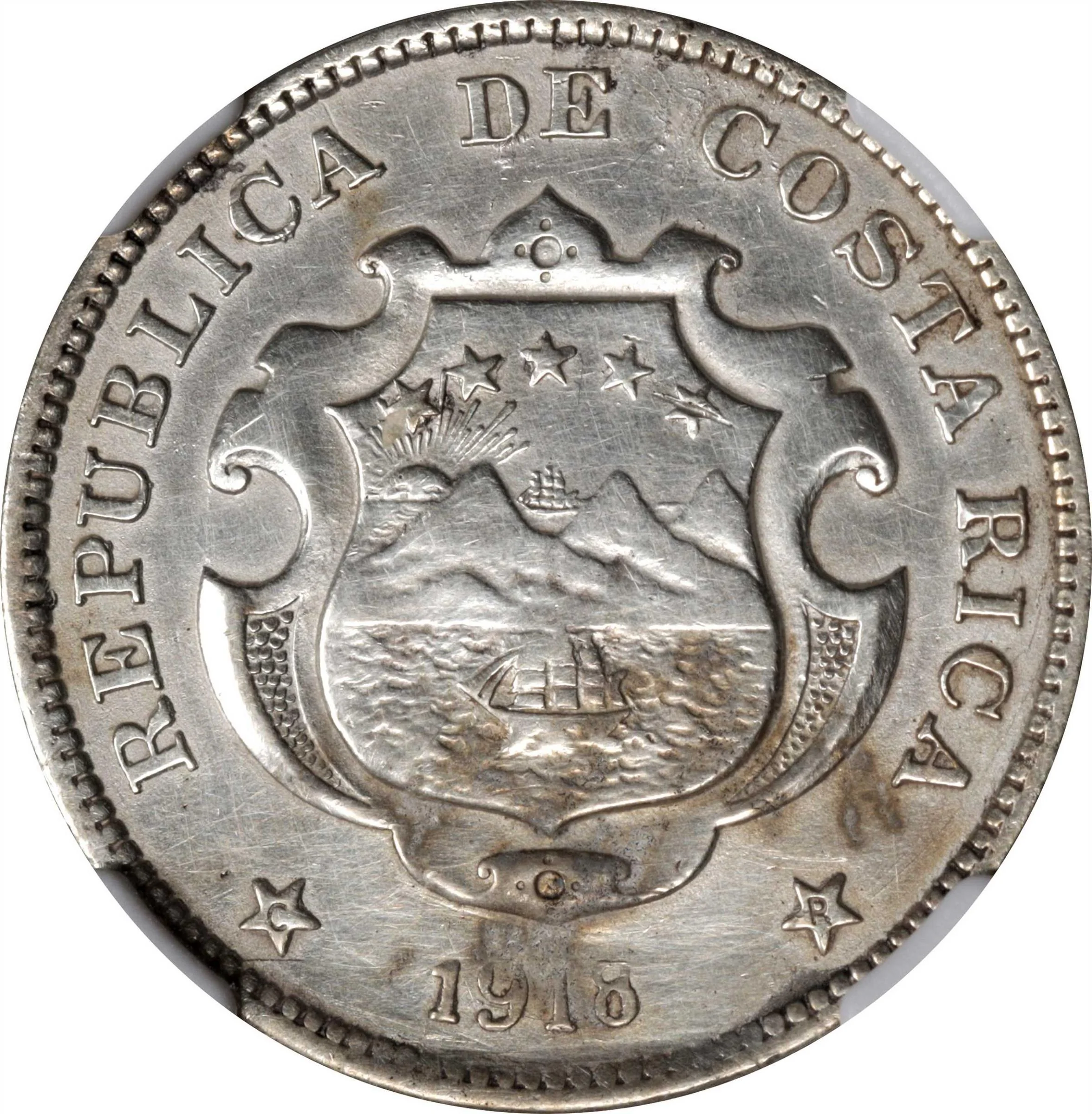
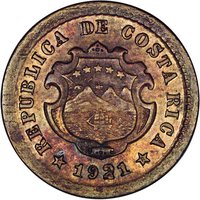
Obverse
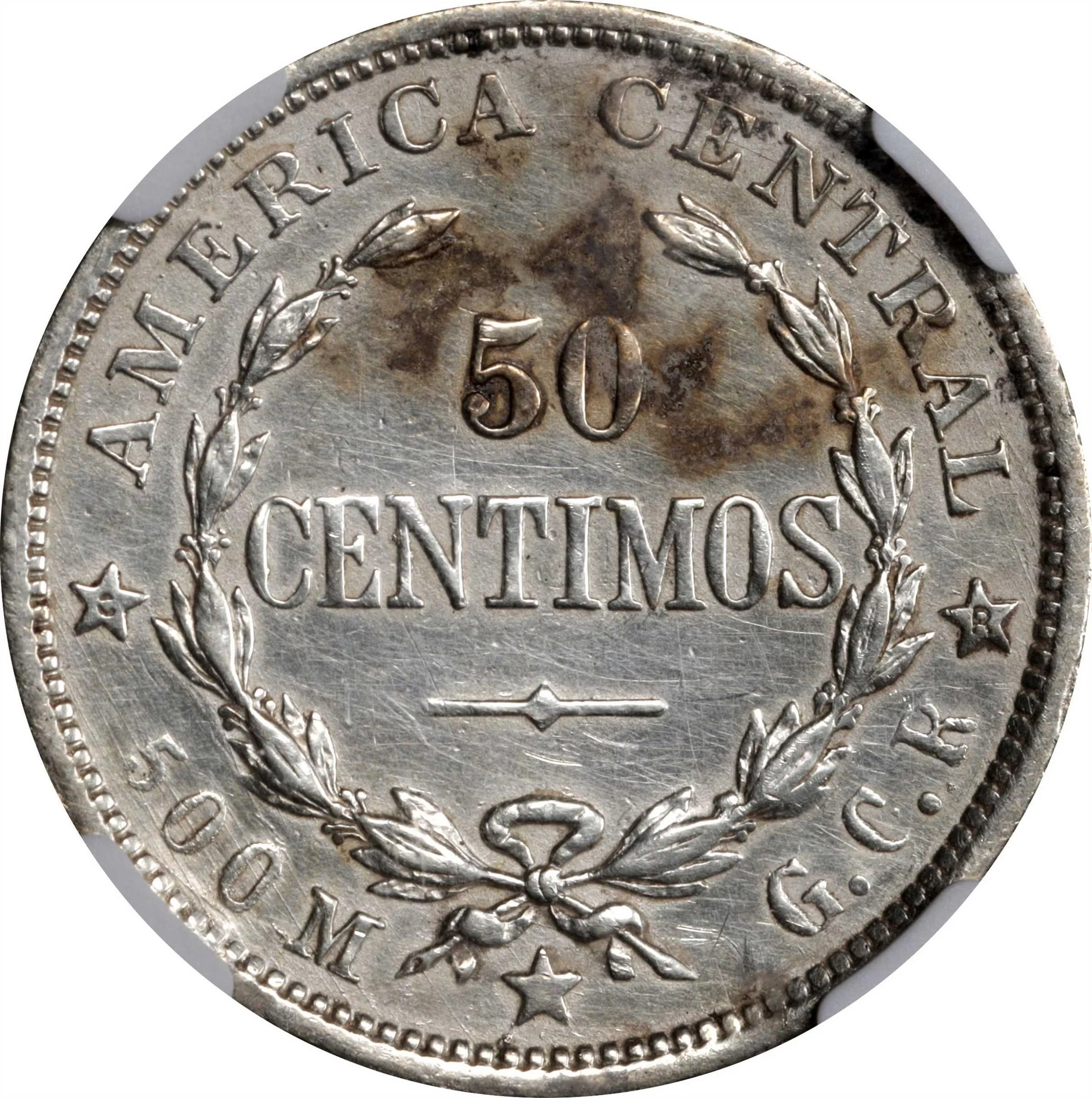
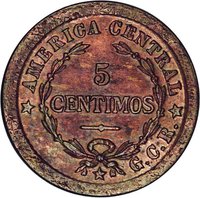
Reverse
Edge
Reeded
Categories
| Symbols> Coat of Arms |
| Symbol> Wreath |
Mints
| Name | Mark |
|---|---|
| Casa Nacional de Moneda de Costa Rica | — |
Mintings
| Year | Mint Mark | Mintage | Quality | Collection |
|---|---|---|---|---|
| 1917 | G.C.R. | 9,400 | ||
| 1918 | G.C.R. | 30,000 |
Historical background
In 1917, Costa Rica’s currency situation was defined by a complex and unstable system of fractional paper money, a legacy of the late 19th century. The nation did not have a central bank; instead, currency issuance was controlled by three private commercial banks—the Banco Internacional de Costa Rica, the Banco Anglo-Costarricense, and the Banco Mercantil de Costa Rica. Each bank issued its own banknotes, which were not backed by gold or silver reserves but were declared legal tender by the government. This led to an over-issuance of paper money, contributing to inflation, a loss of public confidence, and frequent fluctuations in the value of notes between different regions and banks.
The political upheaval of 1917 exacerbated these monetary problems. In January, Minister of Finance Alberto Echandi Montero, under President Alfredo González Flores, had proposed a series of fiscal reforms including a progressive land tax to address chronic budget deficits and stabilize the currency. These measures provoked fierce opposition from the coffee-growing oligarchy and other powerful interests. This discontent culminated in a coup d'état led by Federico Tinoco Granados in late January. The Tinoco dictatorship, seeking political consolidation and facing international isolation (as it was not recognized by the United States), further strained public finances. To fund its administration and military, the regime resorted to increasing the money supply, accelerating inflationary pressures and deepening the currency crisis.
Consequently, by the end of 1917, the colón—officially established in 1896 but not yet a unified national currency—was in a precarious state. The public held little trust in the banknotes, and the economy suffered from the dual burdens of political instability and monetary disorder. This turbulent period highlighted the urgent need for centralized control over currency issuance, a problem that would not be resolved until the creation of the Banco Internacional de Costa Rica (the nation's first central bank) in 1936, which finally monopolized note issue and brought stability to the monetary system.
The political upheaval of 1917 exacerbated these monetary problems. In January, Minister of Finance Alberto Echandi Montero, under President Alfredo González Flores, had proposed a series of fiscal reforms including a progressive land tax to address chronic budget deficits and stabilize the currency. These measures provoked fierce opposition from the coffee-growing oligarchy and other powerful interests. This discontent culminated in a coup d'état led by Federico Tinoco Granados in late January. The Tinoco dictatorship, seeking political consolidation and facing international isolation (as it was not recognized by the United States), further strained public finances. To fund its administration and military, the regime resorted to increasing the money supply, accelerating inflationary pressures and deepening the currency crisis.
Consequently, by the end of 1917, the colón—officially established in 1896 but not yet a unified national currency—was in a precarious state. The public held little trust in the banknotes, and the economy suffered from the dual burdens of political instability and monetary disorder. This turbulent period highlighted the urgent need for centralized control over currency issuance, a problem that would not be resolved until the creation of the Banco Internacional de Costa Rica (the nation's first central bank) in 1936, which finally monopolized note issue and brought stability to the monetary system.
✨ Legendary