

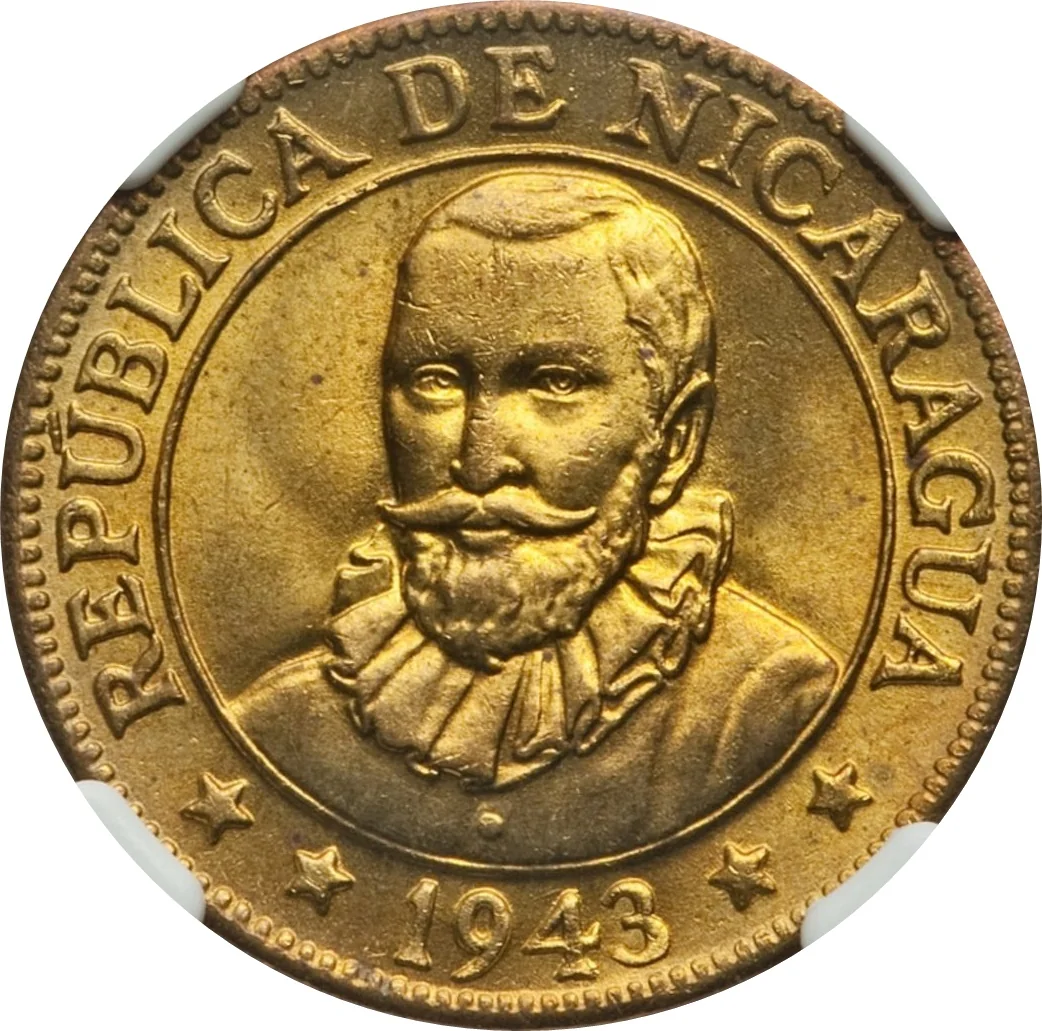
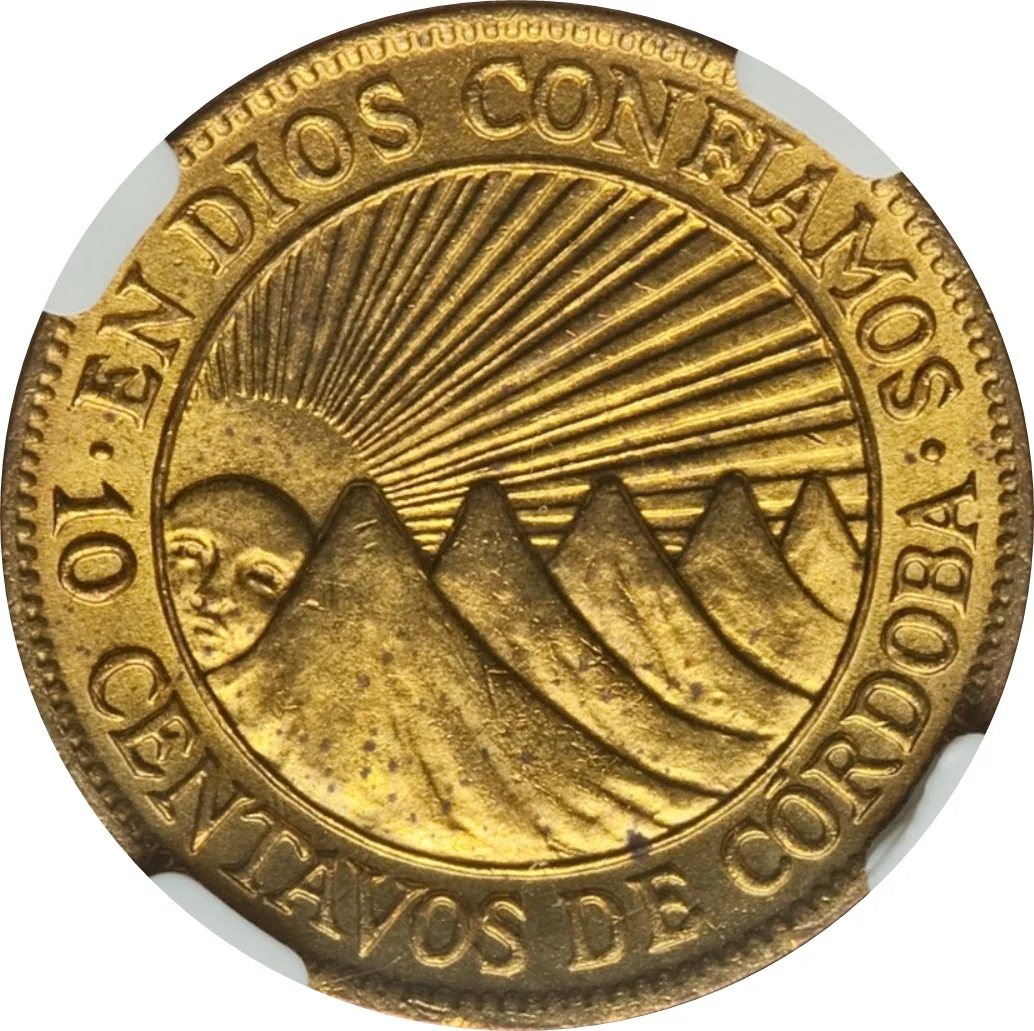
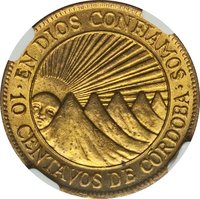
10 Centavos de Córdoba – Nicaragua
Nicaragua
Context
Year: 1943
Issuer: Nicaragua 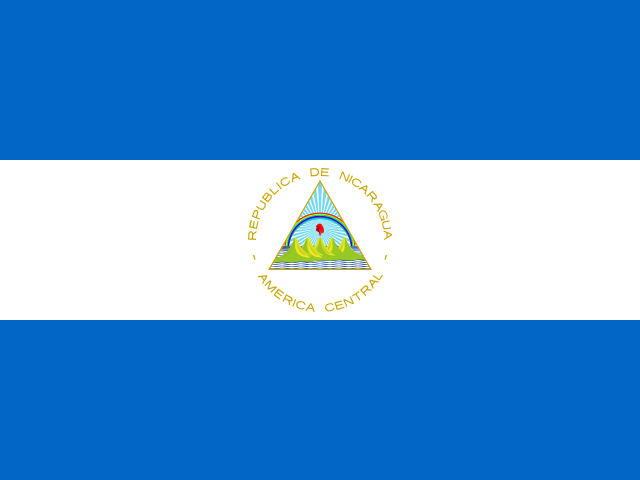
Issuing organization: National Bank of Nicaragua
Period:
(since 1854)
Currency:
(1912—1987)
Demonetization: 15 February 1988
Total mintage: 2,000,000
Material
References
KM: #Click to copy to clipboard22
Numista: #14308
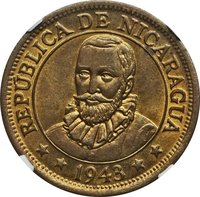
Obverse
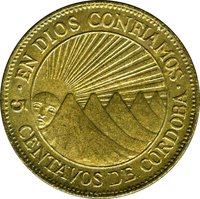
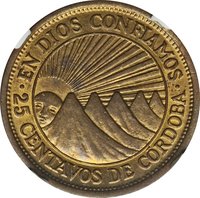
Reverse
Edge
Reeded
Mints
| Name | Mark |
|---|---|
| United States Mint of Philadelphia | — |
Mintings
| Year | Mint Mark | Mintage | Quality | Collection |
|---|---|---|---|---|
| 1943 | — | 2,000,000 |
Historical background
In 1943, Nicaragua's currency system was firmly under the influence of the United States, operating within the framework of the gold-exchange standard established by the 1912 Knox-Castrillo Convention. The national currency, the córdoba, was pegged to the US dollar at a fixed rate of 1.25 córdobas to 1 dollar (or $0.80 US per córdoba). This stability was maintained by the National Bank of Nicaragua, which was founded in 1912 with significant American capital and oversight, effectively ceding monetary sovereignty to US financial interests. The country's gold and dollar reserves, held largely in New York, backed the currency, ensuring its convertibility and facilitating international trade, primarily with the US.
Economically, this arrangement provided notable price stability and low inflation during the period, which was advantageous for the export-oriented agro-export oligarchy and foreign businesses. However, it also critically limited the government's ability to conduct independent monetary policy, especially in responding to domestic economic needs. The system served the interests of the ruling Somoza family, who had consolidated power in the 1930s, as it attracted US support and provided a predictable financial environment for their allied elite. The fixed exchange rate and dollar linkage simplified transactions for the key sectors of coffee, bananas, and mining, which were dominated by American companies like Standard Fruit.
Politically and socially, the currency peg was a symbol of the broader US hegemony in Nicaragua, reflecting the era of "Dollar Diplomacy." While it offered macroeconomic stability, it did little to foster diversified industrial development or address the profound inequality in the largely rural population. The monetary system's rigidity meant that external shocks, such as fluctuations in global commodity prices, were directly transmitted to the domestic economy without the cushion of exchange rate adjustment. Thus, in 1943, Nicaragua's currency was stable but inextricably tied to American economic policy and the interests of a narrow domestic elite, a situation that would persist for decades.
Economically, this arrangement provided notable price stability and low inflation during the period, which was advantageous for the export-oriented agro-export oligarchy and foreign businesses. However, it also critically limited the government's ability to conduct independent monetary policy, especially in responding to domestic economic needs. The system served the interests of the ruling Somoza family, who had consolidated power in the 1930s, as it attracted US support and provided a predictable financial environment for their allied elite. The fixed exchange rate and dollar linkage simplified transactions for the key sectors of coffee, bananas, and mining, which were dominated by American companies like Standard Fruit.
Politically and socially, the currency peg was a symbol of the broader US hegemony in Nicaragua, reflecting the era of "Dollar Diplomacy." While it offered macroeconomic stability, it did little to foster diversified industrial development or address the profound inequality in the largely rural population. The monetary system's rigidity meant that external shocks, such as fluctuations in global commodity prices, were directly transmitted to the domestic economy without the cushion of exchange rate adjustment. Thus, in 1943, Nicaragua's currency was stable but inextricably tied to American economic policy and the interests of a narrow domestic elite, a situation that would persist for decades.
Series: 1943 series
🌟 Uncommon