

2 euro (Josip Plemelj) – Slovenia
Add to wishlist
Circulating commemorative coins
Commemoration: 150th Anniversary of the Birth of Josip Plemelj
Slovenia
Obverse
Description:
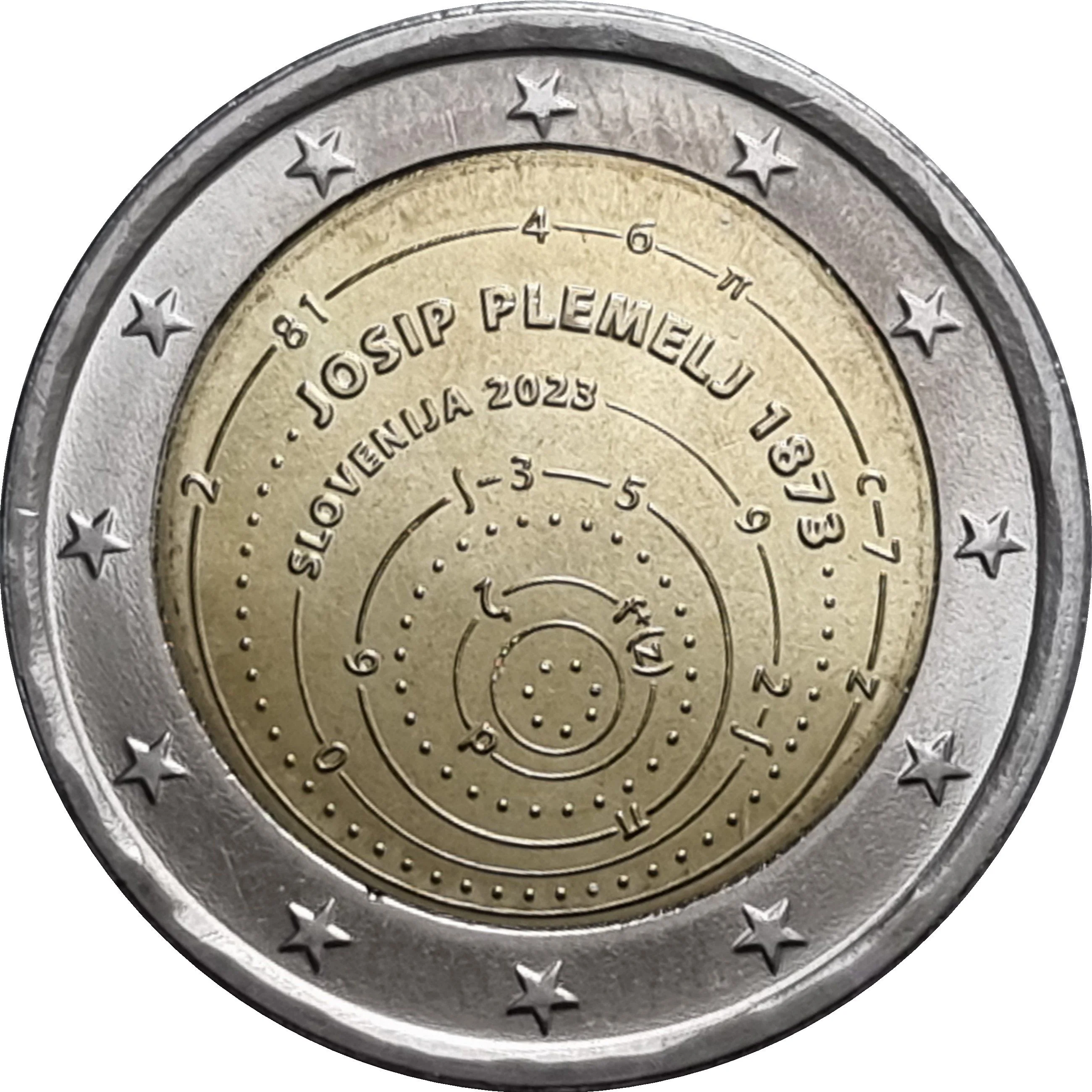
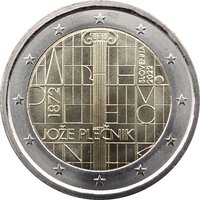
The design features Josip Plemelj’s world-first solution, with rotating numbers and symbols on orbital paths to unite individual elements. This represents his work in mathematics and astronomy. It includes the inscriptions ‘JOSIP PLEMELJ 1873’, ‘SLOVENIJA’, and ‘2023’. The outer ring bears the 12 stars of the European flag.
Inscription:
2 – 81 – 4 – 6 - π - c -7 –z -
JOSIP PLEMELJ 1873
0 – SLOVENIJA 2023 – 9 – 2 -∫ -
6 - ∫ - 3 – 5 – π –
P – ζ - f⁺(Z) -
JOSIP PLEMELJ 1873
0 – SLOVENIJA 2023 – 9 – 2 -∫ -
6 - ∫ - 3 – 5 – π –
P – ζ - f⁺(Z) -
Translation:
JOSIP PLEMELJ 1873 - SLOVENIJA 2023 - 2 - 81 - 4 - 6 - π - c - 7 - z - 0 - 9 - 2 - ∫ - 6 - ∫ - 3 - 5 - π - P - ζ - f⁺(Z) -
Script: Latin
Designer: Jasna Čuk Kolavčič
Reverse
Edge
Mints
| Name | Mark |
|---|---|
| Rome | — |
Mintings
| Year | Mint Mark | Mintage | Quality | Collection |
|---|---|---|---|---|
| 2023 | — | 3,000 | Proof | |
| 2023 | — | 6,000 | BU | |
| 2023 | — | 990,250 |
Historical background
In 2023, Slovenia remains a fully integrated member of the Eurozone, having adopted the euro as its sole legal tender on 1 January 2007. Consequently, the country's monetary policy is set by the European Central Bank (ECB), with the Bank of Slovenia participating in the Eurosystem. The primary domestic currency discussions, therefore, do not revolve around a national currency but focus on the broader impacts of the ECB's policies on the Slovenian economy, including efforts to manage inflation and ensure financial stability.
The key economic backdrop for the year was the continued effort to tackle high inflation, which peaked in late 2022 and remained a significant concern throughout 2023. Like other Eurozone members, Slovenia experienced rising consumer prices driven by elevated energy costs and persistent core inflation. The national debate centered on the social and economic effects of these price increases, with the government implementing targeted measures such as energy price caps and subsidies to shield households and businesses, while the country adhered to the ECB's consecutive interest rate hikes aimed at cooling the economy.
Looking forward, Slovenia's currency situation is firmly anchored to the euro's future. In 2023, the country also reached a major milestone by joining the OECD, further cementing its position within the core of European and global economic structures. Domestic financial discourse focused on maintaining competitiveness within the single currency area, managing public debt in line with EU fiscal rules, and preparing for the future digital euro project, ensuring the nation remains aligned with the Eurozone's evolving monetary framework.
The key economic backdrop for the year was the continued effort to tackle high inflation, which peaked in late 2022 and remained a significant concern throughout 2023. Like other Eurozone members, Slovenia experienced rising consumer prices driven by elevated energy costs and persistent core inflation. The national debate centered on the social and economic effects of these price increases, with the government implementing targeted measures such as energy price caps and subsidies to shield households and businesses, while the country adhered to the ECB's consecutive interest rate hikes aimed at cooling the economy.
Looking forward, Slovenia's currency situation is firmly anchored to the euro's future. In 2023, the country also reached a major milestone by joining the OECD, further cementing its position within the core of European and global economic structures. Domestic financial discourse focused on maintaining competitiveness within the single currency area, managing public debt in line with EU fiscal rules, and preparing for the future digital euro project, ensuring the nation remains aligned with the Eurozone's evolving monetary framework.
Series: Slovenia 2 euro commemoratives

🌱 Common