

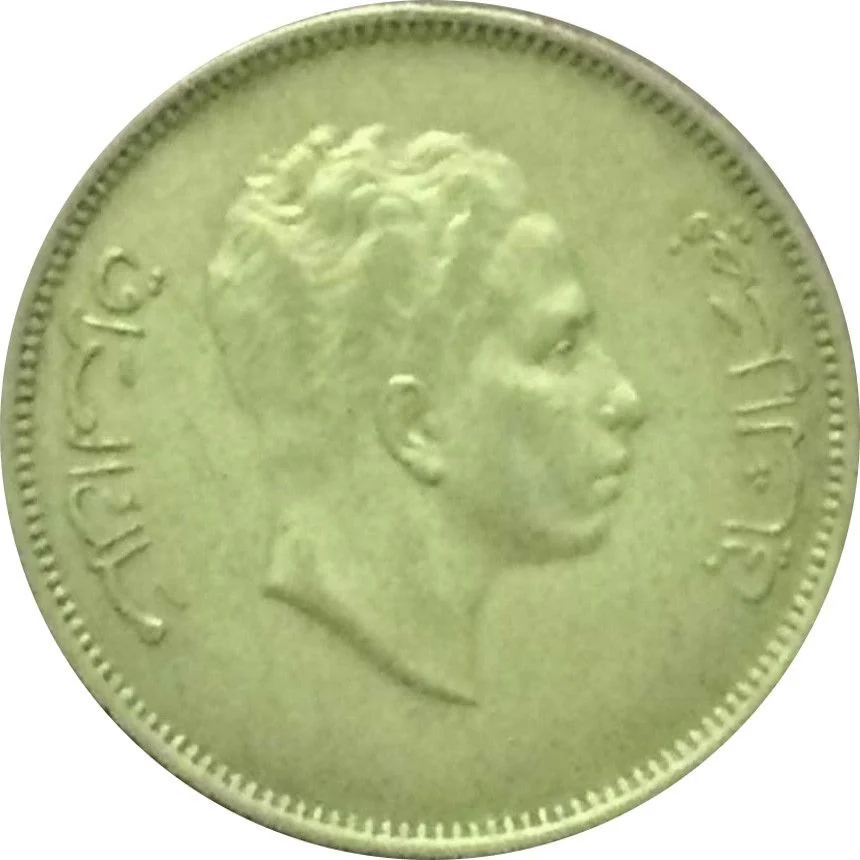
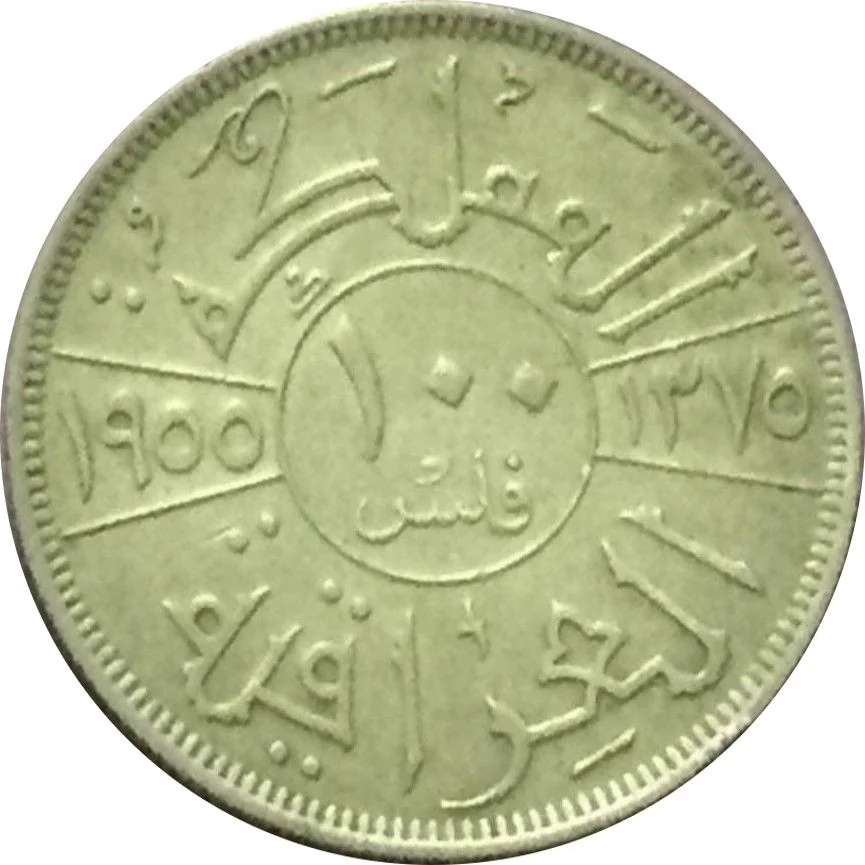
100 Fils – Hashemite Kingdom
Jordan
Context
Year: 1955
Islamic (Hijri) Year: 1375
Country: Jordan 
Issuer: Hashemite Kingdom
Ruler: Faisal II
Currency:
(since 1931)
Demonetized: Yes
Material
References
Numista: #102681
Value
Exchange value: 0.100 IQD
Bullion value: $14.41
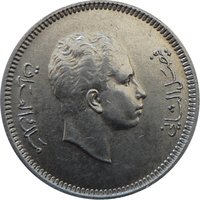
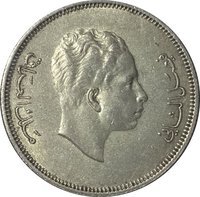
Obverse
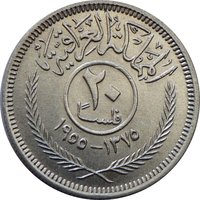
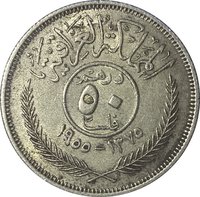
Reverse
Edge
Mintings
| Year | Mint Mark | Mintage | Quality | Collection |
|---|---|---|---|---|
| 1955 | — | — |
Historical background
In 1955, the Hashemite Kingdom of Jordan operated under a currency board system, a legacy of the British Mandate. The official currency was the Jordanian Dinar (JOD), which was pegged at par to the British Pound Sterling (GBP). This arrangement provided significant stability and confidence, as the dinar was fully backed by sterling reserves held in London. The system effectively outsourced Jordan's monetary policy to the Bank of England, ensuring low inflation and a reliable exchange rate, which was crucial for a small, trade-dependent kingdom with limited natural resources.
However, this stability came with constraints. Jordan's money supply was directly tied to its holdings of foreign exchange, primarily sterling, limiting the government's ability to finance development projects or respond to economic shocks through independent monetary policy. The economy was also heavily reliant on British budgetary subsidies and the annual grant from the United Kingdom, which was a key source of the foreign reserves that backed the dinar. This financial dependency mirrored Jordan's broader geopolitical alignment with the West during the early Cold War period.
The year 1955 itself was one of growing political and economic pressures. King Hussein, who had assumed full constitutional powers the previous year, faced rising Arab nationalism and the need for costly domestic development. While the currency board maintained formal stability, the kingdom's underlying fiscal position was fragile. The situation would soon lead to a significant shift; within a few years, Jordan would establish its own central bank (the Central Bank of Jordan in 1964) to gain greater control over monetary policy, marking the beginning of the end for the strict currency board system.
However, this stability came with constraints. Jordan's money supply was directly tied to its holdings of foreign exchange, primarily sterling, limiting the government's ability to finance development projects or respond to economic shocks through independent monetary policy. The economy was also heavily reliant on British budgetary subsidies and the annual grant from the United Kingdom, which was a key source of the foreign reserves that backed the dinar. This financial dependency mirrored Jordan's broader geopolitical alignment with the West during the early Cold War period.
The year 1955 itself was one of growing political and economic pressures. King Hussein, who had assumed full constitutional powers the previous year, faced rising Arab nationalism and the need for costly domestic development. While the currency board maintained formal stability, the kingdom's underlying fiscal position was fragile. The situation would soon lead to a significant shift; within a few years, Jordan would establish its own central bank (the Central Bank of Jordan in 1964) to gain greater control over monetary policy, marking the beginning of the end for the strict currency board system.
✨ Legendary