

⅕ Crown (Penny Black Stamp) – Isle of Man
Non-circulating coins
Commemoration: 150th anniversary of the Penny Black Stamp
Series: Penny Black Stamp
Context
Year: 1990
Country: British Crown dependencies
Issuer: Isle of Man 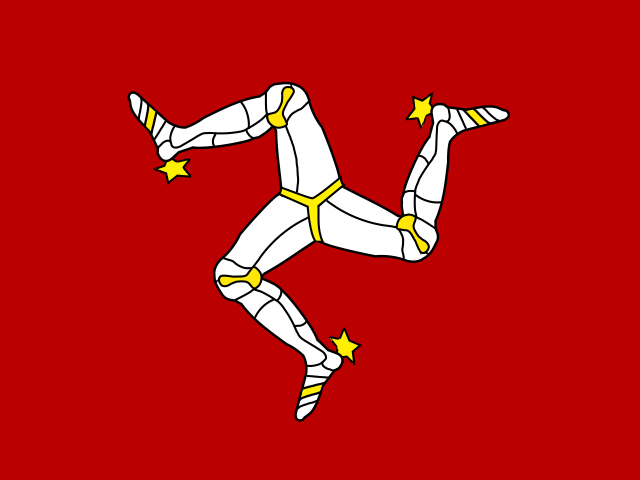
Ruler: Elizabeth II
Currency:
(since 1970)
Total mintage: 150
Material
References
Numista: #389070
Value
Bullion value: $0.00
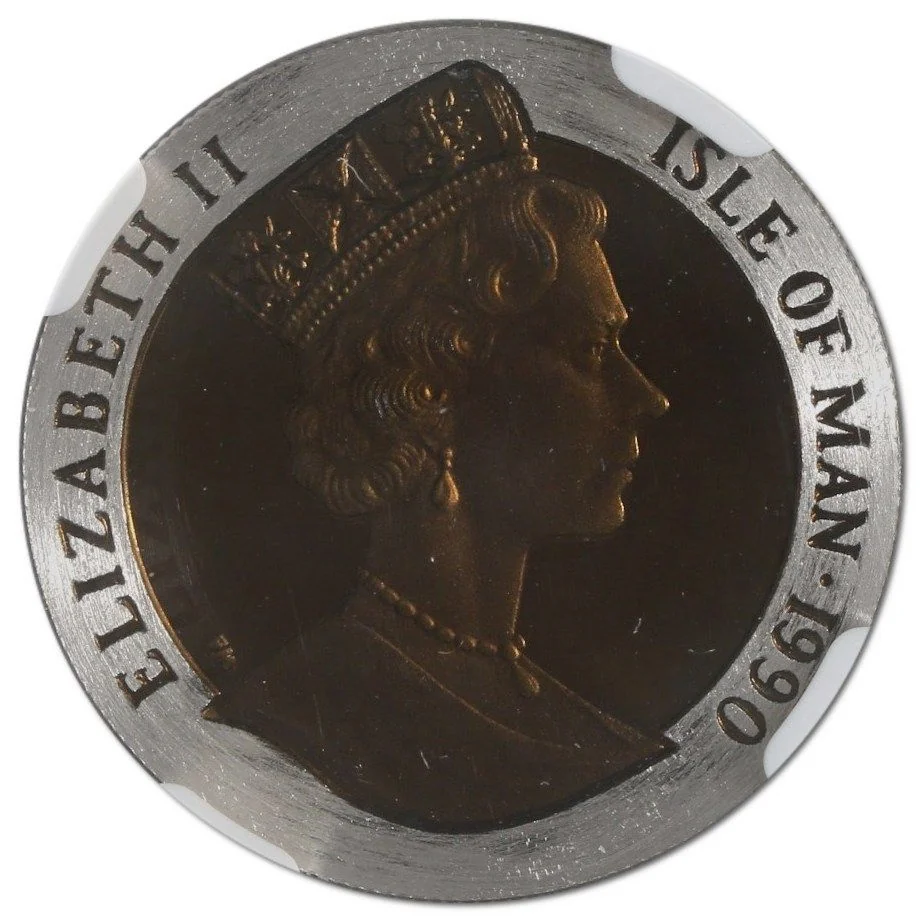
Obverse
Description:
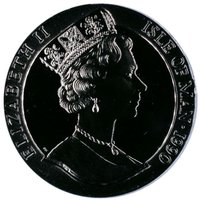
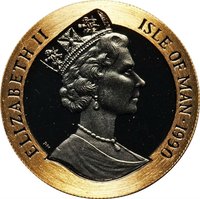
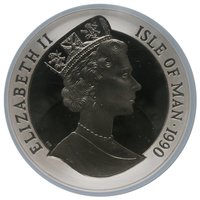
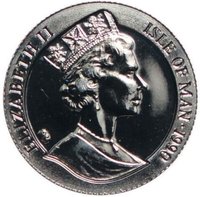
Queen Elizabeth II right-facing bust with George IV State Diadem, surrounded by incused legend and date.
Inscription:
ELIZABETH II ISLE OF MAN · 1990
RDM
PM
RDM
PM
Translation:
ELIZABETH II ISLE OF MAN · 1990
RDM
PM
RDM
PM
Script: Latin
Language: English
Designer: Raphael David Maklouf
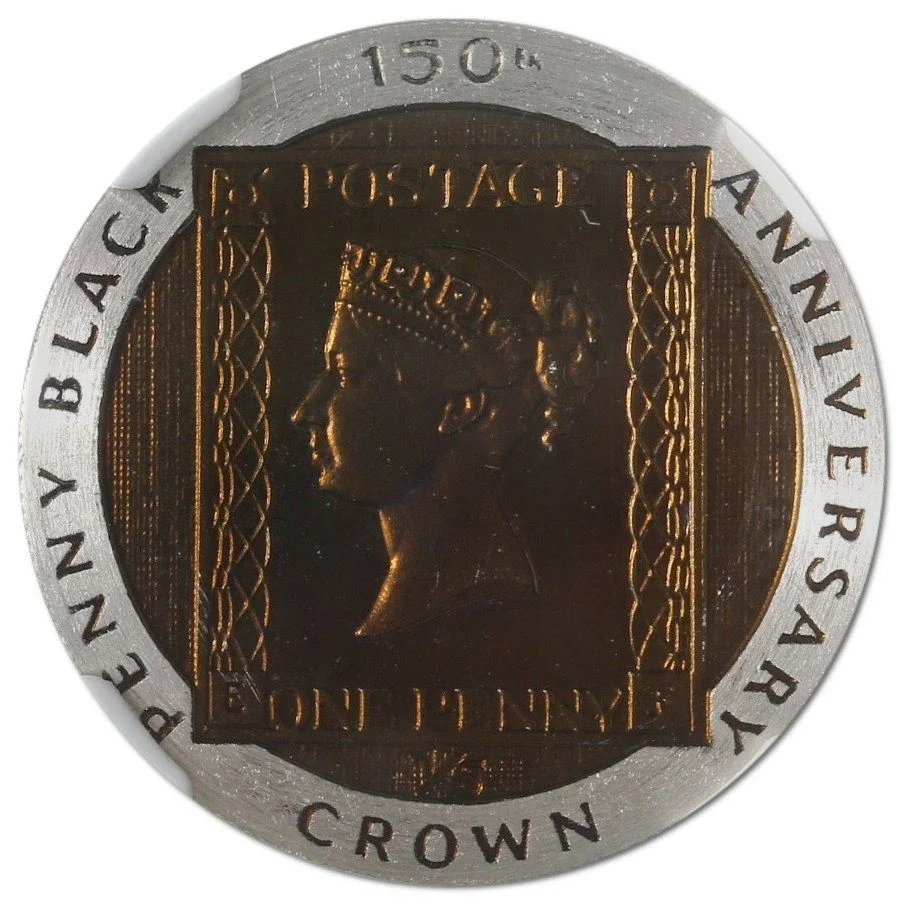
Reverse
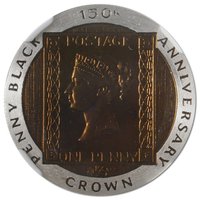
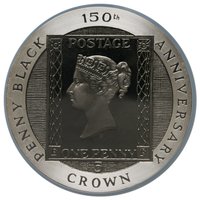
Description:
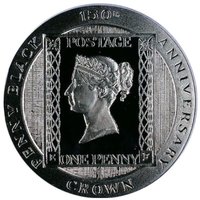
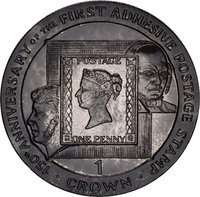
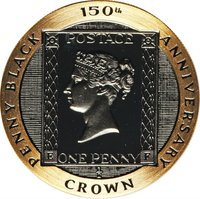
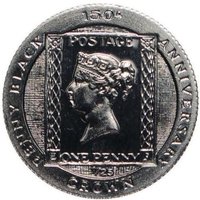
Black central design above value.
Inscription:
PENNY BLACK 150TH ANNIVERSARY
POSTAGE
E ONE PENNY F
1/5
CROWN
POSTAGE
E ONE PENNY F
1/5
CROWN
Script: Latin
Edge
Reeded
Categories
| Currency> Stamp depiction |
| Person> Monarch |
Mints
| Name | Mark |
|---|---|
| Pobjoy Mint | (PM) |
Mintings
| Year | Mint Mark | Mintage | Quality | Collection |
|---|---|---|---|---|
| 1990 | PM | 150 | Proof |
Historical background
In 1990, the Isle of Man's currency situation was defined by its unique political status as a British Crown Dependency. While not part of the United Kingdom, the Island maintained a long-standing currency union with the UK, meaning the UK pound sterling (£) was the official currency and legal tender. The Isle of Man government, through its Treasury, issued its own distinct banknotes and coins, known as Manx pounds. These bore local designs and symbols but were pegged at a strict 1:1 parity with sterling, requiring the Manx authorities to hold sufficient sterling reserves to fully back their issue.
This system provided stability and facilitated seamless trade and financial transactions with the Island's dominant economic partner, the UK. However, it also meant the Isle of Man had no independent monetary policy; interest rates and broader monetary conditions were set by the Bank of England in London. The year 1990 fell within a period of high interest rates in the UK as the government sought to control inflation, which consequently applied to the Isle of Man, impacting local borrowing and economic activity.
The period also highlighted the Island's growing focus on its offshore financial services sector. The stability provided by the sterling link was a key pillar in attracting banking and investment business. While discussions about greater fiscal and economic autonomy were ongoing, there was no serious move to break the currency link in 1990. The system was, and remains, a cornerstone of the Manx economy, balancing the benefits of UK monetary stability with the symbolic and practical expression of its domestic autonomy through its own note issue.
This system provided stability and facilitated seamless trade and financial transactions with the Island's dominant economic partner, the UK. However, it also meant the Isle of Man had no independent monetary policy; interest rates and broader monetary conditions were set by the Bank of England in London. The year 1990 fell within a period of high interest rates in the UK as the government sought to control inflation, which consequently applied to the Isle of Man, impacting local borrowing and economic activity.
The period also highlighted the Island's growing focus on its offshore financial services sector. The stability provided by the sterling link was a key pillar in attracting banking and investment business. While discussions about greater fiscal and economic autonomy were ongoing, there was no serious move to break the currency link in 1990. The system was, and remains, a cornerstone of the Manx economy, balancing the benefits of UK monetary stability with the symbolic and practical expression of its domestic autonomy through its own note issue.
Series: Penny Black Stamp

✨ Legendary