

5 pounds – Gibraltar
Add to wishlist
United Kingdom
Context
Year: 2006
Country: United Kingdom
Issuer: Gibraltar
Ruler: Elizabeth II
Currency:
(since 1971)
Total mintage: 10,000
Material
References
KM: #
Numista: #388813
Value
Exchange value: 5 GIP
Bullion value: $65.55
Inflation-adjusted value: 9.54 GIP
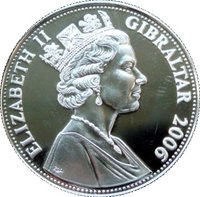
Obverse
Description:
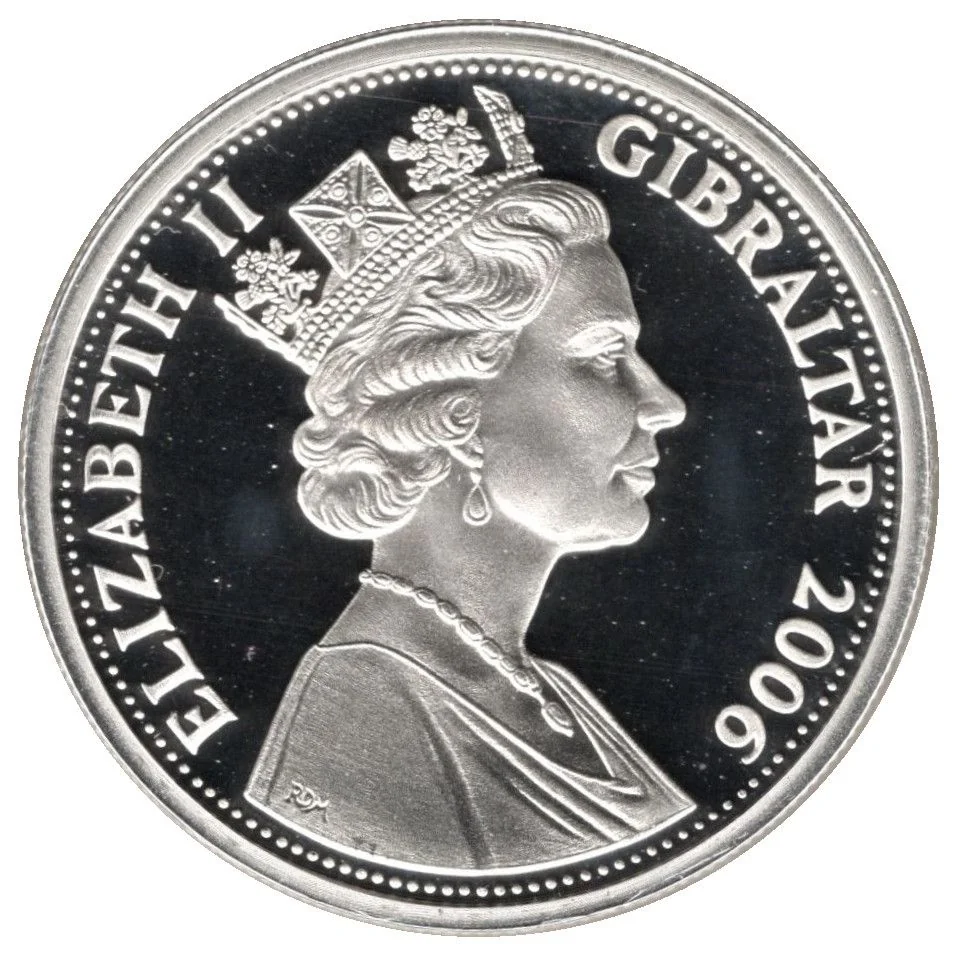
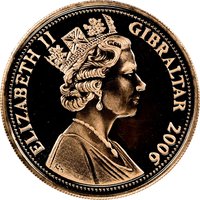
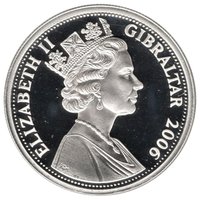
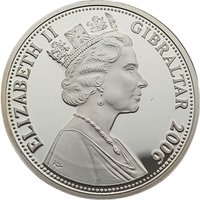
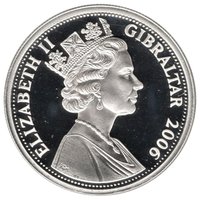
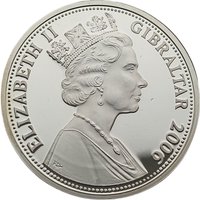
Queen Elizabeth II facing right, wearing the George IV State Diadem.
Inscription:
ELIZABETH II GIBRALTAR 2006
RDM
RDM
Script: Latin
Engraver: Raphael David Maklouf
Reverse
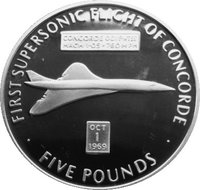
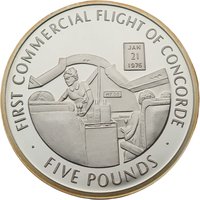
Description:
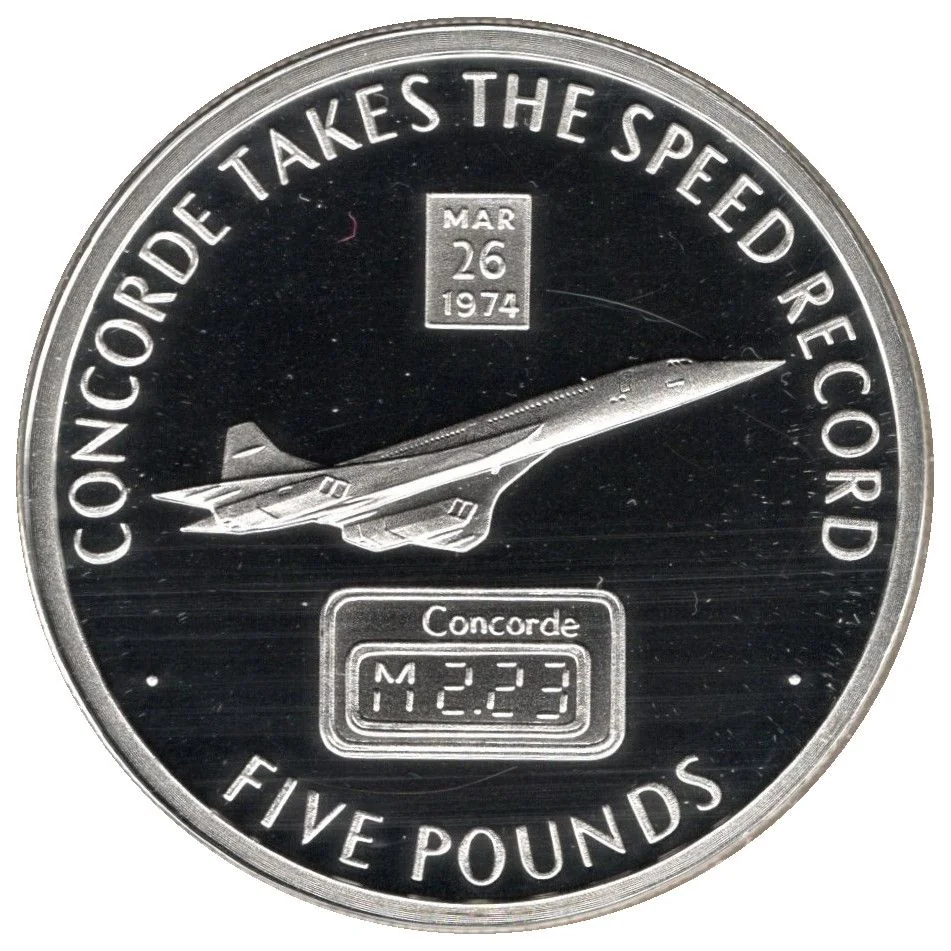
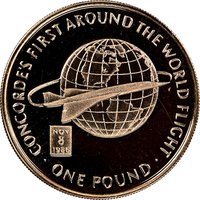
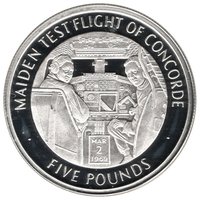
Concorde sets speed record.
Inscription:
CONCORDE TAKES THE SPEED RECORD
MAR 26 1974
Concorde
M 2.23
FIVE POUNDS
MAR 26 1974
Concorde
M 2.23
FIVE POUNDS
Script: Latin
Edge
Reeded
Categories
| Transportation> Aircraft |
Mints
| Name | Mark |
|---|---|
| Tower Mint | — |
Mintings
| Year | Mint Mark | Mintage | Quality | Collection |
|---|---|---|---|---|
| 2006 | — | 10,000 | Proof |
Historical background
In 2006, Gibraltar's currency situation was defined by its unique political status and its practical economic integration with a major neighbour. As a British Overseas Territory, the official currency was (and remains) the Gibraltar pound (GIP), issued by the Government of Gibraltar. This currency was pegged at par with the British pound sterling (GBP), meaning one GIP always equaled one GBP. Sterling itself circulated freely and interchangeably alongside the locally issued notes, forming a de facto dual-currency system where both were legal tender within the territory.
This arrangement, however, existed alongside the widespread and daily use of the euro. Gibraltar's economy is deeply intertwined with that of neighbouring Spain, with significant cross-border flow of workers, tourists, and goods. Consequently, many retail businesses, especially those in the main town centre catering to visitors, readily accepted euros, though often at exchange rates less favourable than the official bank rate. This created a pragmatic multi-currency environment where sterling was dominant for government transactions and local salaries, but the euro was a familiar and necessary part of commercial life.
The year 2006 fell within the period following the UK's decision to retain sterling and not adopt the euro, a choice that extended to Gibraltar. While there had been historical discussions about the potential benefits of euro adoption to facilitate trade with the surrounding region, these were largely settled by the UK's national referendum stance. Therefore, the 2006 status quo was stable: a sterling-based economy with a locally issued pegged currency, operating in a border region where the euro was a frequent and complementary transactional medium, reflecting Gibraltar's hybrid identity as a British territory with deep European connections.
This arrangement, however, existed alongside the widespread and daily use of the euro. Gibraltar's economy is deeply intertwined with that of neighbouring Spain, with significant cross-border flow of workers, tourists, and goods. Consequently, many retail businesses, especially those in the main town centre catering to visitors, readily accepted euros, though often at exchange rates less favourable than the official bank rate. This created a pragmatic multi-currency environment where sterling was dominant for government transactions and local salaries, but the euro was a familiar and necessary part of commercial life.
The year 2006 fell within the period following the UK's decision to retain sterling and not adopt the euro, a choice that extended to Gibraltar. While there had been historical discussions about the potential benefits of euro adoption to facilitate trade with the surrounding region, these were largely settled by the UK's national referendum stance. Therefore, the 2006 status quo was stable: a sterling-based economy with a locally issued pegged currency, operating in a border region where the euro was a frequent and complementary transactional medium, reflecting Gibraltar's hybrid identity as a British territory with deep European connections.
Series: Concorde Milestones
✨ Legendary