

100 Won (5th Republic) – South Korea
Circulating commemorative coins
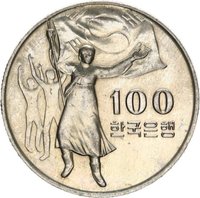
Commemoration: 1st Anniversary of the 5th Republic
South Korea
Context
References
KM: #Click to copy to clipboard24
Numista: #14289
Value
Exchange value: 100 KRW = $0.07
Inflation-adjusted value: 552.60 KRW
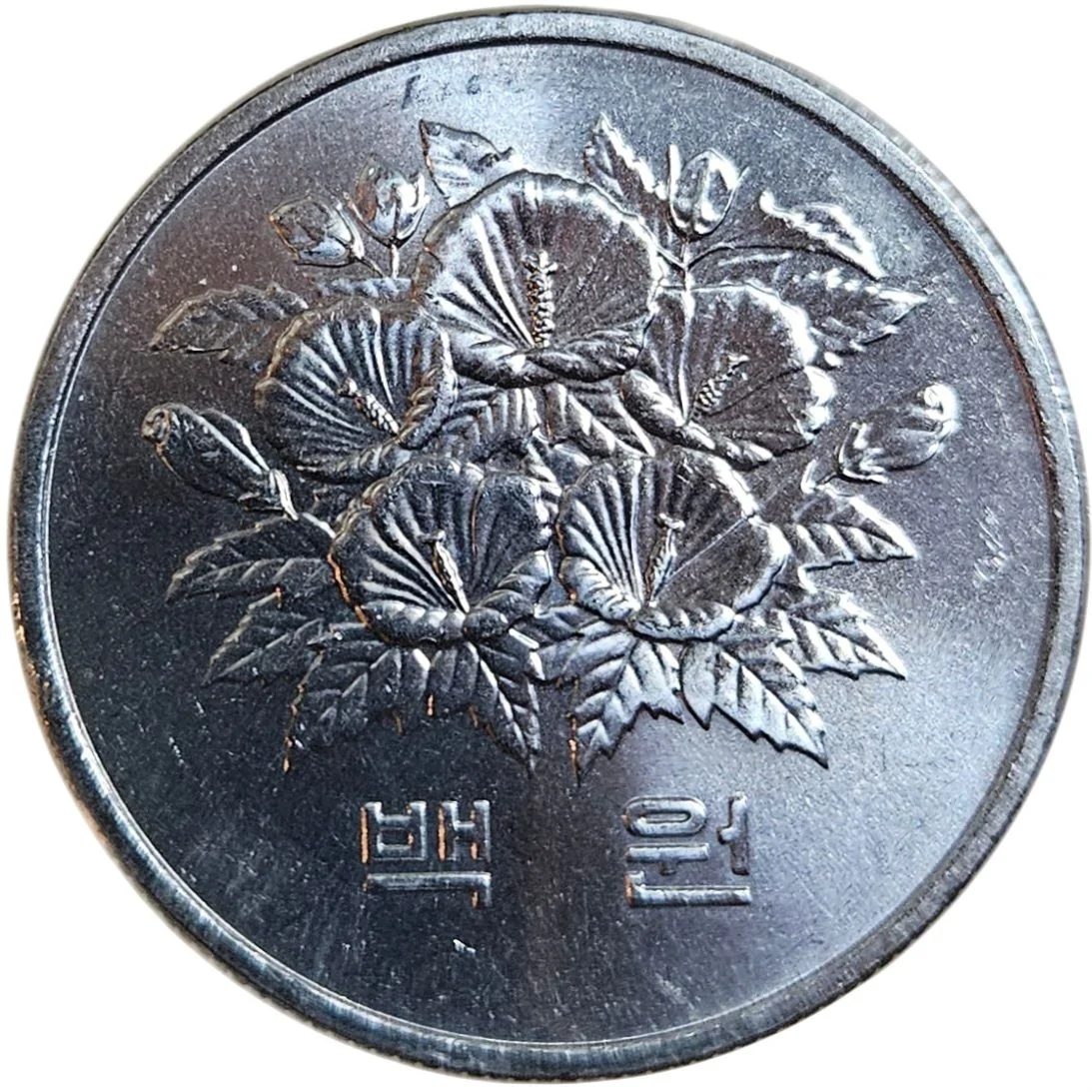
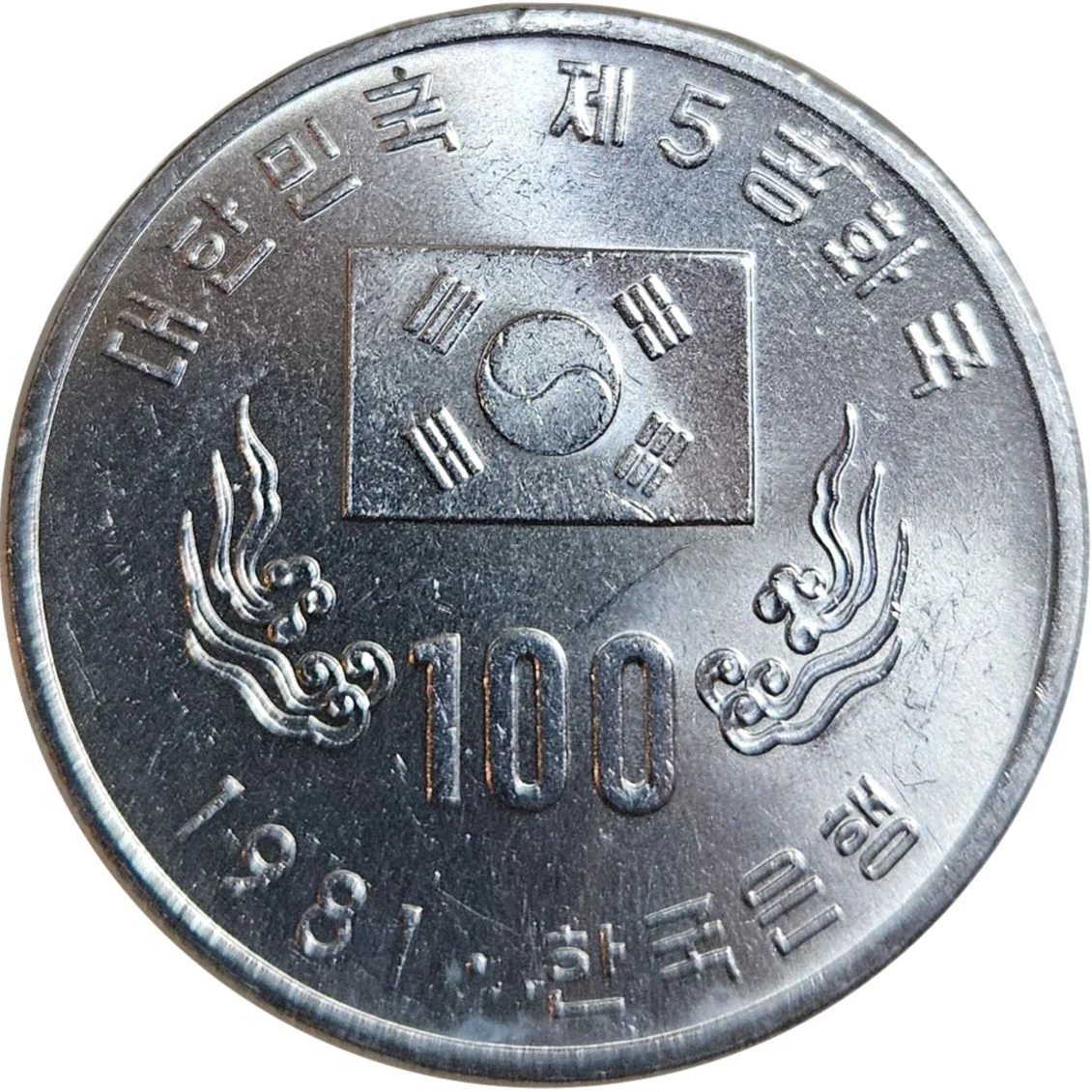
Obverse
Reverse
Edge
© jabin2001
Mints
| Name | Mark |
|---|---|
| Korea Minting and Security Printing Corporation | — |
Mintings
| Year | Mint Mark | Mintage | Quality | Collection |
|---|---|---|---|---|
| 1981 | — | 4,980,000 | ||
| 1981 | — | 2,000 | Proof |
Historical background
In 1981, South Korea's currency situation was characterized by a tightly controlled and undervalued won, operating under a fixed exchange rate system managed by the authoritarian government of President Chun Doo-hwan. The official exchange rate was pegged to a basket of currencies, heavily weighted toward the U.S. dollar, and maintained at approximately 700 won per dollar. This policy was a cornerstone of the nation's export-led industrialization strategy, as an artificially cheap won made Korean goods—like textiles, ships, and electronics—highly competitive in international markets, fueling the rapid economic growth of the "Miracle on the Han River."
However, this rigid control came with significant distortions and pressures. The fixed exchange rate, combined with high domestic inflation and a growing current account deficit, led to a substantial overvaluation of the currency in real terms. This created a thriving black market for foreign exchange and encouraged capital flight, as businesses and individuals sought to circumvent strict controls. The government's heavy intervention in the foreign exchange market also drained foreign reserves and required strict capital controls, insulating the financial system but limiting its efficiency and integration with the global economy.
The situation in 1981 was ultimately unsustainable, setting the stage for major reforms later in the decade. Mounting external pressures, particularly from trading partners like the United States demanding currency appreciation and market liberalization, forced a gradual shift. This culminated in 1987 with a significant devaluation and a move toward a managed floating exchange rate system, marking the beginning of a slow and cautious liberalization of South Korea's capital and foreign exchange markets as the country continued its ascent as an industrial power.
However, this rigid control came with significant distortions and pressures. The fixed exchange rate, combined with high domestic inflation and a growing current account deficit, led to a substantial overvaluation of the currency in real terms. This created a thriving black market for foreign exchange and encouraged capital flight, as businesses and individuals sought to circumvent strict controls. The government's heavy intervention in the foreign exchange market also drained foreign reserves and required strict capital controls, insulating the financial system but limiting its efficiency and integration with the global economy.
The situation in 1981 was ultimately unsustainable, setting the stage for major reforms later in the decade. Mounting external pressures, particularly from trading partners like the United States demanding currency appreciation and market liberalization, forced a gradual shift. This culminated in 1987 with a significant devaluation and a move toward a managed floating exchange rate system, marking the beginning of a slow and cautious liberalization of South Korea's capital and foreign exchange markets as the country continued its ascent as an industrial power.
🌱 Fairly Common