

10 bahts (Fine Arts Department) – Thailand
Add to wishlist
Circulating commemorative coins
Commemoration: Centenary of Fine Arts Department
Thailand
Context
Year: 2011
Thai Year:: 2554
Issuer: Thailand
Ruler: Bhumibol Adulyadej
Currency:
(since 1897)
Total mintage: 2,000,000
Material
References
Y: #
Numista: #38746
Value
Exchange value: 10 THB
Obverse
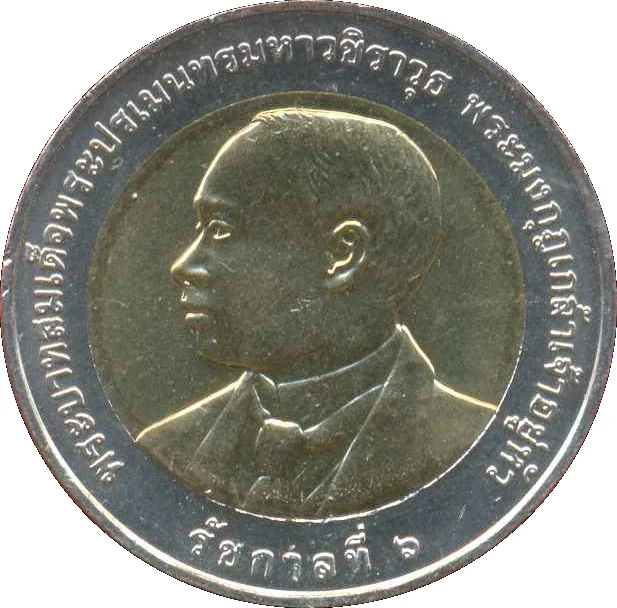
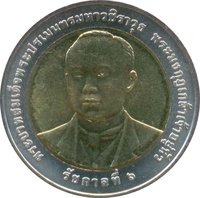
Description:
King's left-facing bust.
Inscription:
พระบาทสมเด็จพระปรเมนทรมหาวชิราวุธ พระมงกุฏเกล้าเจ้าอยู่หัว
รัชกาลที่ ๖
รัชกาลที่ ๖
Translation:
His Majesty King Vajiravudh, the royal adornment of the head, the King.
The Sixth Reign.
The Sixth Reign.
Language: Thai
Reverse
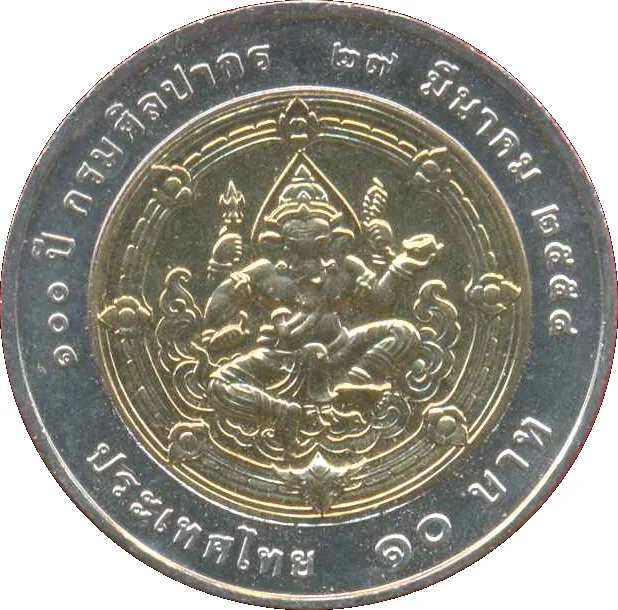
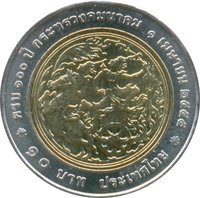
Description:
Remover of obstacles, god of beginnings.
Inscription:
๑๐๐ ปี กรมศิลปากร ๒๗่ มีนาคม ๒๕๕๔
ประเทศไทย ๑๐ บาท
ประเทศไทย ๑๐ บาท
Translation:
100 Years Fine Arts Department 27 March 2011
Thailand 10 Baht
Thailand 10 Baht
Language: Thai
Edge
Segmented reeding
Mintings
| Year | Mint Mark | Mintage | Quality | Collection |
|---|---|---|---|---|
| 2011 | — | 2,000,000 |
Historical background
In 2011, Thailand's currency, the baht (THB), was a focal point of economic tension and policy challenge. The baht had appreciated significantly in the preceding years, reaching a 13-year high against the US dollar in early 2011. This strength was driven by Thailand's robust economic recovery from the 2008 global financial crisis, persistent current account surpluses, and strong capital inflows attracted by the country's higher interest rates compared to developed markets. However, this appreciation hurt the competitiveness of Thailand's crucial export sector, which accounted for over 60% of GDP, causing concern among businesses and policymakers.
The government, led by Prime Minister Yingluck Shinawatra who took office in August, faced a difficult balancing act. On one hand, there was pressure to intervene to weaken the baht and protect exporters. On the other, aggressive intervention to buy US dollars risked fueling domestic inflation and drawing criticism from trading partners for currency manipulation. The Bank of Thailand (BOT) implemented a series of measures, including cutting interest rates in late 2011 and imposing reserve requirements on non-resident baht accounts to deter speculative short-term inflows. These "capital flow management" tools aimed to reduce volatility without fully reversing the currency's trend.
The situation was further complicated by catastrophic flooding in the latter half of 2011, which severely disrupted manufacturing supply chains and dampened economic growth. This natural disaster temporarily reduced capital inflows and eased some appreciation pressure on the baht, but the core dilemma remained unresolved. Thus, 2011 ended with the authorities cautiously navigating between supporting post-flood recovery, managing inflation, and containing a strong currency, setting the stage for ongoing policy debates in the years to follow.
The government, led by Prime Minister Yingluck Shinawatra who took office in August, faced a difficult balancing act. On one hand, there was pressure to intervene to weaken the baht and protect exporters. On the other, aggressive intervention to buy US dollars risked fueling domestic inflation and drawing criticism from trading partners for currency manipulation. The Bank of Thailand (BOT) implemented a series of measures, including cutting interest rates in late 2011 and imposing reserve requirements on non-resident baht accounts to deter speculative short-term inflows. These "capital flow management" tools aimed to reduce volatility without fully reversing the currency's trend.
The situation was further complicated by catastrophic flooding in the latter half of 2011, which severely disrupted manufacturing supply chains and dampened economic growth. This natural disaster temporarily reduced capital inflows and eased some appreciation pressure on the baht, but the core dilemma remained unresolved. Thus, 2011 ended with the authorities cautiously navigating between supporting post-flood recovery, managing inflation, and containing a strong currency, setting the stage for ongoing policy debates in the years to follow.
🌱 Common