

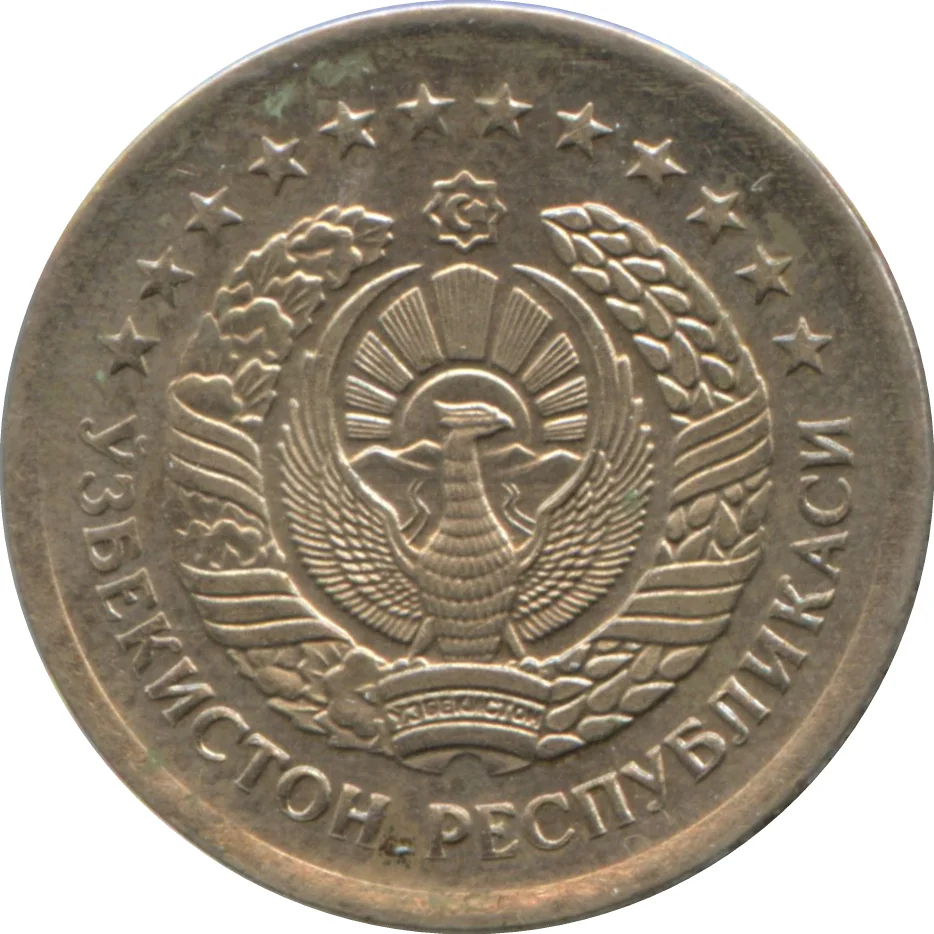
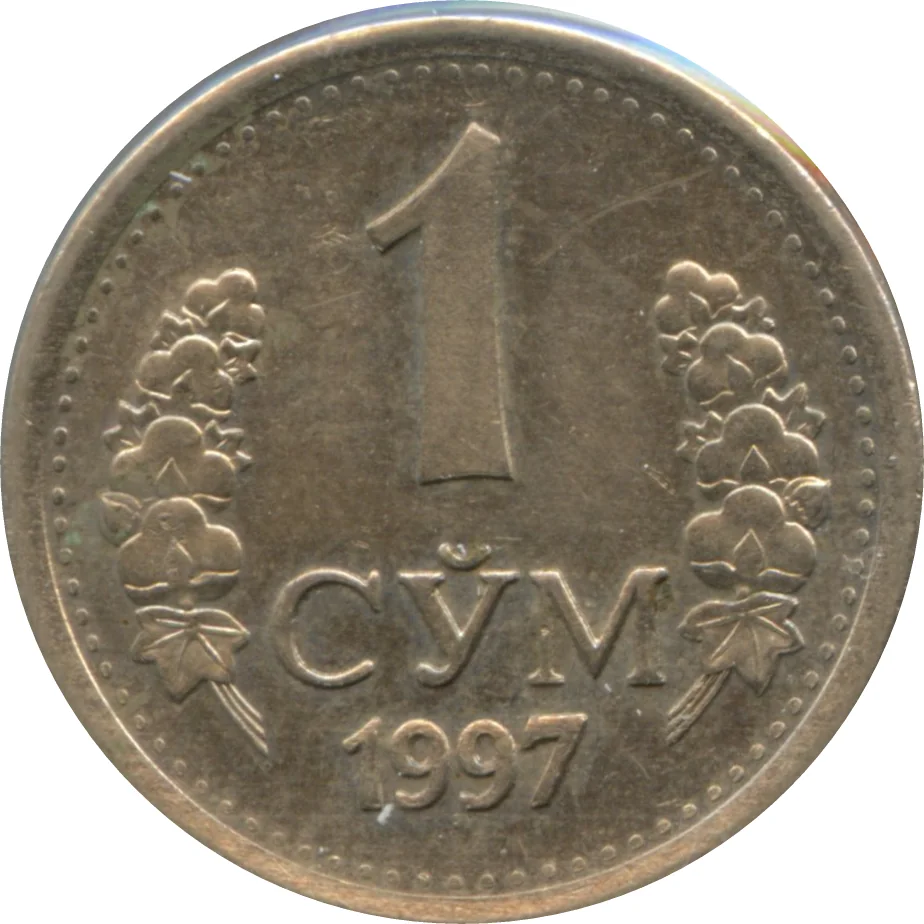
1 soʻm – Uzbekistan
Add to wishlist
Uzbekistan
Context
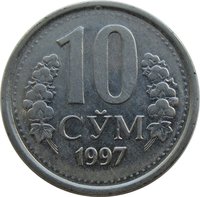
Years: 1997–2000
Issuer: Uzbekistan
Period:
(since 1991)
Currency:
(since 1994)
Demonetization: 1 March 2020
Material
References
KM: #
Numista: #3872
Value
Exchange value: 1 UZS
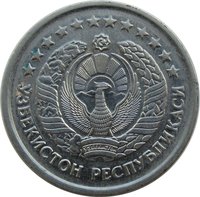
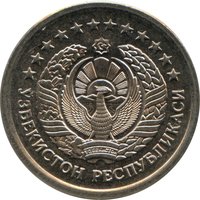
Obverse
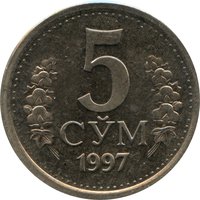
Reverse
Edge
Plain
Categories
| Animal> Bird |
| Mythology> Fantastic animal |
| Symbols> Coat of Arms |
| Symbol> Sun |
Mintings
| Year | Mint Mark | Mintage | Quality | Collection |
|---|---|---|---|---|
| 1997 | — | — | ||
| 1998 | — | — | ||
| 1999 | — | — | ||
| 2000 | — | — |
Historical background
In 1997, Uzbekistan was navigating the complex aftermath of the Soviet collapse, operating with a dual-currency system that severely distorted its economy. The national currency, the som-coupon, introduced in 1993, circulated alongside the Russian ruble and, more importantly, existed in parallel with a vastly different "hard currency" black market. The government maintained an official exchange rate that was grossly overvalued—pegged at around 40 som to the US dollar—while the real, black-market rate was closer to 300 som per dollar. This enormous gap created a crippling shortage of foreign currency, stifled foreign investment, and encouraged widespread corruption as access to official rates was a privilege granted to state-connected enterprises.
The government's response was characterized by strict protectionist measures and administrative control. To conserve hard currency, Uzbekistan imposed severe import restrictions and complex licensing regimes, leading to frequent shortages of consumer goods. The central bank rationed foreign exchange, creating a system where the state dictated economic priorities, often to the detriment of private businesses and ordinary citizens who were forced to rely on the black market for any meaningful foreign transactions. This environment fostered a large shadow economy, estimated to be as large as the official one, and isolated Uzbekistan from international financial institutions and markets.
The situation in 7 set the stage for a pivotal, though limited, reform. Under mounting pressure from the IMF and facing deepening economic isolation, the government took a significant step in October 1997 by introducing a new, unified som (UZS) to replace the som-coupon. While this formally abolished the dual system, the reform was incomplete; the government initially maintained a fixed, still-overvalued official rate for the new som alongside the persistent black market. Thus, 1997 ended not with a resolution, but with a crucial yet tentative move towards currency unification, leaving the core issues of convertibility and liberalization unaddressed until more substantial reforms in the early 2000s.
The government's response was characterized by strict protectionist measures and administrative control. To conserve hard currency, Uzbekistan imposed severe import restrictions and complex licensing regimes, leading to frequent shortages of consumer goods. The central bank rationed foreign exchange, creating a system where the state dictated economic priorities, often to the detriment of private businesses and ordinary citizens who were forced to rely on the black market for any meaningful foreign transactions. This environment fostered a large shadow economy, estimated to be as large as the official one, and isolated Uzbekistan from international financial institutions and markets.
The situation in 7 set the stage for a pivotal, though limited, reform. Under mounting pressure from the IMF and facing deepening economic isolation, the government took a significant step in October 1997 by introducing a new, unified som (UZS) to replace the som-coupon. While this formally abolished the dual system, the reform was incomplete; the government initially maintained a fixed, still-overvalued official rate for the new som alongside the persistent black market. Thus, 1997 ended not with a resolution, but with a crucial yet tentative move towards currency unification, leaving the core issues of convertibility and liberalization unaddressed until more substantial reforms in the early 2000s.
🌱 Common