

25 cents – Canada
Add to wishlist
Canada
Context
Years: 1968–1978
Issuer: Canada
Ruler: Elizabeth II
Currency:
(since 1858)
Total mintage: 814,648,307
Material
References
KM: #
Numista: #3863
Value
Exchange value: 0.25 CAD
Inflation-adjusted value: 2.24 CAD
Obverse
Description:
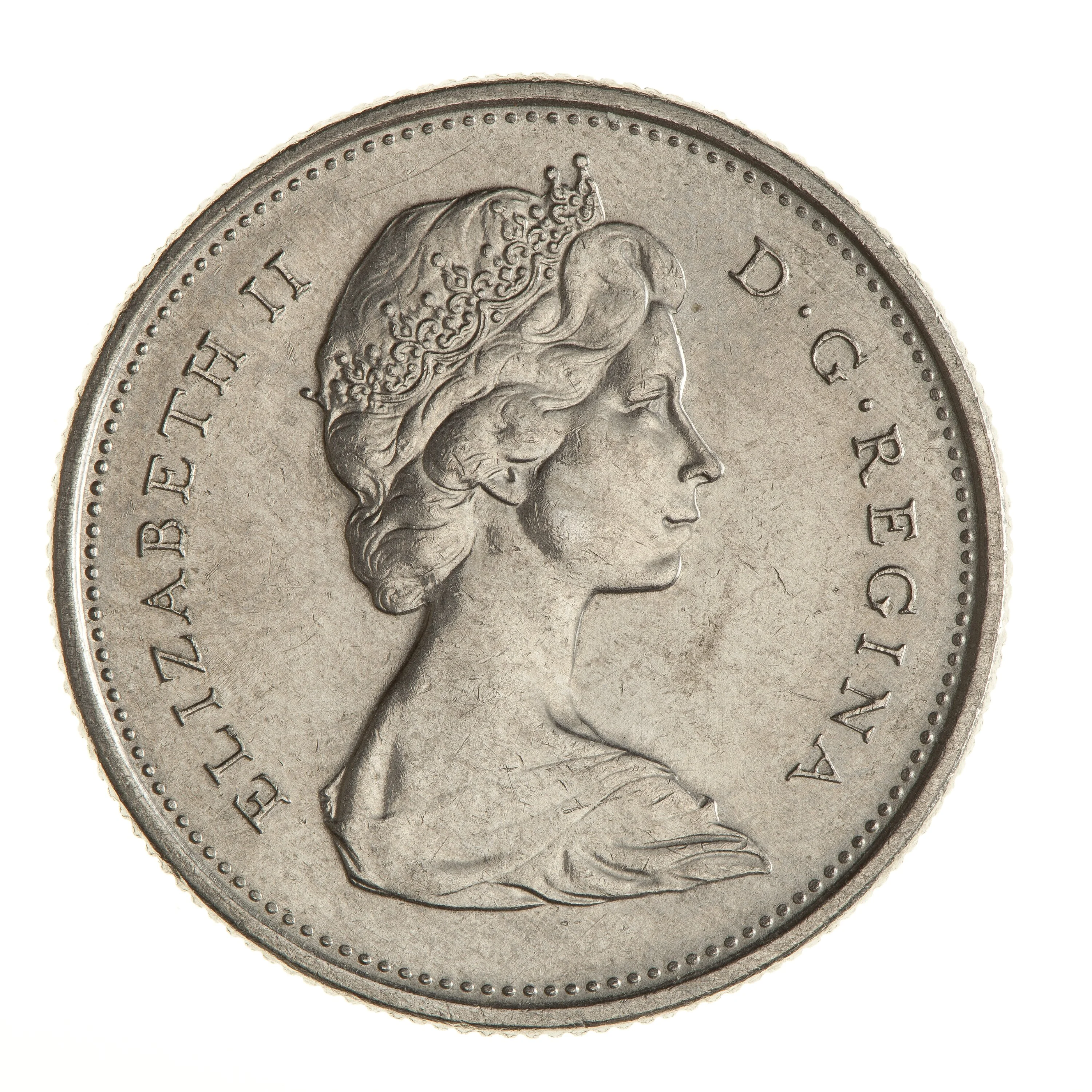
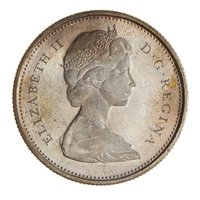
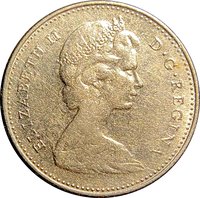
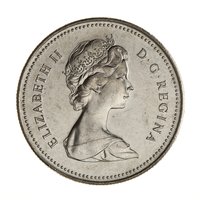
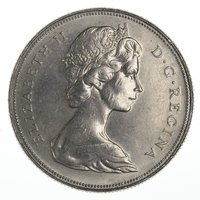
Bust of Queen Elizabeth II at age 37, wearing a tiara and facing right.
Inscription:
ELIZABETH II D·G·REGINA
Translation:
Elizabeth II by the Grace of God Queen
Script: Latin
Designer: Arnold Machin
Reverse
Description:
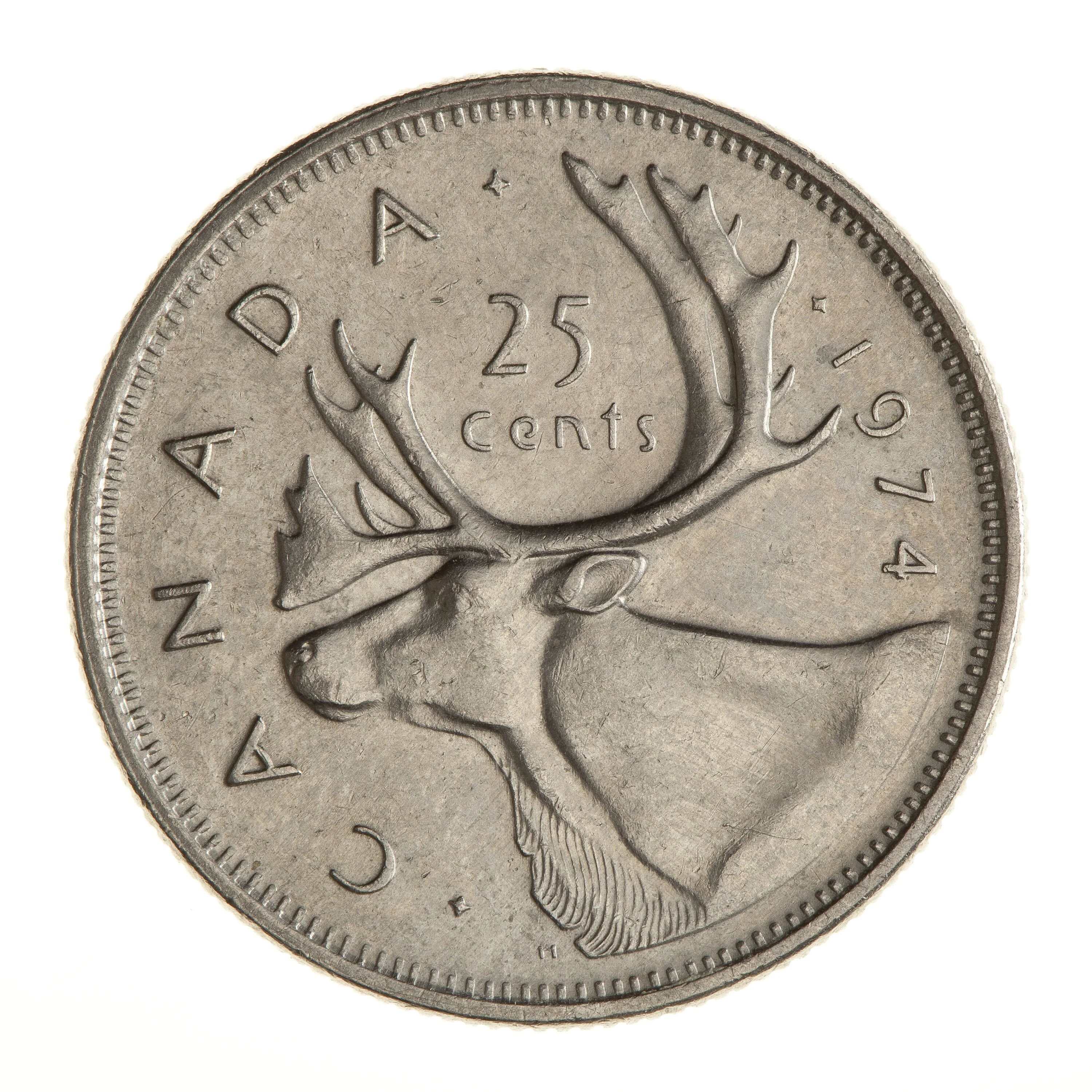
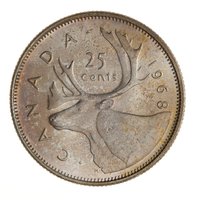
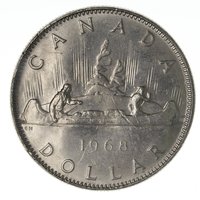
A caribou with its face value, encircled by "CANADA".
Inscription:
CANADA 1974
25
Cents
H
25
Cents
H
Script: Latin
Engraver: Emanuel Otto Hahn
Edge
Reeded
Mints
| Name | Mark |
|---|---|
| Royal Canadian Mint of Ottawa | — |
| Royal Canadian Mint of Winnipeg | — |
Mintings
| Year | Mint Mark | Mintage | Quality | Collection |
|---|---|---|---|---|
| 1968 | — | 88,686,931 | ||
| 1968 | — | 521,641 | Prooflike | |
| 1969 | — | — | ||
| 1969 | — | 326,203 | Prooflike | |
| 1970 | — | 349,120 | Prooflike | |
| 1970 | — | — | ||
| 1971 | — | 48,170,428 | ||
| 1971 | — | 253,311 | Prooflike | |
| 1971 | — | 33,517 | BU | |
| 1972 | — | 43,743,387 | ||
| 1972 | — | 224,275 | Prooflike | |
| 1972 | — | 38,198 | BU | |
| 1974 | — | 192,360,598 | ||
| 1974 | — | 213,589 | Prooflike | |
| 1974 | — | 44,296 | BU | |
| 1975 | — | 252,259,000 | ||
| 1975 | — | 36,581 | BU | |
| 1975 | — | 197,372 | Prooflike | |
| 1976 | — | 86,898,261 | ||
| 1976 | — | 171,737 | Prooflike | |
| 1977 | — | 99,634,555 | ||
| 1977 | — | 225,307 | Prooflike | |
| 1978 | — | 260,000 | Prooflike | |
| 1978 | — | — |
Historical background
In 1968, Canada's currency was in a period of significant transition, marked by the final phase of a multi-year process to introduce a new, fully Canadian dollar. Since 1935, Canada's banknotes had been printed by the British American Bank Note Company, often featuring the portrait of the British monarch. However, the 1967 centennial celebrations had catalyzed a push for a distinct national identity, leading to the establishment of the Bank of Canada's own printing plant in Ottawa. By 1968, this facility was ramping up production of the new "Canadian Landscape" series, which began issuance in 1969. These notes were a bold departure, replacing monarchs with iconic Canadian scenes, such as the fishing fleet at Lunenburg, Nova Scotia, symbolizing a move toward visual sovereignty.
Economically, the year was dominated by international monetary pressures and domestic inflation concerns. The global currency system, established under the Bretton Woods agreement, was under severe strain, with the U.S. dollar as the anchor. As a major trading partner with the U.S., Canada felt these reverberations acutely. Domestically, inflation was rising, prompting the Bank of Canada, under Governor Louis Rasminsky, to maintain a tight monetary policy. The Canadian dollar was floating, a system it had uniquely adopted since 1950, which provided some insulation but required careful management to control capital flows and stabilize prices amidst worldwide financial uncertainty.
Furthermore, 1968 saw the continued circulation of the old "Devil's Head" portrait series of Queen Elizabeth II, creating a brief period where two distinct note families were in public use. The government and central bank were actively managing this logistical changeover while also preparing the public for the new, more secure notes. Thus, the currency situation in 1968 was one of tangible change, caught between the symbolic legacy of the British Commonwealth and the emerging assertion of a modern Canadian identity, all while navigating a complex and turbulent international economic landscape.
Economically, the year was dominated by international monetary pressures and domestic inflation concerns. The global currency system, established under the Bretton Woods agreement, was under severe strain, with the U.S. dollar as the anchor. As a major trading partner with the U.S., Canada felt these reverberations acutely. Domestically, inflation was rising, prompting the Bank of Canada, under Governor Louis Rasminsky, to maintain a tight monetary policy. The Canadian dollar was floating, a system it had uniquely adopted since 1950, which provided some insulation but required careful management to control capital flows and stabilize prices amidst worldwide financial uncertainty.
Furthermore, 1968 saw the continued circulation of the old "Devil's Head" portrait series of Queen Elizabeth II, creating a brief period where two distinct note families were in public use. The government and central bank were actively managing this logistical changeover while also preparing the public for the new, more secure notes. Thus, the currency situation in 1968 was one of tangible change, caught between the symbolic legacy of the British Commonwealth and the emerging assertion of a modern Canadian identity, all while navigating a complex and turbulent international economic landscape.
Series: 1968 Canada circulation coins
🌱 Very Common