

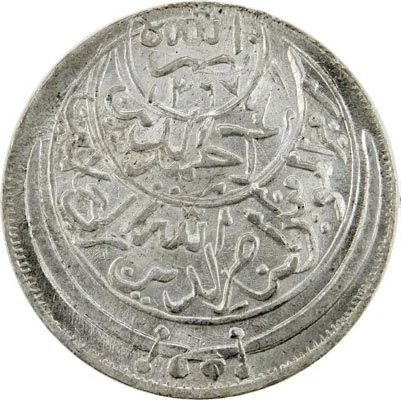
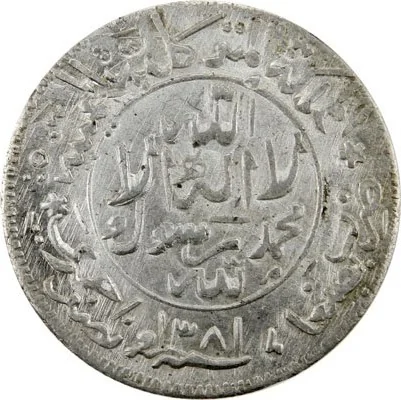
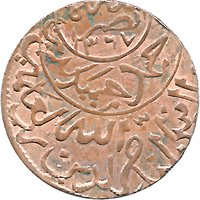
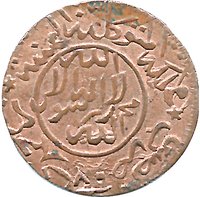
½ rial – Mutawakkilite Kingdom
Add to wishlist
Yemen
Context
Years: 1958–1963
Country: Yemen
Issuer: Mutawakkilite Kingdom
Ruler: Ahmad bin Yahya
Currency:
(1918—1974)
Demonetized: Yes
Material
References
Y: #
Numista: #142784
Value
Bullion value: $34.27
Categories
| Object> Cold weapons |
Mintings
| Year | Mint Mark | Mintage | Quality | Collection |
|---|---|---|---|---|
| 1958 | — | — | ||
| 1959 | — | — | ||
| 1960 | — | — | ||
| 1961 | — | — | ||
| 1962 | — | — | ||
| 1963 | — | — |
Historical background
By 1958, the currency situation in the Mutawakkilite Kingdom of Yemen was characterized by a stark duality and severe economic isolation. The kingdom, ruled by Imam Ahmad bin Yahya, operated a closed, traditional economy with the Yemeni Riyal (YRI) as its official currency. However, this silver coin, minted domestically, circulated alongside a plethora of foreign silver coins—most notably the Maria Theresa Thaler (MTT)—which were deeply trusted and preferred for larger transactions and external trade. This reliance on physical specie, particularly silver, reflected the kingdom's resistance to modern banking and paper money, which were viewed with suspicion by the conservative Imamate.
The system was fundamentally strained by the Imam's deliberate policy of economic autarky and his conflict with the British in the Aden Protectorate. Foreign exchange was scarce, and the state's finances were weak, relying heavily on customs duties and limited agricultural exports. Crucially, the kingdom lacked a central bank or a modern monetary authority, leaving its currency vulnerable to manipulation. A critical factor in 1958 was the sharp depreciation of the Yemeni Riyal against the MTT. This was largely engineered by the royal court itself, which profited by selling the overvalued official riyals to pilgrims and traders needing local currency while hoarding the more stable Thalers for state purchases abroad.
This unstable and exploitative currency environment exacerbated the kingdom's growing internal crises. The disparity between the official and market exchange rates fostered a thriving black market, bred popular resentment, and highlighted the state's administrative weaknesses. It occurred against a backdrop of increased foreign influence, with both the newly formed United Arab Republic (Egypt) and the Soviet Union providing aid and modern banknotes for specific projects, further undermining the traditional monetary system. Thus, in 1958, Yemen's currency was not just an economic tool but a symbol of a deeply divided and increasingly untenable political order, presaging the revolution that would erupt four years later.
The system was fundamentally strained by the Imam's deliberate policy of economic autarky and his conflict with the British in the Aden Protectorate. Foreign exchange was scarce, and the state's finances were weak, relying heavily on customs duties and limited agricultural exports. Crucially, the kingdom lacked a central bank or a modern monetary authority, leaving its currency vulnerable to manipulation. A critical factor in 1958 was the sharp depreciation of the Yemeni Riyal against the MTT. This was largely engineered by the royal court itself, which profited by selling the overvalued official riyals to pilgrims and traders needing local currency while hoarding the more stable Thalers for state purchases abroad.
This unstable and exploitative currency environment exacerbated the kingdom's growing internal crises. The disparity between the official and market exchange rates fostered a thriving black market, bred popular resentment, and highlighted the state's administrative weaknesses. It occurred against a backdrop of increased foreign influence, with both the newly formed United Arab Republic (Egypt) and the Soviet Union providing aid and modern banknotes for specific projects, further undermining the traditional monetary system. Thus, in 1958, Yemen's currency was not just an economic tool but a symbol of a deeply divided and increasingly untenable political order, presaging the revolution that would erupt four years later.
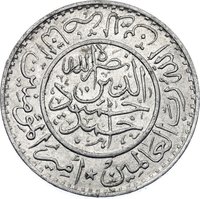
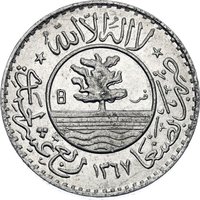
💎 Very Rare