

1⁄80 rial – Mutawakkilite Kingdom
Add to wishlist
Yemen
Context
Year: 1961
Islamic (Hijri) Year:: 1380
Country: Yemen
Issuer: Mutawakkilite Kingdom
Ruler: Ahmad bin Yahya
Currency:
(1918—1974)
Demonetized: Yes
Material
References
Y: #
Numista: #104533
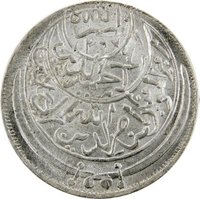
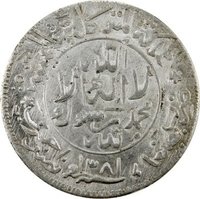
Obverse
Description:
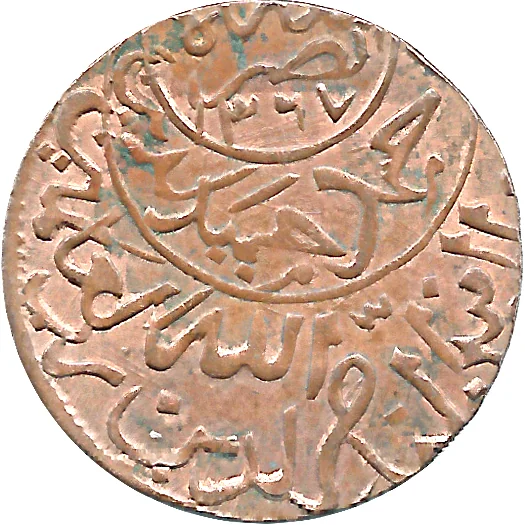
Crescent below AH 1367 accession date.
Script: Arabic
Reverse
Description:
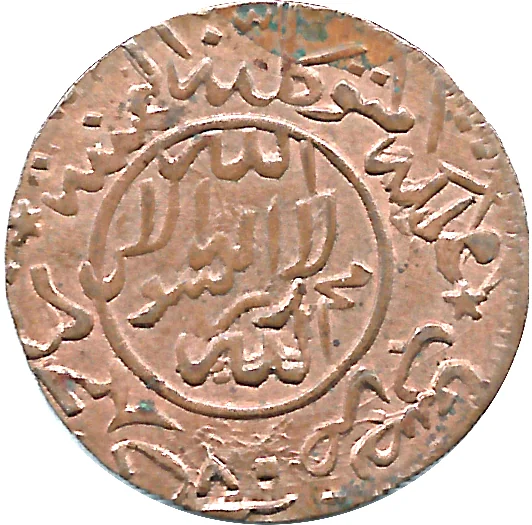
Engraved with date
Script: Arabic
Edge
Plain
Mintings
| Year | Mint Mark | Mintage | Quality | Collection |
|---|---|---|---|---|
| 1961 | — | — |
Historical background
By 1961, the currency situation in the Mutawakkilite Kingdom of Yemen was a direct reflection of its political and economic isolation. The state, ruled by Imam Ahmad bin Yahya, operated a deeply conservative and insular feudal system, largely disconnected from the modern global economy. There was no independent national currency in circulation. Instead, the primary medium of exchange was the Maria Theresa thaler (MT$), a large silver coin first minted in the 18th century. This antique currency, valued for its silver content and reliability, was supplemented by the Indian rupee, a legacy of British influence in the region and its use in neighboring Aden.
This dual-currency system was cumbersome and symbolic of the kingdom's stagnation. The reliance on physical silver thalers limited the government's ability to conduct monetary policy, control inflation, or finance development. Economically, the kingdom was poor, with little formal banking infrastructure beyond the capital, Sana'a. Foreign trade was minimal, and internal taxation was often collected in kind rather than cash, further reducing the need for a sophisticated financial system. The currency picture was essentially medieval, preserving a pre-modern economic structure while the wider Arab world was rapidly modernizing.
The situation was poised for change, however, as external pressures mounted. Rivalry with the British in Aden and the influence of the newly formed United Arab Republic (Egypt and Syria) to the north exposed the kingdom's vulnerability. While Imam Ahmad resisted major reforms, the archaic currency system became a glaring weakness. It would ultimately take the overthrow of the monarchy in the 1962 North Yemen Civil War to finally abolish the Maria Theresa thaler and introduce a modern national currency, the Yemeni rial, in an effort to integrate the country into the contemporary economic world.
This dual-currency system was cumbersome and symbolic of the kingdom's stagnation. The reliance on physical silver thalers limited the government's ability to conduct monetary policy, control inflation, or finance development. Economically, the kingdom was poor, with little formal banking infrastructure beyond the capital, Sana'a. Foreign trade was minimal, and internal taxation was often collected in kind rather than cash, further reducing the need for a sophisticated financial system. The currency picture was essentially medieval, preserving a pre-modern economic structure while the wider Arab world was rapidly modernizing.
The situation was poised for change, however, as external pressures mounted. Rivalry with the British in Aden and the influence of the newly formed United Arab Republic (Egypt and Syria) to the north exposed the kingdom's vulnerability. While Imam Ahmad resisted major reforms, the archaic currency system became a glaring weakness. It would ultimately take the overthrow of the monarchy in the 1962 North Yemen Civil War to finally abolish the Maria Theresa thaler and introduce a modern national currency, the Yemeni rial, in an effort to integrate the country into the contemporary economic world.
💎 Extremely Rare