

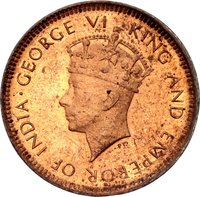
Obverse
Description:
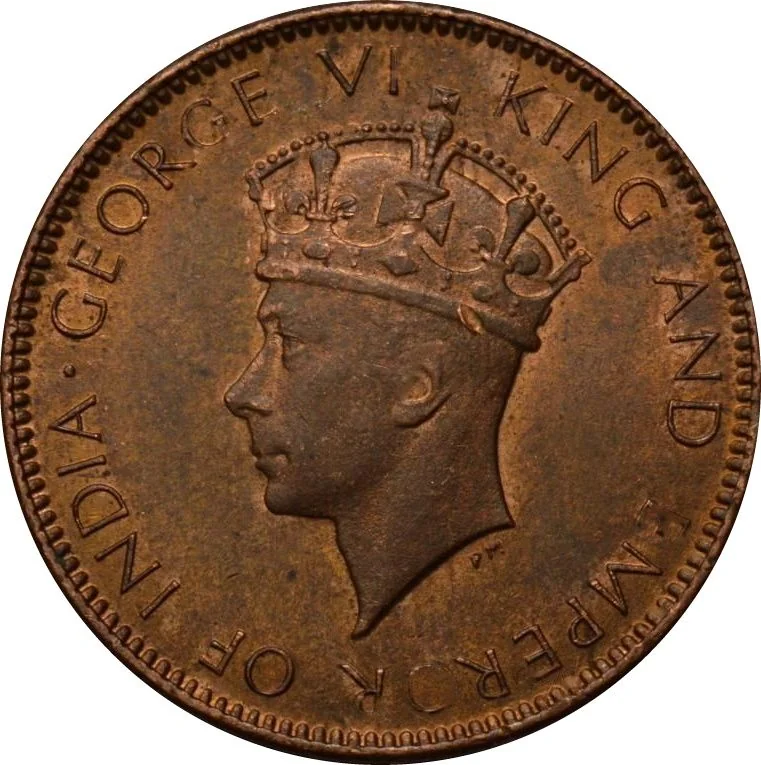
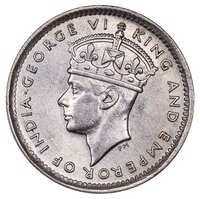
Crowned left-facing bust.
Inscription:
GEORGE VI KING AND EMPEROR OF INDIA.
Translation:
GEORGE VI KING AND EMPEROR OF INDIA.
Language: English
Engraver: Percy Metcalfe
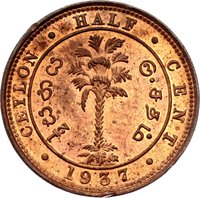
Reverse
Description:
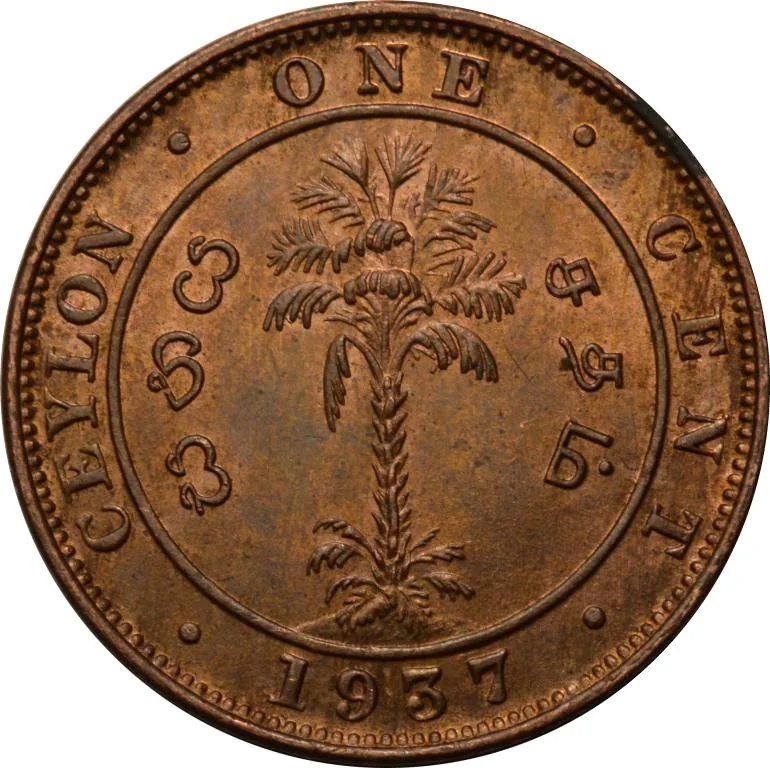
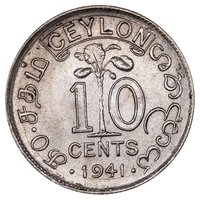
Denomination outside, palm tree and Sinhalese-Tamil lettering inside.
Inscription:
CEYLON · ONE · CENT
සතය சதம்
· 1942 ·
සතය சதம்
· 1942 ·
Translation:
CEYLON · ONE · CENT
One Cent One Cent
· 1942 ·
One Cent One Cent
· 1942 ·
Engraver: Leonard Charles Wyon
Edge
Plain
Mints
| Name | Mark |
|---|---|
| Kolkata / Calcutta / Murshidabad | — |
Mintings
| Year | Mint Mark | Mintage | Quality | Collection |
|---|---|---|---|---|
| 1937 | — | 4,538,000 | ||
| 1937 | — | — | Proof | |
| 1940 | — | 10,190,000 | ||
| 1940 | — | — | Proof | |
| 1942 | — | 20,780,000 |
Historical background
In 1937, Ceylon's currency was firmly embedded within the imperial framework of the British Sterling Area, operating under a Currency Board System established in 1884. The island’s monetary policy was not autonomous; the Ceylon Currency Board in London issued rupees (pegged at 1s. 6d.) fully backed by sterling reserves. This ensured absolute convertibility and stability with the pound sterling, but it also meant that the money supply was directly tied to Ceylon’s export earnings and foreign reserves, rather than domestic economic needs. The system was inherently deflationary, as the currency in circulation could only expand with a trade surplus, limiting the government's ability to use monetary policy for development.
The economy was heavily dependent on the export of primary commodities—tea, rubber, and coconut products—which made it vulnerable to global price fluctuations. The 1930s had brought the severe challenges of the Great Depression, causing a dramatic fall in export incomes and straining the colony's finances. By 1937, while there was some recovery in commodity prices, the rigid Currency Board system was increasingly criticised by a growing Ceylonese political and business elite. They argued it stifled economic growth and industrialisation by preventing credit expansion for local enterprise and prioritising the security of sterling over the development needs of Ceylon.
Consequently, 1937 existed in a period of mounting pressure for monetary reform. The landmark election of the first State Council under the Donoughmore Constitution in 1931 had ushered in a phase of increasing Ceylonese influence in fiscal matters. Discussions were turning towards the establishment of a central bank to replace the Currency Board, a move advocated to gain control over credit policy and foster a more independent, managed currency. Thus, the currency situation in 1937 was one of colonial orthodoxy still in place, but actively being challenged by nationalist forces seeking financial autonomy as a cornerstone for future self-rule.
The economy was heavily dependent on the export of primary commodities—tea, rubber, and coconut products—which made it vulnerable to global price fluctuations. The 1930s had brought the severe challenges of the Great Depression, causing a dramatic fall in export incomes and straining the colony's finances. By 1937, while there was some recovery in commodity prices, the rigid Currency Board system was increasingly criticised by a growing Ceylonese political and business elite. They argued it stifled economic growth and industrialisation by preventing credit expansion for local enterprise and prioritising the security of sterling over the development needs of Ceylon.
Consequently, 1937 existed in a period of mounting pressure for monetary reform. The landmark election of the first State Council under the Donoughmore Constitution in 1931 had ushered in a phase of increasing Ceylonese influence in fiscal matters. Discussions were turning towards the establishment of a central bank to replace the Currency Board, a move advocated to gain control over credit policy and foster a more independent, managed currency. Thus, the currency situation in 1937 was one of colonial orthodoxy still in place, but actively being challenged by nationalist forces seeking financial autonomy as a cornerstone for future self-rule.
🌱 Common