

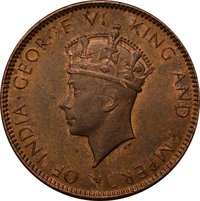
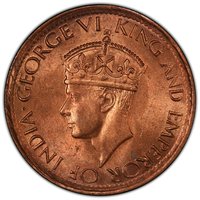
Obverse
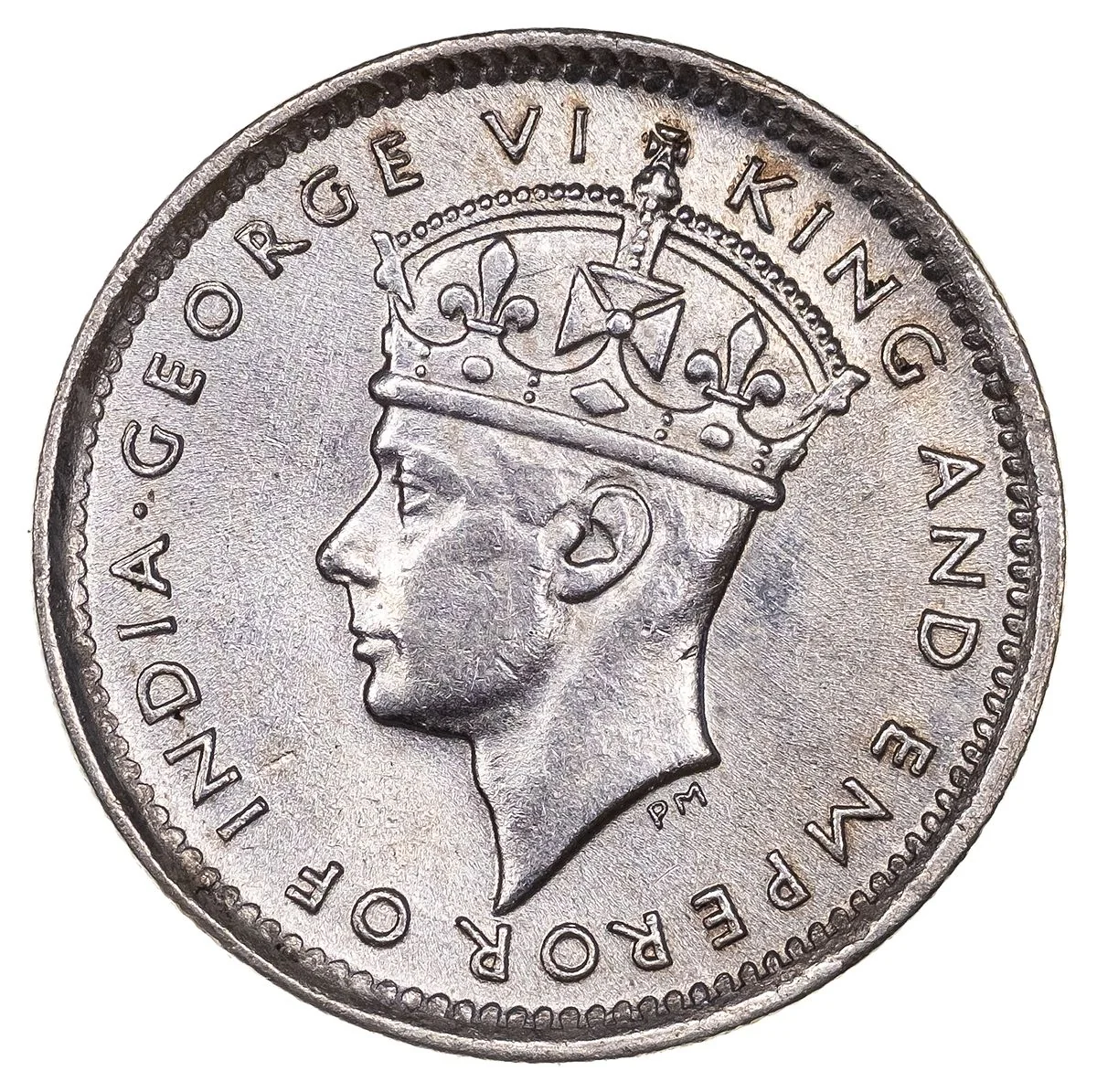
Description:
Crowned left-facing bust.
Inscription:
GEORGE VI KING AND EMPEROR OF INDIA.
Translation:
GEORGE VI KING AND EMPEROR OF INDIA.
Language: English
Engraver: Percy Metcalfe
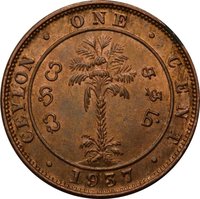
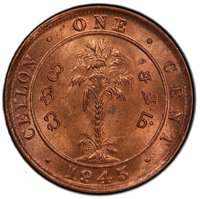
Reverse
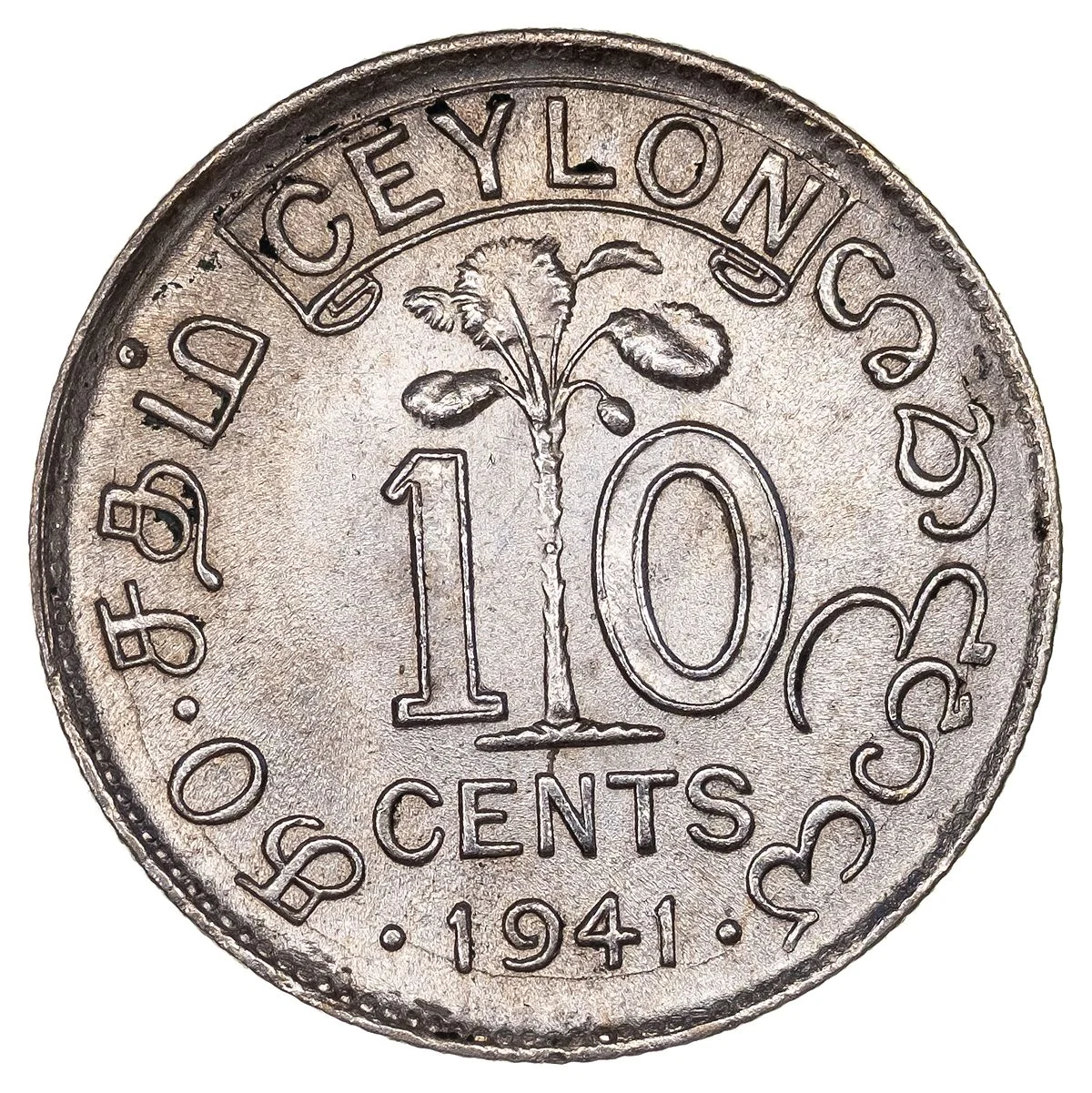
Description:
Denomination
Inscription:
CEYLON
௧௦. சதம் දහයයි
10
CENTS
·1941·
௧௦. சதம் දහයයි
10
CENTS
·1941·
Translation:
CEYLON
TEN CENTS
10
CENTS
·1941·
TEN CENTS
10
CENTS
·1941·
Engraver: Leonard Charles Wyon
Edge
Reeded
Mints
| Name | Mark |
|---|---|
| Kolkata / Calcutta / Murshidabad | — |
Mintings
| Year | Mint Mark | Mintage | Quality | Collection |
|---|---|---|---|---|
| 1941 | — | 16,271,000 |
Historical background
In 1941, Ceylon's currency situation was fundamentally governed by its status as a British Crown Colony, operating under a strict currency board system. The island’s monetary authority, the Ceylon Currency Board, was based in London and operated on a purely fiduciary basis, issuing the Ceylon Rupee (pegged at 1s. 6d. Sterling) only against the deposit of sterling securities in the UK. This ensured full convertibility and tied Ceylon's money supply directly to its sterling reserves and balance of payments with Britain, making its economy highly dependent on and vulnerable to decisions made in London.
The outbreak of World War II profoundly impacted this system, as it did across the Sterling Area. While the formal peg remained, wartime exigencies led to inflationary pressures. Essential imports became scarce and expensive due to shipping disruptions and the prioritisation of the British war effort, while export markets for Ceylon's primary products—tea, rubber, and coconut—were disrupted. The colony was compelled to accumulate large sterling balances in London as payment for its exports, but these funds were effectively blocked, limiting the ability to purchase goods and contributing to domestic liquidity issues and rising prices.
Furthermore, the war directly shaped the physical currency in circulation. Fearing a Japanese invasion following the fall of Singapore in early 1942, the British authorities secretly moved the colony's gold and silver coin reserves to East Africa for safekeeping. This led to a chronic shortage of small change and the subsequent introduction of low-denomination "invasion notes" printed on poor-quality paper. Thus, by the end of 1941, Ceylon's currency system was characterised by its formal sterling peg, growing inflationary strains from wartime trade distortions, and the beginning of a physical currency crisis that would escalate in the following year.
The outbreak of World War II profoundly impacted this system, as it did across the Sterling Area. While the formal peg remained, wartime exigencies led to inflationary pressures. Essential imports became scarce and expensive due to shipping disruptions and the prioritisation of the British war effort, while export markets for Ceylon's primary products—tea, rubber, and coconut—were disrupted. The colony was compelled to accumulate large sterling balances in London as payment for its exports, but these funds were effectively blocked, limiting the ability to purchase goods and contributing to domestic liquidity issues and rising prices.
Furthermore, the war directly shaped the physical currency in circulation. Fearing a Japanese invasion following the fall of Singapore in early 1942, the British authorities secretly moved the colony's gold and silver coin reserves to East Africa for safekeeping. This led to a chronic shortage of small change and the subsequent introduction of low-denomination "invasion notes" printed on poor-quality paper. Thus, by the end of 1941, Ceylon's currency system was characterised by its formal sterling peg, growing inflationary strains from wartime trade distortions, and the beginning of a physical currency crisis that would escalate in the following year.
🌱 Fairly Common