

10 Cents – Canada
Canada
Context
Years: 1965–1969
Issuer: Canada 
Ruler: Elizabeth II
Currency:
(since 1858)
Total mintage: 92,392,296
Material
References
KM: #Click to copy to clipboard61
Numista: #385
Value
Exchange value: 0.10 CAD = $0.07
Bullion value: $5.42
Inflation-adjusted value: 0.98 CAD
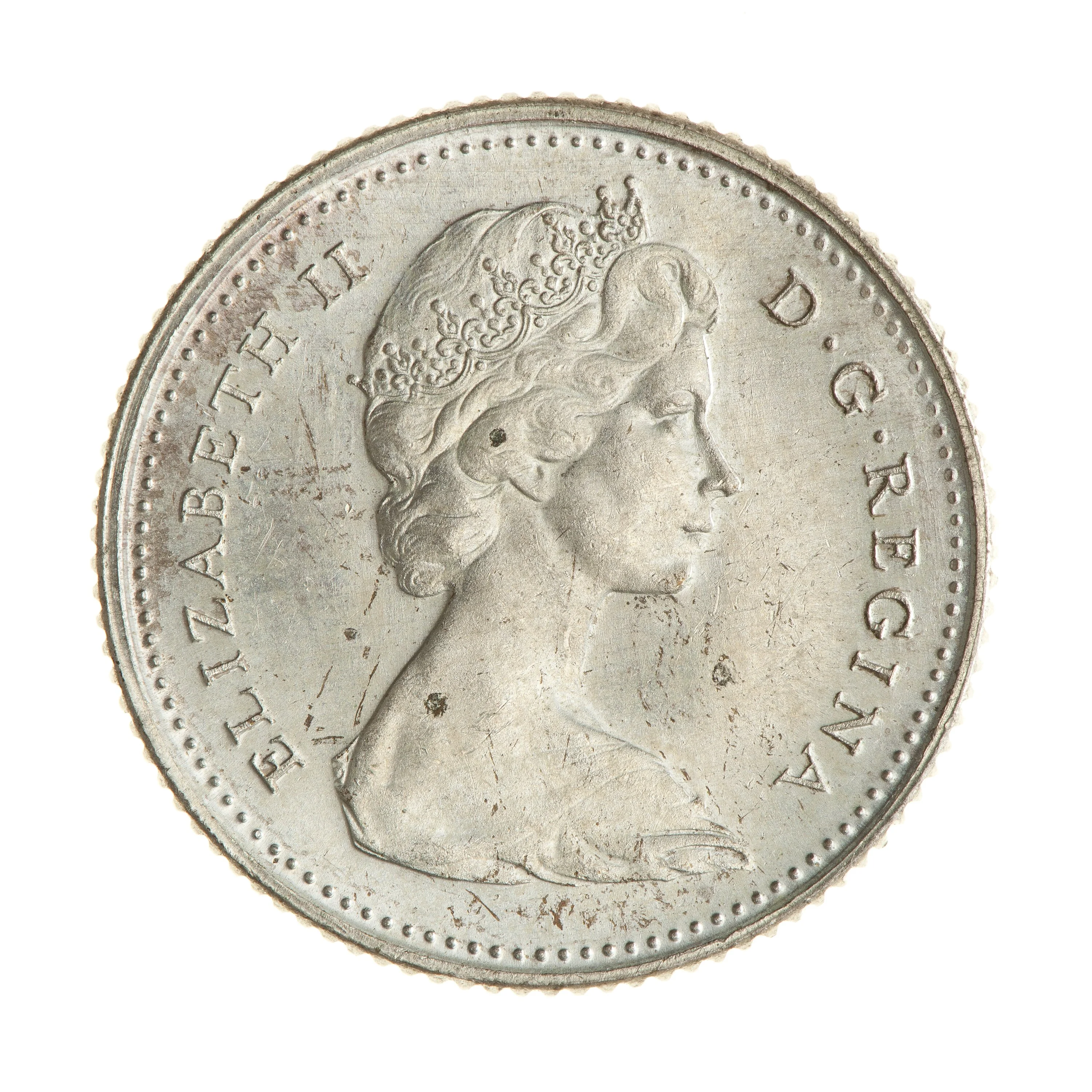
Obverse
Description:
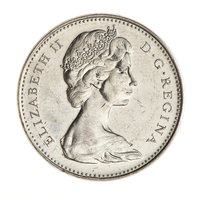
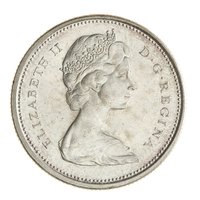
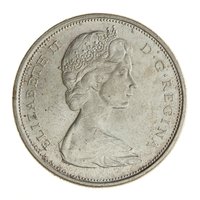
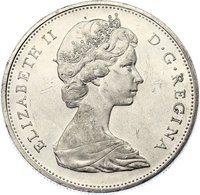
Bust of Queen Elizabeth II at age 37, wearing a tiara and facing right.
Inscription:
ELIZABETH II D•G•REGINA
Translation:
Elizabeth II by the Grace of God, Queen
Script: Latin
Language: Latin
Designer: Arnold Machin
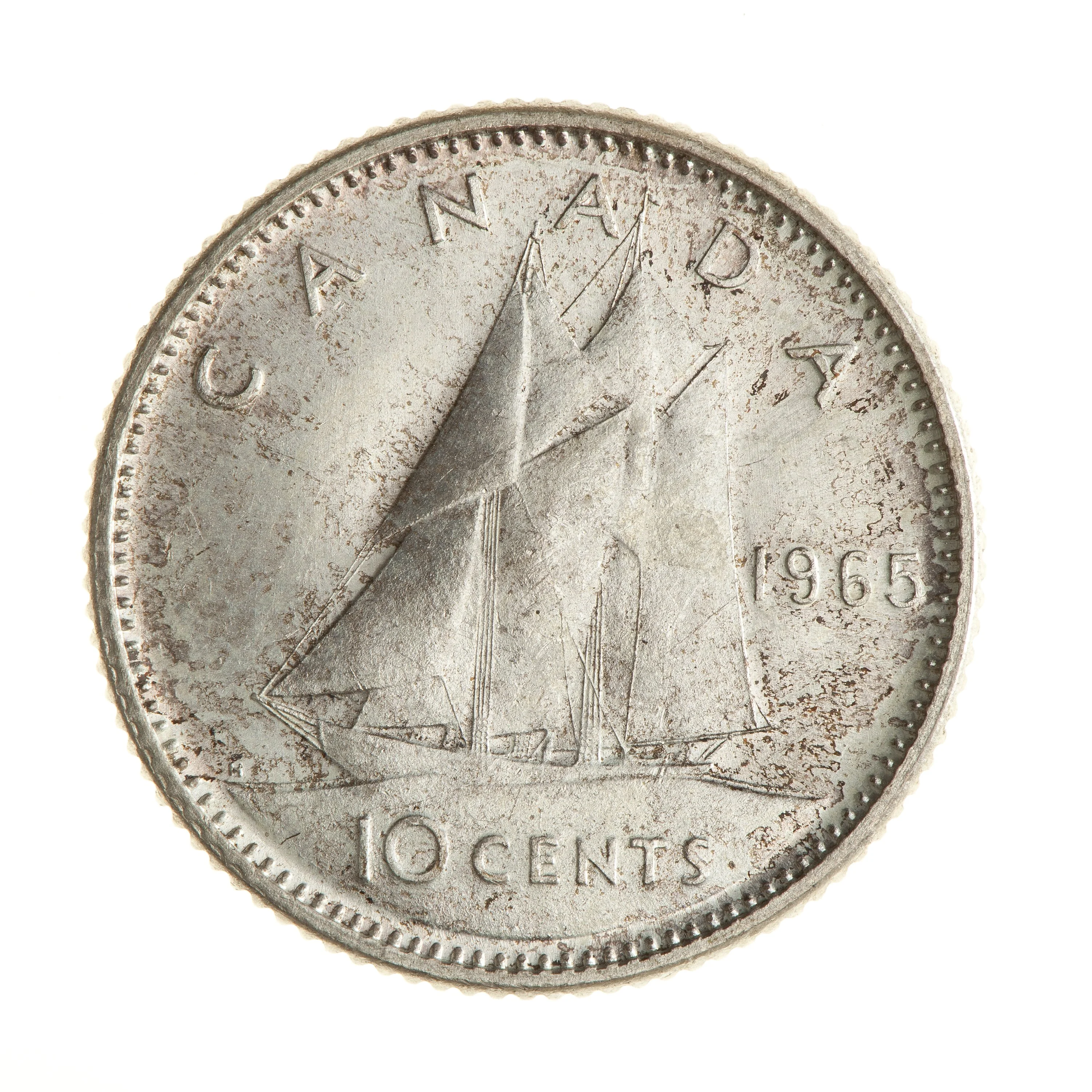
Reverse
Description:
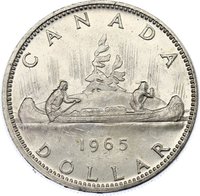
Bluenose, the celebrated Nova Scotian racing schooner, under sail.
Inscription:
CANADA
1965
10 CENTS
H
1965
10 CENTS
H
Script: Latin
Designer: Emanuel Otto Hahn
Edge
Reeded
Categories
| Transportation> Watercraft |
Mints
| Name | Mark |
|---|---|
| Royal Canadian Mint of Ottawa | — |
Mintings
| Year | Mint Mark | Mintage | Quality | Collection |
|---|---|---|---|---|
| 1965 | — | 56,965,392 | ||
| 1965 | — | 186,000 | Prooflike | |
| 1966 | — | 673,000 | Prooflike | |
| 1966 | — | 34,567,898 | ||
| 1969 | — | 6 |
Historical background
In 1965, Canada’s currency was undergoing a significant and symbolic transformation with the introduction of a new national currency series to replace the long-standing portrait of the British monarch. Since 1935, Canadian banknotes had featured an image of King George VI, and later, from 1954, a young Queen Elizabeth II. However, the government of Prime Minister Lester B. Pearson, reflecting a rising sense of Canadian nationalism and identity in the post-war era, spearheaded a change to feature distinctly Canadian themes and historical figures. This initiative, led by the Bank of Canada under Governor Louis Rasminsky, aimed to create banknotes that celebrated Canada’s own heritage and achievements.
The result was the “Canadian Scenes” series, also known as the “Scenes of Canada” series, which began circulation in 1967 to coincide with the centennial of Confederation. The final designs were approved and printed in 1965, making it the pivotal year of preparation. The new notes removed the reigning monarch’s portrait from the main face of the bill, relocating a small likeness of Queen Elizabeth II to the secondary side. The primary faces instead showcased Canadian landscapes and icons: the $1 note featured the Parliament Buildings, the $5 highlighted fishing, the $10 focused on industry, and the $20 depicted the Canadian Rockies. This was a profound visual declaration of national self-confidence.
Economically, 1965 was a year of stability for the Canadian dollar, which was still operating under the Bretton Woods system of fixed exchange rates. It was pegged to the U.S. dollar at approximately US$0.925, with only minor fluctuations. The broader economic context was one of strong post-war growth and low inflation, providing a stable backdrop for this major numismatic change. Thus, 1965 stands as a landmark year where Canada’s monetary policy and national symbolism converged, setting the stage for the circulation of a currency that was designed to look inward and celebrate the country’s own story.
The result was the “Canadian Scenes” series, also known as the “Scenes of Canada” series, which began circulation in 1967 to coincide with the centennial of Confederation. The final designs were approved and printed in 1965, making it the pivotal year of preparation. The new notes removed the reigning monarch’s portrait from the main face of the bill, relocating a small likeness of Queen Elizabeth II to the secondary side. The primary faces instead showcased Canadian landscapes and icons: the $1 note featured the Parliament Buildings, the $5 highlighted fishing, the $10 focused on industry, and the $20 depicted the Canadian Rockies. This was a profound visual declaration of national self-confidence.
Economically, 1965 was a year of stability for the Canadian dollar, which was still operating under the Bretton Woods system of fixed exchange rates. It was pegged to the U.S. dollar at approximately US$0.925, with only minor fluctuations. The broader economic context was one of strong post-war growth and low inflation, providing a stable backdrop for this major numismatic change. Thus, 1965 stands as a landmark year where Canada’s monetary policy and national symbolism converged, setting the stage for the circulation of a currency that was designed to look inward and celebrate the country’s own story.
Series: 1965 Canada circulation coins
🌱 Very Common