

20 dollars – Colorado
Add to wishlist
United States
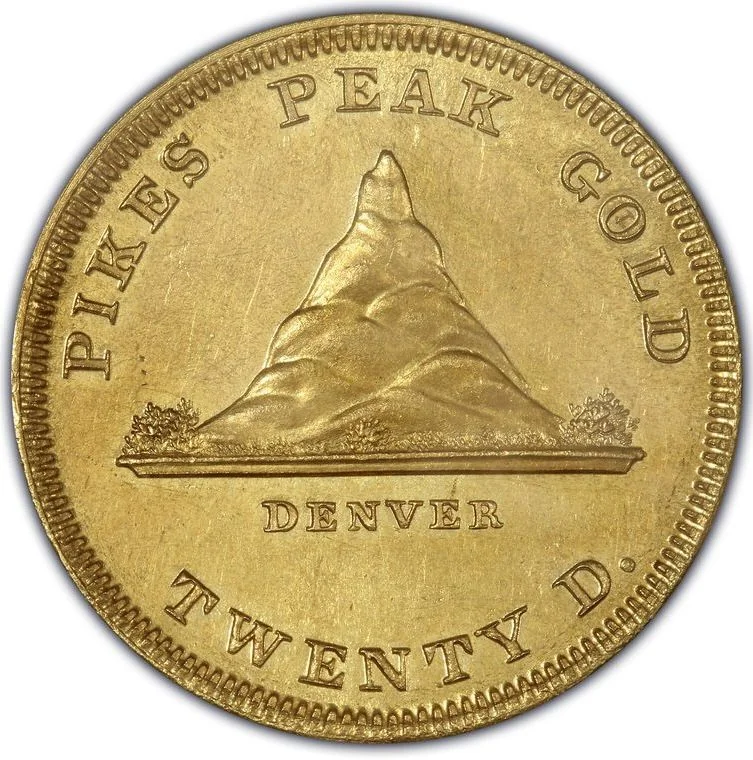
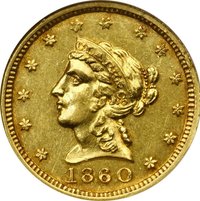
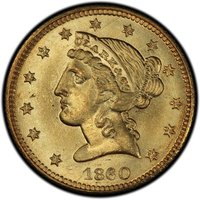
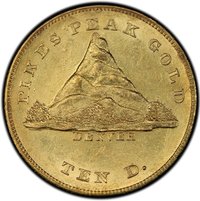
Obverse
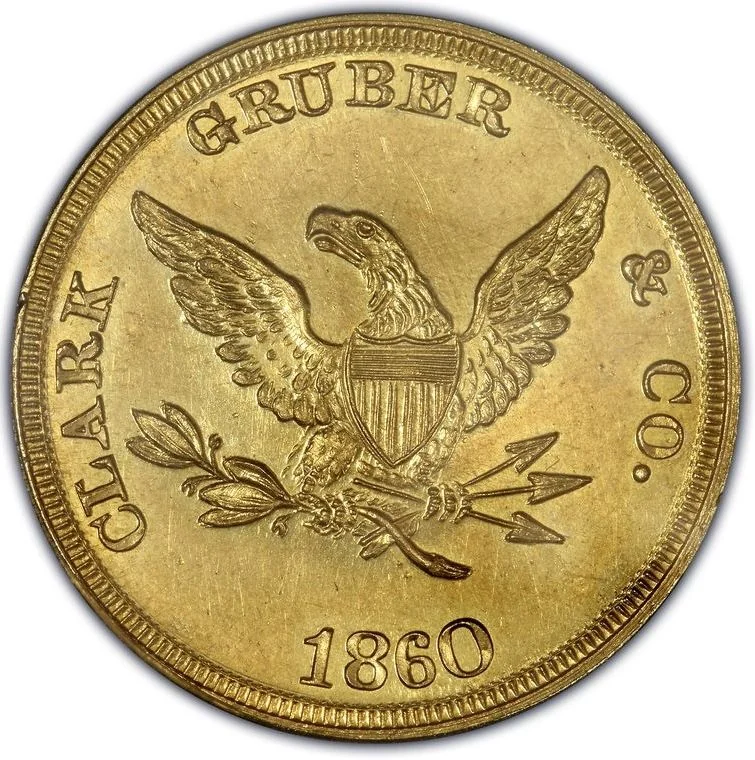
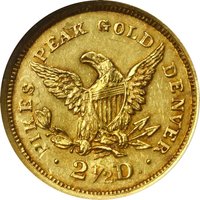
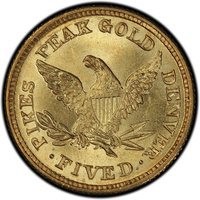
Reverse
Description:
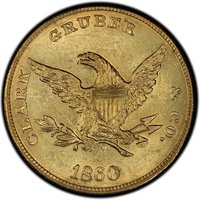
Bald eagle facing forward, U.S. shield on chest, clutching arrows and an olive branch.
Inscription:
CLARK GRUBER & CO.
1860
1860
Script: Latin
Edge
Mintings
| Year | Mint Mark | Mintage | Quality | Collection |
|---|---|---|---|---|
| 1860 | — | 50,000 |
Historical background
In 1860, Colorado was in the midst of a chaotic and transformative period, defined by the Pike's Peak Gold Rush that began in 1858. As tens of thousands of prospectors and settlers flooded into the region, the area lacked any formal banking system or a reliable, standardized currency. The federal government had not yet established a mint in Denver (the first would open in 1863), and the remote territory was financially isolated from the established economies of the East. This created a severe shortage of official coinage, forcing the local economy to operate on a precarious mixture of gold dust, privately minted tokens, and often dubious paper notes.
The primary medium of exchange was raw gold dust, carried in small pouches and weighed on scales at merchants' counters. However, its inconsistent purity and the ease of theft or "salting" (adding brass filings) made transactions slow and fraught with distrust. To address this, private assayers and goldsmiths, like Clark, Gruber & Co. in Denver, began minting their own gold coins. These private issues, stamped with their weight and purity, were widely trusted and became the de facto currency of the territory. Simultaneously, merchants, mining companies, and even saloons issued their own paper "scrip" or "shinplasters"—promissory notes redeemable for goods or services at their specific establishments—which circulated locally but were often worthless elsewhere.
This fragmented monetary system existed on the brink of the Civil War, a conflict that would soon exacerbate the situation. As the war began in 1861, confidence in paper money from the Eastern states plummeted in Colorado, and gold and silver became even more paramount. The territory's reliance on tangible gold and privately minted coins highlighted its raw, extractive economy and its distance from the centralized financial structures of the United States, a reality that would only begin to change with Colorado's eventual statehood in 1876.
The primary medium of exchange was raw gold dust, carried in small pouches and weighed on scales at merchants' counters. However, its inconsistent purity and the ease of theft or "salting" (adding brass filings) made transactions slow and fraught with distrust. To address this, private assayers and goldsmiths, like Clark, Gruber & Co. in Denver, began minting their own gold coins. These private issues, stamped with their weight and purity, were widely trusted and became the de facto currency of the territory. Simultaneously, merchants, mining companies, and even saloons issued their own paper "scrip" or "shinplasters"—promissory notes redeemable for goods or services at their specific establishments—which circulated locally but were often worthless elsewhere.
This fragmented monetary system existed on the brink of the Civil War, a conflict that would soon exacerbate the situation. As the war began in 1861, confidence in paper money from the Eastern states plummeted in Colorado, and gold and silver became even more paramount. The territory's reliance on tangible gold and privately minted coins highlighted its raw, extractive economy and its distance from the centralized financial structures of the United States, a reality that would only begin to change with Colorado's eventual statehood in 1876.
Series: 1860 Colorado) circulation coins
✨ Legendary