

10 Dollars – Singapore
Singapore
Context

Material
References
KM: #Click to copy to clipboard17a
Numista: #14266
Value
Exchange value: 10 SGD = $7.92
Obverse
Description:
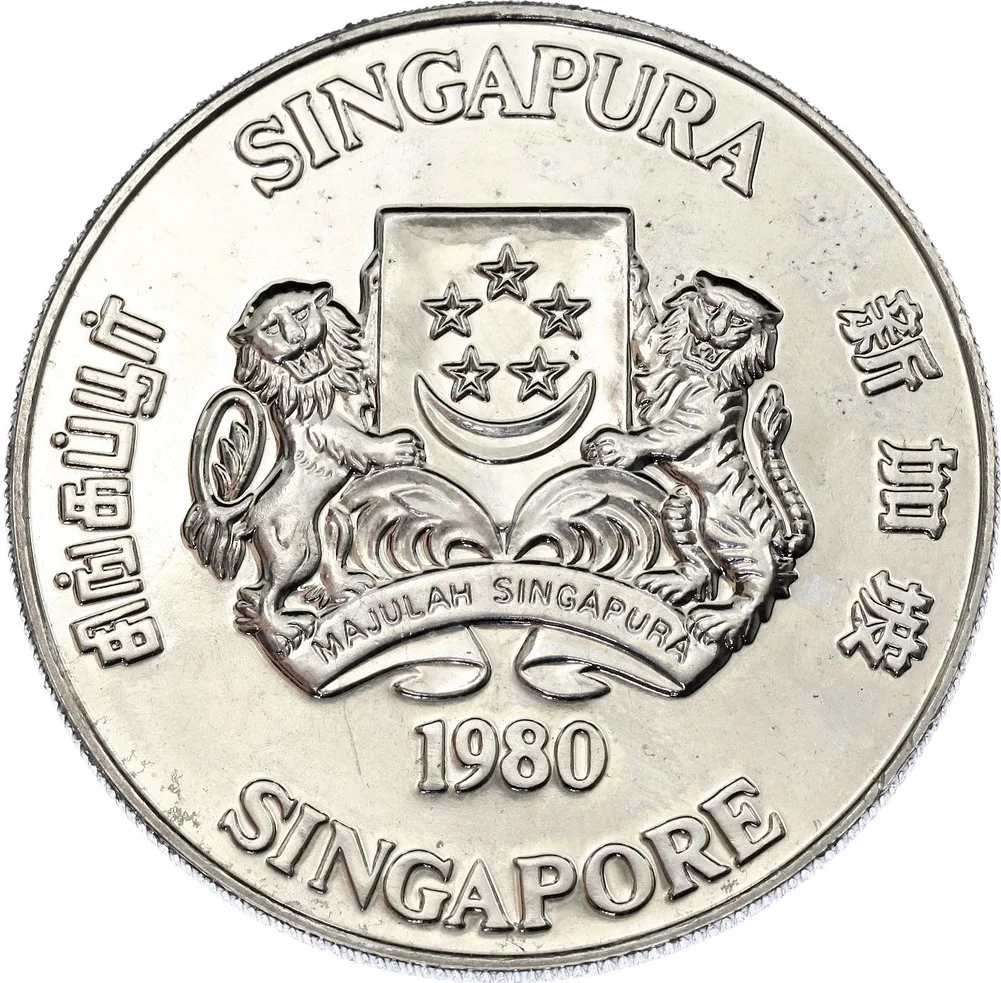
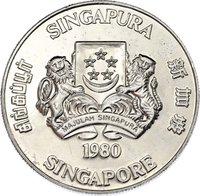
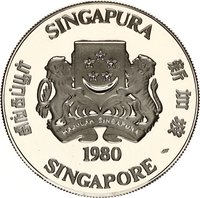
Singapore's coat of arms, encircled by "SINGAPORE" in the nation's four major languages, with the issue year beneath.
Inscription:
SINGAPURA
சிங்கப்பூர்
MAJULAH SINGAPURA
新加坡
1980
SINGAPORE
சிங்கப்பூர்
MAJULAH SINGAPURA
新加坡
1980
SINGAPORE
Translation:
SINGAPORE
SINGAPORE
ONWARD SINGAPORE
SINGAPORE
1980
SINGAPORE
SINGAPORE
ONWARD SINGAPORE
SINGAPORE
1980
SINGAPORE
Reverse
Description:
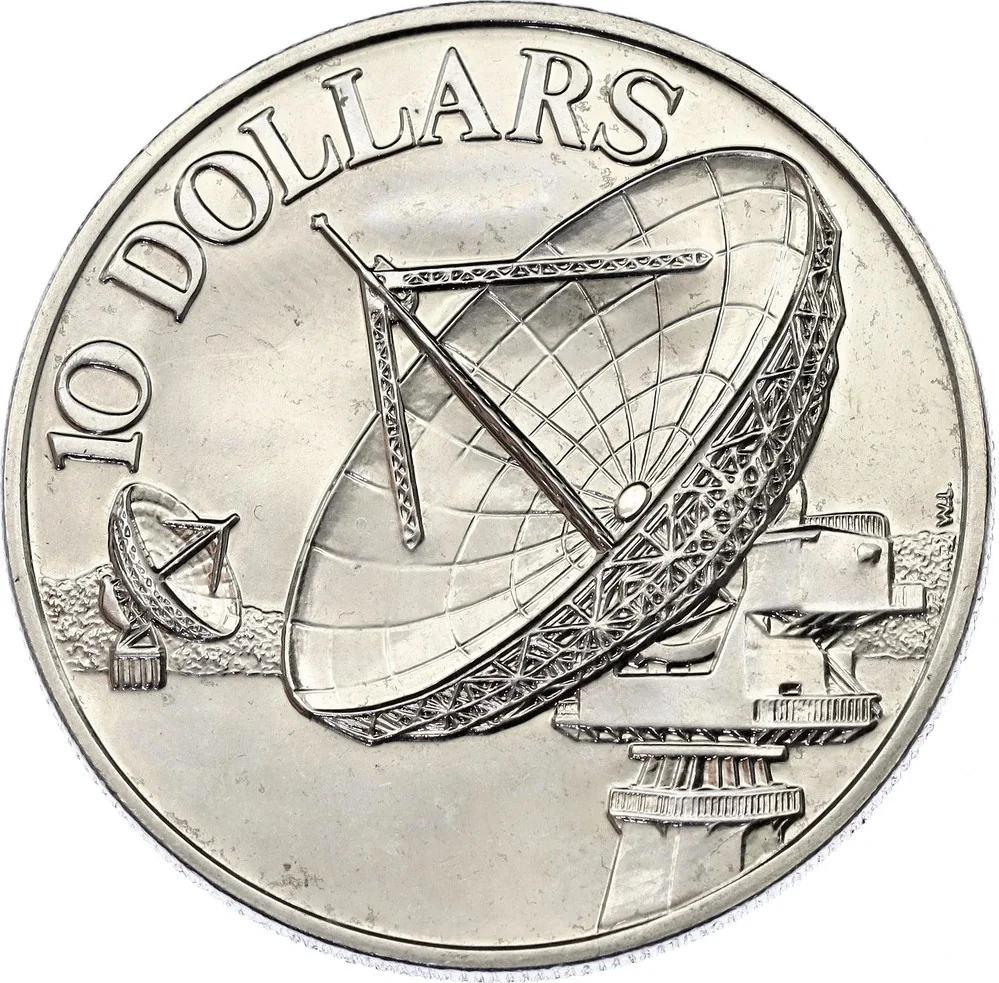
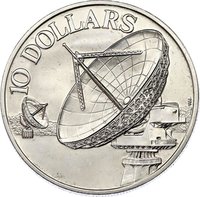
Central right: large satellite dish. Left: smaller dish. Denomination above.
Inscription:
10 DOLLARS
W.L.
W.L.
Edge
Reeded
Categories
| Science |
| Symbols> Coat of Arms |
Mintings
| Year | Mint Mark | Mintage | Quality | Collection |
|---|---|---|---|---|
| 1980 | — | 120,000 | ||
| 1980 | — | 15,000 | Proof |
Historical background
In 1980, Singapore's currency situation was characterized by a period of consolidation and strategic management following a decade of significant change. The most pivotal development had occurred in 1973, when the Singapore dollar was de-pegged from the British pound and, after a brief link to the US dollar, was placed on a managed float against a secret trade-weighted basket of currencies of its major trading partners. By 1980, this Monetary Authority of Singapore (MAS)-managed float was firmly established, providing the flexibility needed to control imported inflation and maintain export competitiveness, which were crucial for the city-state's trade-dependent economy.
The primary monetary policy focus was on controlling inflation, which had surged globally due to the 1979 oil crisis. The MAS utilized the exchange rate as its principal tool rather than domestic interest rates, deliberately allowing the Singapore dollar to appreciate moderately against its trading partners. This appreciation helped to dampen the cost of imported goods and raw materials, shielding the domestic economy from the worst of global price shocks. This exchange-rate-centric approach, unique for its time, underscored a pragmatic policy choice where currency stability was prioritized as a key anti-inflationary measure.
Furthermore, the currency landscape was shaped by the dissolution of the Currency Interchangeability Agreement with Brunei in 1973. By 1980, the Singapore dollar and the Brunei dollar, while still interchangeable at par for practical everyday use in both countries, were distinct currencies issued by their respective monetary authorities. This arrangement provided regional convenience but without formal monetary union obligations. Overall, the currency framework of 1980 reflected Singapore's mature and deliberate shift towards an independent, managed monetary system designed to ensure price stability and foster continued economic growth during a volatile global period.
The primary monetary policy focus was on controlling inflation, which had surged globally due to the 1979 oil crisis. The MAS utilized the exchange rate as its principal tool rather than domestic interest rates, deliberately allowing the Singapore dollar to appreciate moderately against its trading partners. This appreciation helped to dampen the cost of imported goods and raw materials, shielding the domestic economy from the worst of global price shocks. This exchange-rate-centric approach, unique for its time, underscored a pragmatic policy choice where currency stability was prioritized as a key anti-inflationary measure.
Furthermore, the currency landscape was shaped by the dissolution of the Currency Interchangeability Agreement with Brunei in 1973. By 1980, the Singapore dollar and the Brunei dollar, while still interchangeable at par for practical everyday use in both countries, were distinct currencies issued by their respective monetary authorities. This arrangement provided regional convenience but without formal monetary union obligations. Overall, the currency framework of 1980 reflected Singapore's mature and deliberate shift towards an independent, managed monetary system designed to ensure price stability and foster continued economic growth during a volatile global period.
⭐ Rare