

100 kronen – Austria
Add to wishlist
Austria
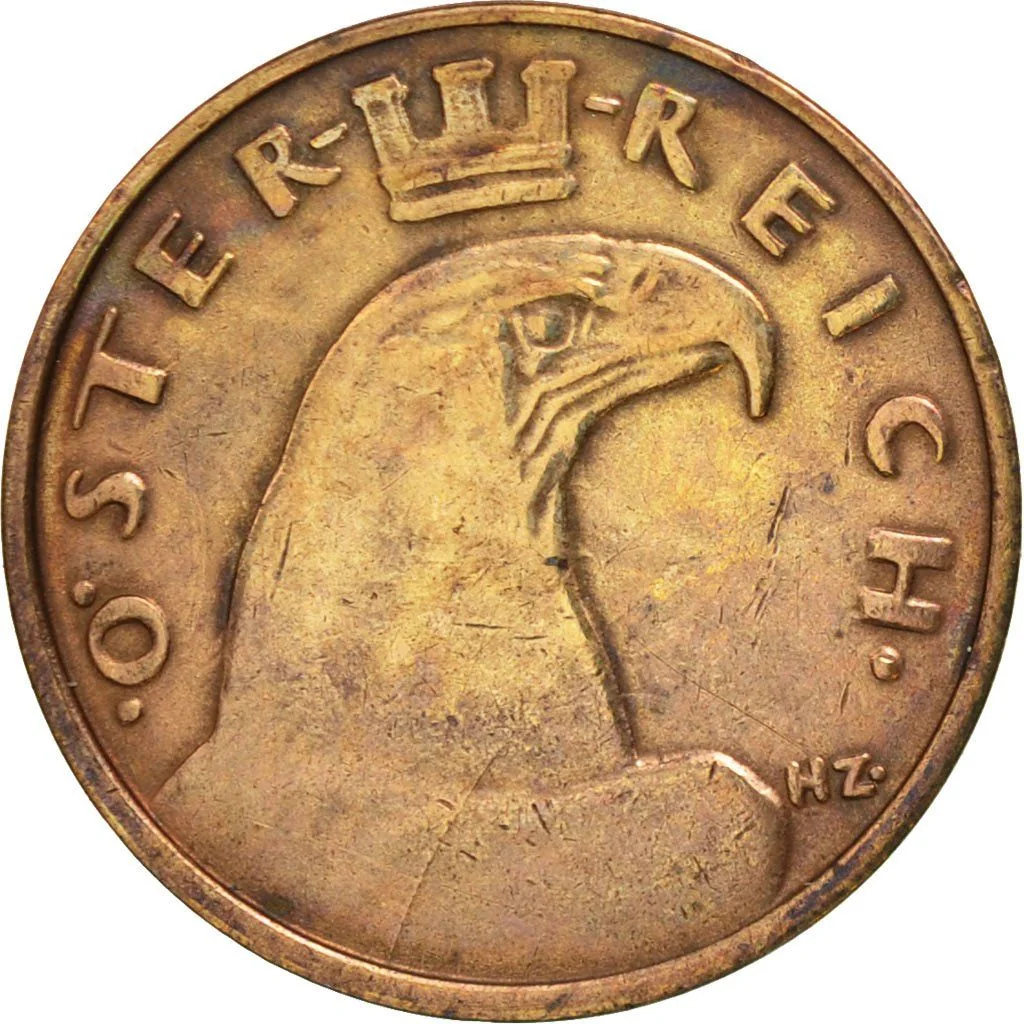
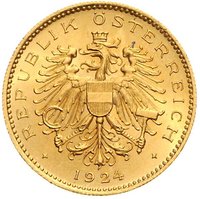
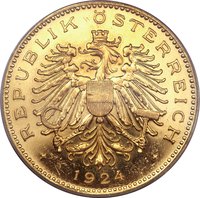
Obverse
Description:
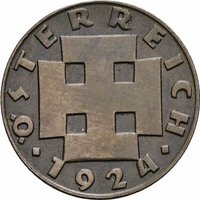
Crowned eagle head right, legend divided.
Inscription:
ÖSTER- -REICH·
HZ·
HZ·
Translation:
EASTERN - -REICH·
HZ·
HZ·
Script: Latin
Language: German
Engraver: Heinrich Zita
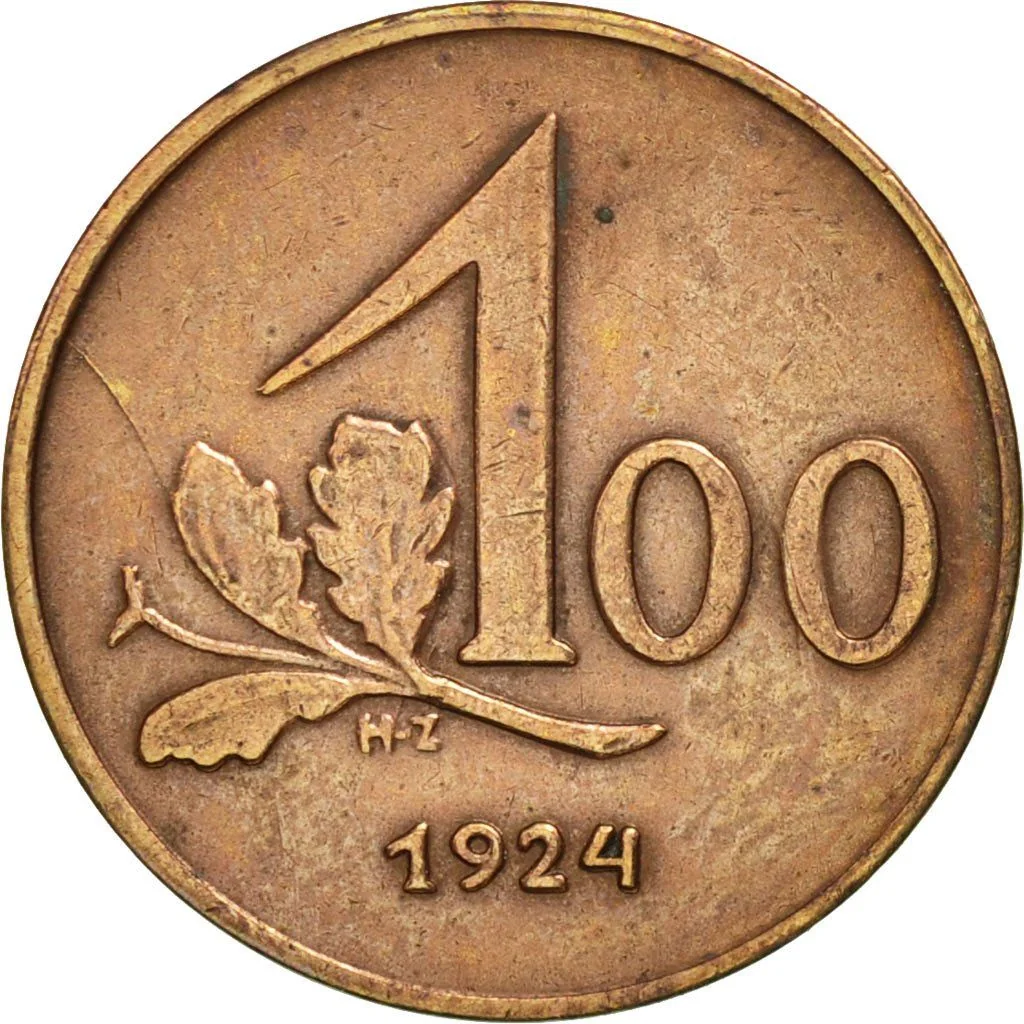
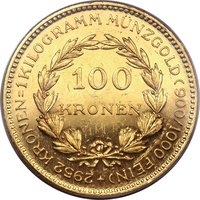
Reverse
Description:
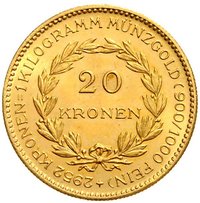
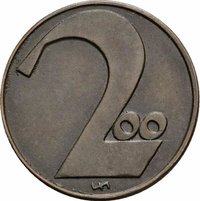
Leaf right: value. Below: date.
Inscription:
100
H-Z
1924
H-Z
1924
Script: Latin
Engraver: Heinrich Zita
Edge
Plain
Mints
| Name | Mark |
|---|---|
| Münze Österreich | — |
Mintings
| Year | Mint Mark | Mintage | Quality | Collection |
|---|---|---|---|---|
| 1923 | — | 5,603,680 | ||
| 1924 | — | 43,813,820 |
Historical background
By 1923, Austria was in the throes of one of the most severe hyperinflations in European history, a direct consequence of the economic and political disintegration following World War I. The collapse of the Austro-Hungarian Empire had left the small, new Austrian republic with a shattered industrial base, a massive debt burden, and a huge administrative apparatus to fund. To meet its obligations and finance essential imports, the government resorted to printing money with no backing, causing the value of the Austrian krone to plummet. Prices doubled within days, then hours, eroding savings, crippling wage earners, and pushing the nation toward social collapse.
The crisis reached its zenith in the summer and autumn of 1923. The currency had become virtually worthless, with an exchange rate soaring to approximately 70,000 kronen to one US dollar by August, compared to a pre-war rate of about 5 kronen. Economic life descended into chaos as people rushed to spend wages immediately, barter replaced cash transactions, and foreign currencies became the preferred medium for any significant trade. The social fabric frayed under the strain, with widespread malnutrition and political extremism gaining ground amidst the desperation.
International intervention proved to be the turning point. Fearing Austria's total collapse and potential Anschluss (union) with Germany, the League of Nations orchestrated a rescue package in late 1923. This plan provided a large international loan, guaranteed by several nations, contingent on Austria committing to strict fiscal discipline, central bank independence, and a balanced budget. These measures restored confidence almost overnight. In December 1923, Austria introduced the new Schilling, pegged to gold and valued at 10,000 old kronen, finally halting the hyperinflation and setting the stage for a period of painful but stable reconstruction.
The crisis reached its zenith in the summer and autumn of 1923. The currency had become virtually worthless, with an exchange rate soaring to approximately 70,000 kronen to one US dollar by August, compared to a pre-war rate of about 5 kronen. Economic life descended into chaos as people rushed to spend wages immediately, barter replaced cash transactions, and foreign currencies became the preferred medium for any significant trade. The social fabric frayed under the strain, with widespread malnutrition and political extremism gaining ground amidst the desperation.
International intervention proved to be the turning point. Fearing Austria's total collapse and potential Anschluss (union) with Germany, the League of Nations orchestrated a rescue package in late 1923. This plan provided a large international loan, guaranteed by several nations, contingent on Austria committing to strict fiscal discipline, central bank independence, and a balanced budget. These measures restored confidence almost overnight. In December 1923, Austria introduced the new Schilling, pegged to gold and valued at 10,000 old kronen, finally halting the hyperinflation and setting the stage for a period of painful but stable reconstruction.
Series: 1923 Austria circulation coins
🌱 Very Common