

5 pounds (October victory) – Egypt
Add to wishlist
Non-circulating coins
Commemoration: 50 years October victory
Series: October Victory Golden Jubilee
Egypt
Context
Year: 2023
Islamic (Hijri) Year:: 1445
Issuer: Egypt
Period:
(since 1971)
Currency:
(since 1916)
Total mintage: 5,000
Material
References
KM: #
Numista: #383139
Value
Exchange value: 5 EGP
Bullion value: $30.58
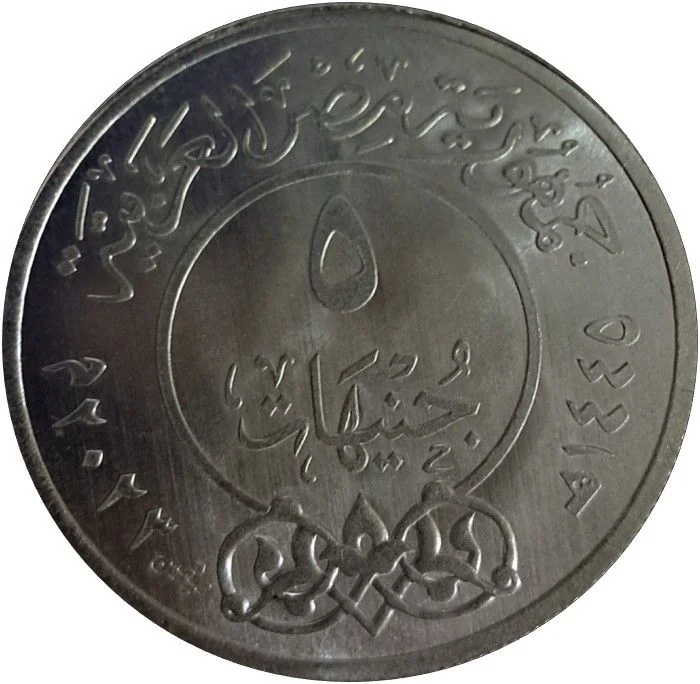
Obverse
Description:
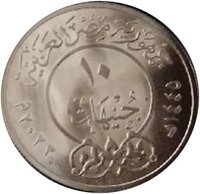
Denomination, dates
Inscription:
جمهورية مصر العربيه
٥ جنيهات
٢٠٢٣ م ١٤٤٥ ه
٥ جنيهات
٢٠٢٣ م ١٤٤٥ ه
Translation:
Arab Republic of Egypt
5 Pounds
2023 AD 1445 AH
5 Pounds
2023 AD 1445 AH
Script: Arabic (naskh)
Language: Arabic
Engraver: Neven
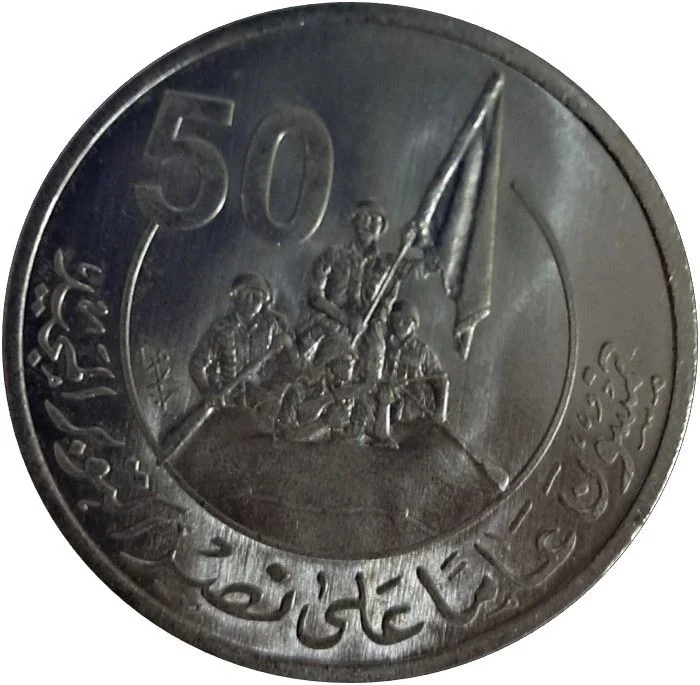
Reverse
Description:
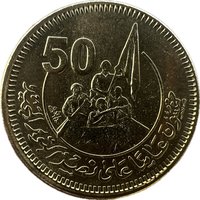
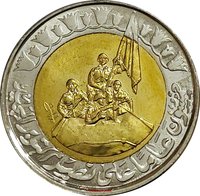
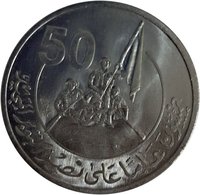
Soldiers with flag, legend below.
Inscription:
خمسون عاما علي نصر اكتوبر المجيد
Translation:
Fifty Years Since the Glorious October Victory
Script: Arabic (naskh)
Language: Arabic
Edge
Reeded
Mints
| Name | Mark |
|---|---|
| Egyptian Mint Authority | — |
Mintings
| Year | Mint Mark | Mintage | Quality | Collection |
|---|---|---|---|---|
| 2023 | — | 5,000 |
Historical background
In 2023, Egypt faced a severe and protracted currency crisis, marked by a stark divergence between the official and parallel market exchange rates for the Egyptian pound. The root cause was a chronic shortage of foreign currency, driven by years of high external debt repayments, a costly import dependency, and the lingering economic shocks from the war in Ukraine. To preserve reserves, the Central Bank of Egypt (CBE) maintained strict capital controls and an artificially strong official rate, which discouraged remittances and foreign investment through formal channels and fueled a booming black market where the pound traded at a discount of up to 50%.
The situation reached a critical point, compelling the Egyptian government to secure a $3 billion financial support package from the International Monetary Fund (IMF) in December 2022, contingent on implementing a flexible exchange rate and structural reforms. After delaying for months, the CBE finally allowed a two-stage devaluation in January and March 2023, which saw the pound lose nearly half its official value against the dollar, moving it closer to the parallel market rate. This was accompanied by a shift to a "crawling peg" system, intended to allow for more gradual and regular adjustments to prevent future large gaps.
These measures, while painful, were aimed at correcting macroeconomic imbalances. The devaluation successfully unified the exchange rates and spurred a significant influx of foreign currency, including over $25 billion in commitments from Gulf allies for strategic investments. However, the immediate consequence for Egyptians was soaring inflation, which peaked at over 38% in September 2023, severely eroding purchasing power and living standards. Thus, 2023 was a pivotal year of harsh correction, setting the stage for a more market-driven currency regime but at a high short-term social cost.
The situation reached a critical point, compelling the Egyptian government to secure a $3 billion financial support package from the International Monetary Fund (IMF) in December 2022, contingent on implementing a flexible exchange rate and structural reforms. After delaying for months, the CBE finally allowed a two-stage devaluation in January and March 2023, which saw the pound lose nearly half its official value against the dollar, moving it closer to the parallel market rate. This was accompanied by a shift to a "crawling peg" system, intended to allow for more gradual and regular adjustments to prevent future large gaps.
These measures, while painful, were aimed at correcting macroeconomic imbalances. The devaluation successfully unified the exchange rates and spurred a significant influx of foreign currency, including over $25 billion in commitments from Gulf allies for strategic investments. However, the immediate consequence for Egyptians was soaring inflation, which peaked at over 38% in September 2023, severely eroding purchasing power and living standards. Thus, 2023 was a pivotal year of harsh correction, setting the stage for a more market-driven currency regime but at a high short-term social cost.
✨ Legendary