

10 baiocchi – Papal States
Add to wishlist
Vatican City
Context
Years: 1858–1864
Country: Vatican City
Issuer: Papal States
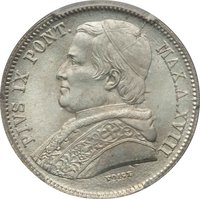
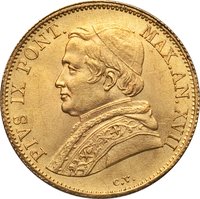
Ruler: Pius IX
Currency:
(1835—1866)
Subdivision: 10 baiocchi = 1 Giulio/Paolo
Demonetized: Yes
Total mintage: 5,612,673
Material
References
KM: #
Numista: #38291
Value
Bullion value: $5.61
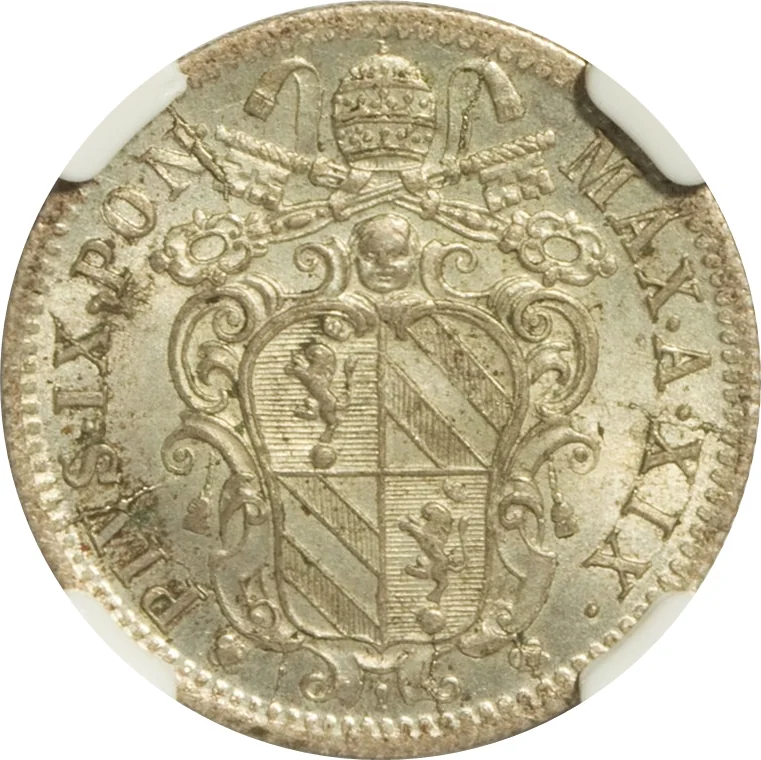
Obverse
Description:
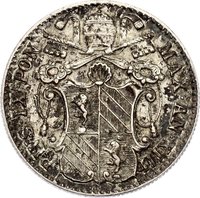
Papal coat of arms
Inscription:
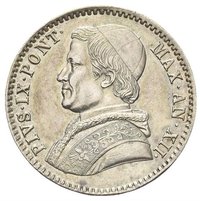
PIVS٠IX٠PON MAX٠A٠XIX٠
Translation:
Pius IX, Pontifex Maximus, Year 19.
Script: Latin
Language: Latin
Engraver: Carl Friedrich Voigt
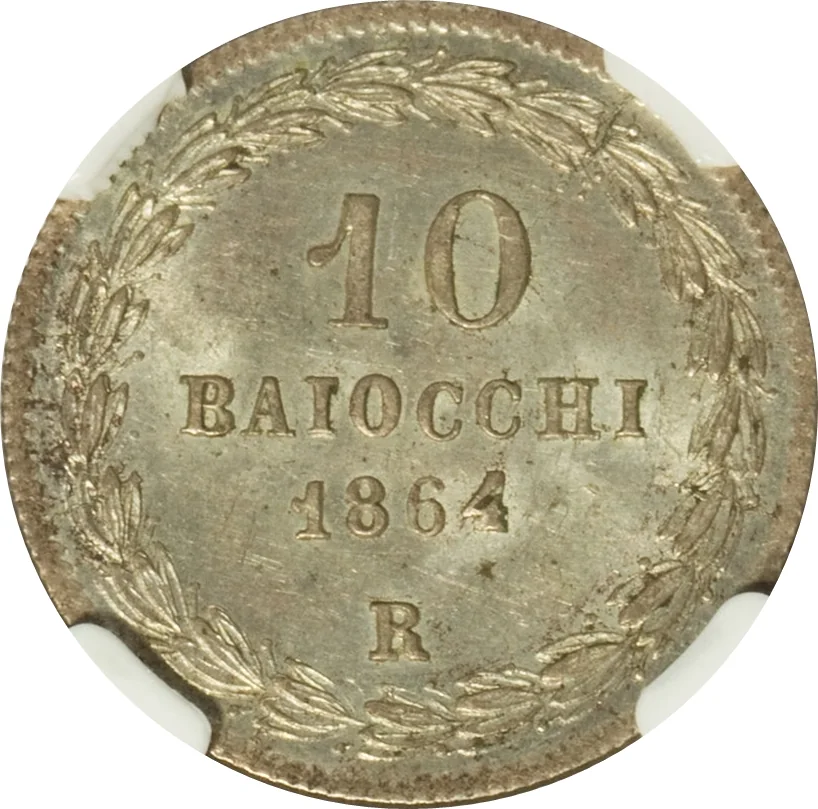
Reverse
Description:
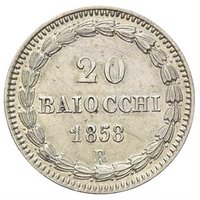
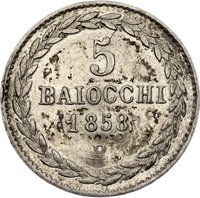
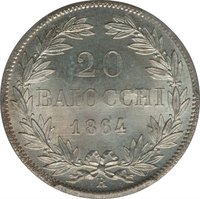
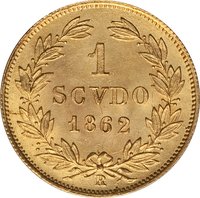
Value, date, and mintmark encircled by wreath.
Inscription:
10
BAIOCCHI
1864
R
BAIOCCHI
1864
R
Script: Latin
Engraver: Carl Friedrich Voigt
Edge
Reeded
Mintings
Historical background
In 1858, the Papal States faced a complex and strained monetary situation, characteristic of the pre-unification Italian peninsula. The state lacked a unified, modern currency system, instead operating with a circulation of multiple coin types. The official standard was the Papal Scudo, divided into 100 Baiocchi, with the Scudo itself valued at 5 French francs due to the influence of the Latin Monetary Union. However, in practice, a bewildering variety of coins circulated simultaneously, including older local issues, coins from neighboring Italian states like Tuscany and the Two Sicilies, and foreign currencies, particularly French and Austrian coins. This proliferation created chronic confusion in commerce and facilitated widespread counterfeiting.
The financial health of the Papal treasury was precarious, heavily reliant on deficit spending and loans to cover administrative costs and the maintenance of a large clerical bureaucracy. Revenues from taxes, customs, and ecclesiastical sources were insufficient, leading to periodic debasement of coinage to generate seigniorage profit. While Pope Pius IX’s government had introduced some modern silver and gold coins in the 1850s, confidence in the currency was undermined by the state’s political instability and its dependence on French military support to maintain temporal power against growing nationalist movements.
Ultimately, the currency situation reflected the broader economic and political fragility of the Papal States on the eve of Italian unification. The lack of a strong, exclusive monetary authority mirrored the weakening temporal sovereignty of the Pope. Within three years, with the annexation of most papal territories into the Kingdom of Italy in 1860-61, the Papal States' currency would begin to be withdrawn and replaced by the unified Italian lira, marking the end of its independent monetary history save for the drastically reduced territory of Vatican City.
The financial health of the Papal treasury was precarious, heavily reliant on deficit spending and loans to cover administrative costs and the maintenance of a large clerical bureaucracy. Revenues from taxes, customs, and ecclesiastical sources were insufficient, leading to periodic debasement of coinage to generate seigniorage profit. While Pope Pius IX’s government had introduced some modern silver and gold coins in the 1850s, confidence in the currency was undermined by the state’s political instability and its dependence on French military support to maintain temporal power against growing nationalist movements.
Ultimately, the currency situation reflected the broader economic and political fragility of the Papal States on the eve of Italian unification. The lack of a strong, exclusive monetary authority mirrored the weakening temporal sovereignty of the Pope. Within three years, with the annexation of most papal territories into the Kingdom of Italy in 1860-61, the Papal States' currency would begin to be withdrawn and replaced by the unified Italian lira, marking the end of its independent monetary history save for the drastically reduced territory of Vatican City.
⭐ Rare