

20 baiocchi – Papal States
Add to wishlist
Vatican City
Context
Years: 1865–1866
Country: Vatican City
Issuer: Papal States
Ruler: Pius IX
Currency:
(1835—1866)
Subdivision: 20 baiocchi = 1 Doppio Giulio
Demonetized: Yes
Total mintage: 12,946,114
Material
References
KM: #
Numista: #38287
Value
Bullion value: $10.96
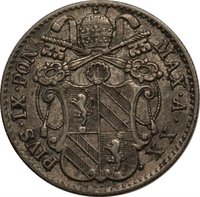
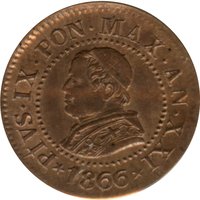
Obverse
Description:
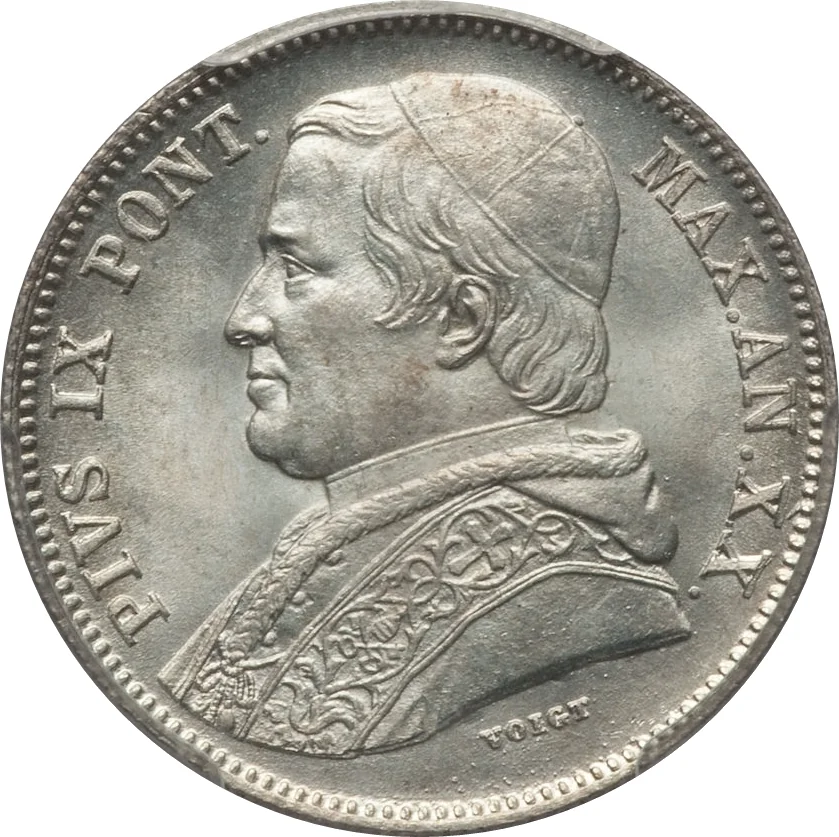
Left-facing bust.
Inscription:
PIVS IX PONT. MAX.AN.XX
VOIGT
VOIGT
Translation:
Pius IX Supreme Pontiff Year 20
Script: Latin
Language: Latin
Engraver: Carl Friedrich Voigt
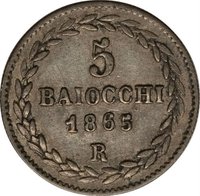
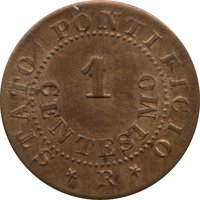
Reverse
Description:
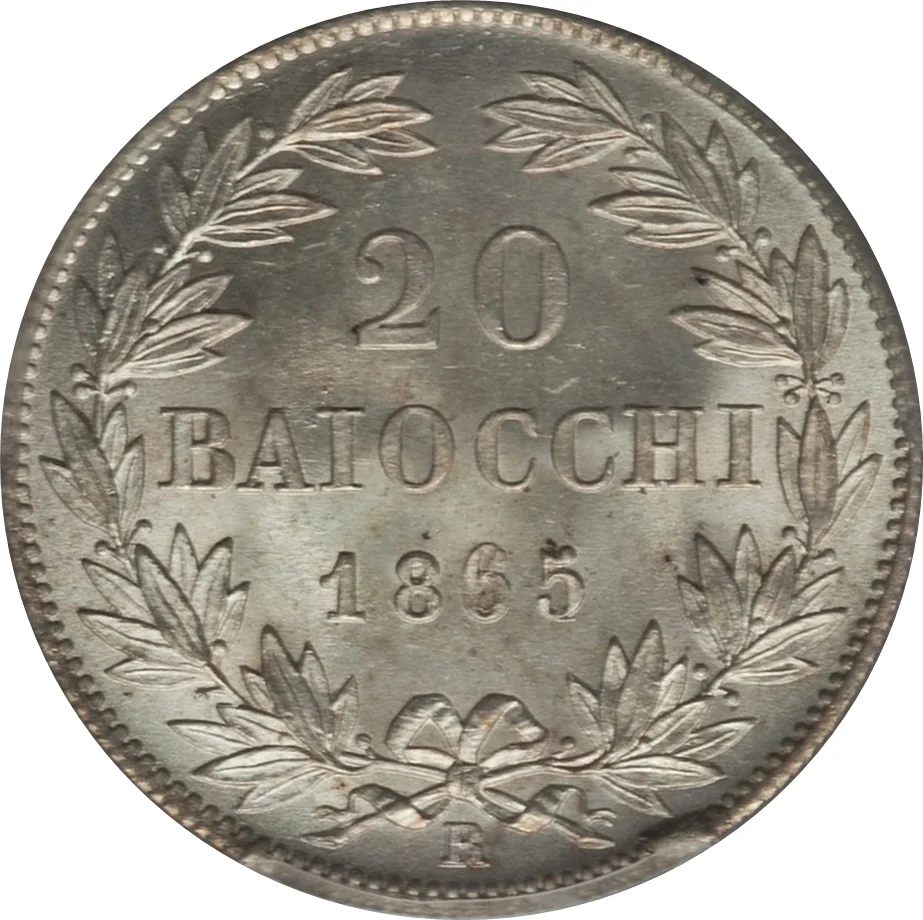
Value and date encircled.
Inscription:
20
BAIOCCHI
1865
R
BAIOCCHI
1865
R
Script: Latin
Engraver: Carl Friedrich Voigt
Edge
Reeded
Mints
| Name | Mark |
|---|---|
| Rome | — |
Mintings
| Year | Mint Mark | Mintage | Quality | Collection |
|---|---|---|---|---|
| 1865 | R | 7,346,114 | ||
| 1866 | R | 5,600,000 |
Historical background
In 1865, the currency situation within the Papal States was complex and transitional, reflecting its precarious political position. The official monetary system was based on the Papal Scudo, divided into 100 Baiocchi, with the Scudo itself valued at 5 French francs due to the States' membership in the Latin Monetary Union (LMU), which it had joined in 1866. However, the practical reality was one of significant monetary plurality. Alongside Papal coinage, French francs, Sardinian lire (from the Kingdom of Piedmont-Sardinia), and other Italian state currencies circulated freely, a consequence of trade, pilgrimage, and the growing political and economic influence of the expanding Kingdom of Italy.
This monetary fragmentation was a direct symptom of the Papal States' declining sovereignty. By 1865, the kingdom of Italy had already annexed most of the Papal territories, leaving only Rome and the surrounding region under direct papal control, protected by a French garrison. The widespread use of "Italian" currency, especially the Piedmontese lira, in daily transactions underscored the inevitable economic integration with the rest of the peninsula, despite political and religious resistance from the Vatican.
Consequently, the monetary landscape was in a state of unresolved tension. While the government of Pope Pius IX maintained its mint and adhered to the LMU standard, the de facto circulation of foreign coins and the looming political end of the Papal States created an unstable and dual system. The Papal Scudo was, in essence, a currency living on borrowed time, its authority eroded not by economic policy but by the imminent force of Italian unification, which would culminate in 1870 with the capture of Rome and the full adoption of the Italian lira.
This monetary fragmentation was a direct symptom of the Papal States' declining sovereignty. By 1865, the kingdom of Italy had already annexed most of the Papal territories, leaving only Rome and the surrounding region under direct papal control, protected by a French garrison. The widespread use of "Italian" currency, especially the Piedmontese lira, in daily transactions underscored the inevitable economic integration with the rest of the peninsula, despite political and religious resistance from the Vatican.
Consequently, the monetary landscape was in a state of unresolved tension. While the government of Pope Pius IX maintained its mint and adhered to the LMU standard, the de facto circulation of foreign coins and the looming political end of the Papal States created an unstable and dual system. The Papal Scudo was, in essence, a currency living on borrowed time, its authority eroded not by economic policy but by the imminent force of Italian unification, which would culminate in 1870 with the capture of Rome and the full adoption of the Italian lira.
🌱 Fairly Common