

1 Peso – Cuba
Cuba
Context
Year: 1994
Issuer: Cuba 
Period:
(since 1959)
Currency:
(since 1914)
Demonetization: 1994
Total mintage: 10,000
Material
Diameter: 32.5 mm
Weight: 12.7 g
Thickness: 2.4 mm
Shape: Round
Composition: Steel colorized
Technique: Coloured
Alignment: Coin alignment
flip
References
KM: #Click to copy to clipboard497
Numista: #38249
Value
Exchange value: 1 CUP
Obverse
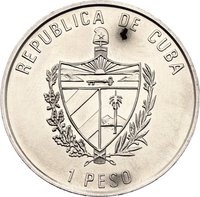
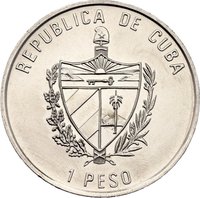
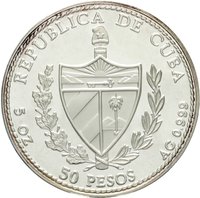
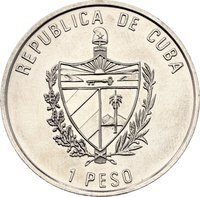
Description:
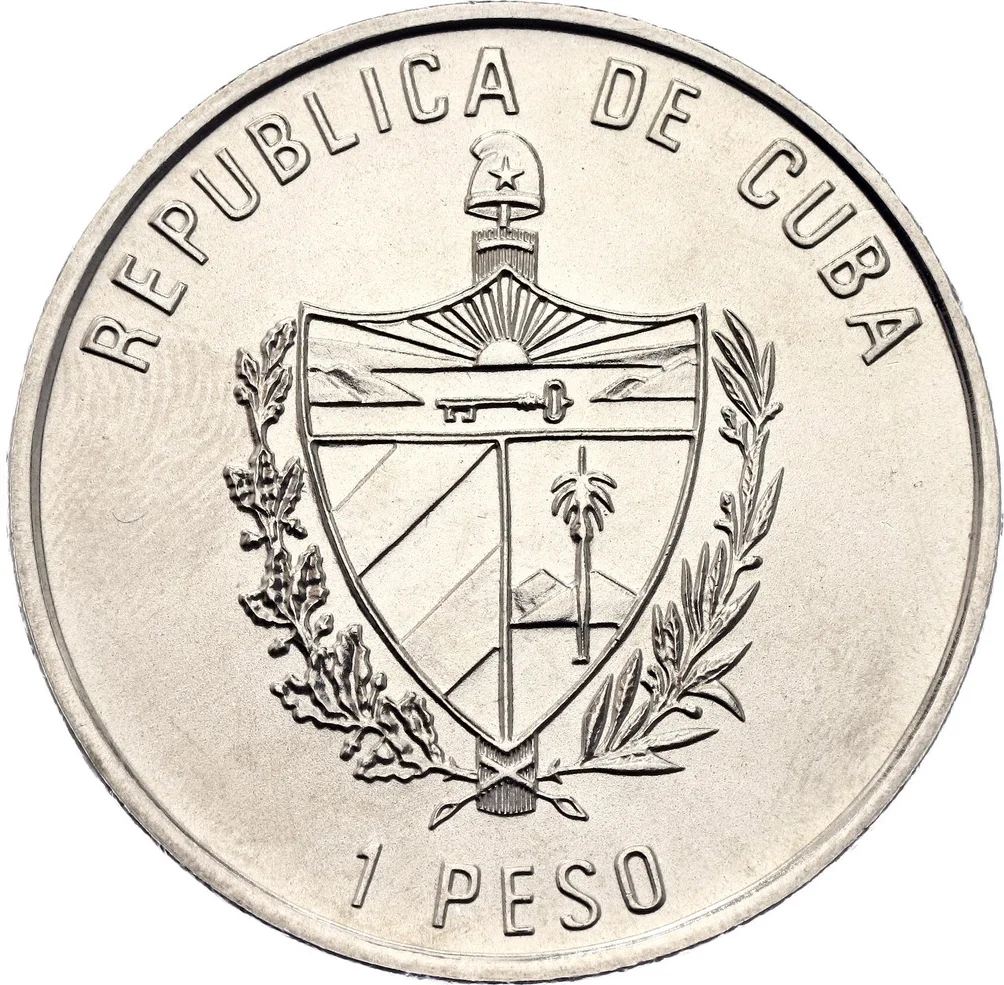
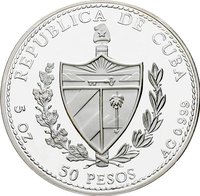
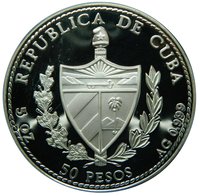
Cuban coat of arms, country name above, face value below.
Inscription:
REPUBLICA DE CUBA
1 PESO
1 PESO
Translation:
REPUBLIC OF CUBA
1 PESO
1 PESO
Script: Latin
Language: Spanish
Engraver: Charles Edward Barber
Reverse
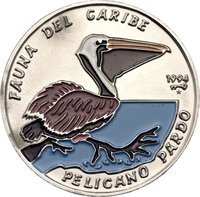
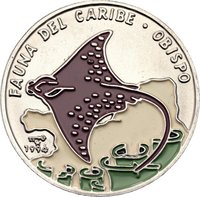
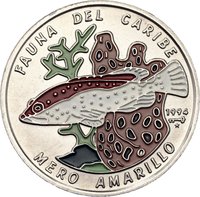
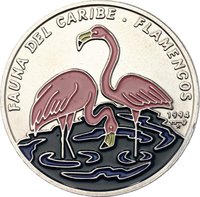
Description:
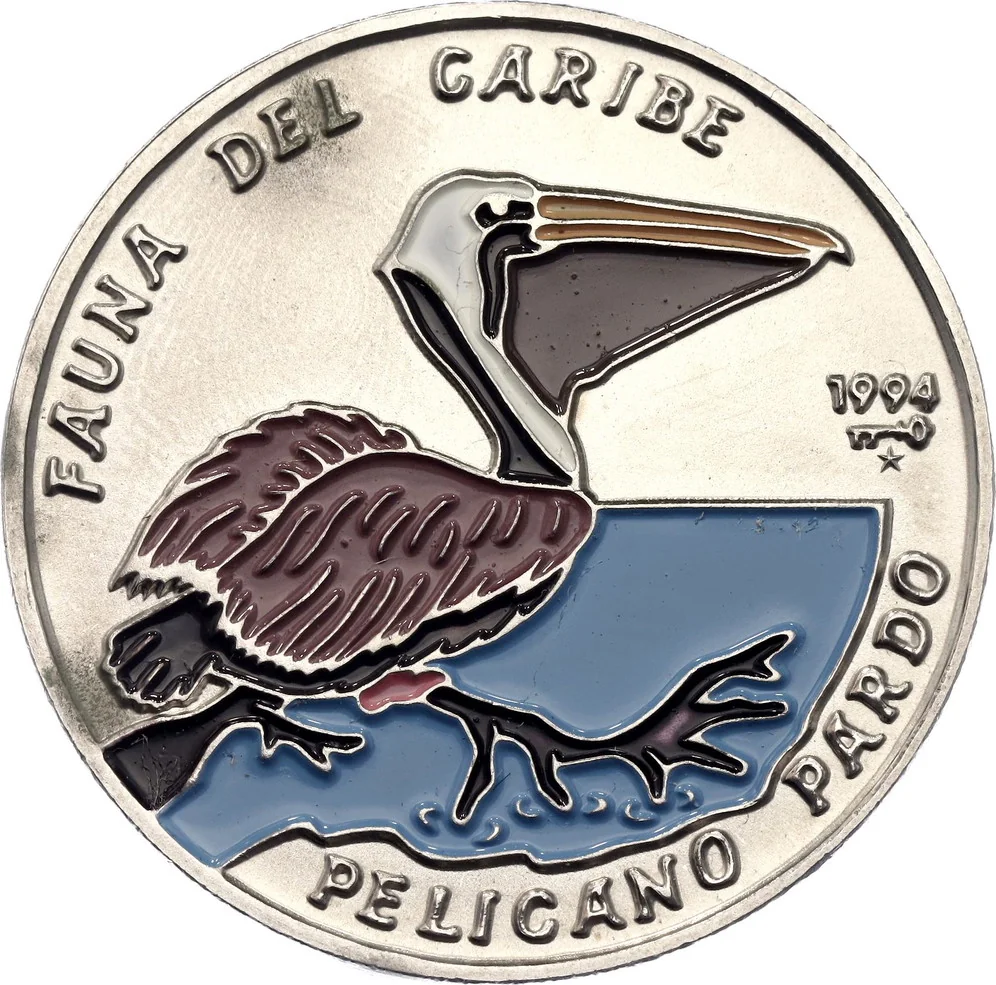
Pelican above animal name, date and mintmark right.
Inscription:
FAUNA DEL CARIBE
1994
PELICANO PARDO
1994
PELICANO PARDO
Translation:
Fauna of the Caribbean
1994
Brown Pelican
1994
Brown Pelican
Script: Latin
Language: Spanish
Engraver: Rigoberto Peláez Alcázar
Edge
Plain
Categories
| Animal> Bird |
| Symbols> Coat of Arms |
Mints
| Name | Mark |
|---|---|
| Empresa Cubana de Acuñaciones | — |
Mintings
| Year | Mint Mark | Mintage | Quality | Collection |
|---|---|---|---|---|
| 1994 | — | 10,000 | BU | |
| 1994 | — | — | Proof |
Historical background
In 1994, Cuba faced its most severe economic crisis since the 1959 revolution, known as the "Special Period in Time of Peace." The collapse of the Soviet Union in 1991 had severed the island's vital economic lifeline, eliminating billions in subsidies, favorable trade, and aid. This precipitated a catastrophic economic contraction, with GDP falling by over 35%. Shortages of food, fuel, and basic goods were rampant, leading to widespread malnutrition and a desperate search for survival strategies by the population.
The currency situation was at the heart of this crisis. Cuba operated with a dual-currency system, though not in its later formalized sense. The Cuban peso (CUP) was the national currency used for salaries and most domestic transactions, but its value was evaporating due to hyperinflation and a collapsing domestic economy. Meanwhile, the U.S. dollar, which had been illegal for citizens to possess since the 1960s, became the de facto currency of the black market, which supplied most essential goods. This created a brutal dichotomy: those with access to dollars (via remittances, tourism, or the black market) could access a parallel economy, while those reliant solely on peso salaries faced destitution.
In response to the crisis, the government enacted dramatic, market-oriented reforms in mid-1994. Most significantly, it legalized the U.S. dollar, allowing citizens to hold and use it openly. This move aimed to capture the hard currency circulating in the black market and provide a safety valve for the population. Concurrently, the government opened mercados agropecuarios (farmers' markets), where food could be sold at market prices in pesos, increasing supply. These measures, alongside a crackdown on illegal emigration during the 1994 rafters crisis, stabilized the extreme social tension and marked a pivotal, albeit reluctant, acceptance of limited capitalist mechanisms to save the socialist system.
The currency situation was at the heart of this crisis. Cuba operated with a dual-currency system, though not in its later formalized sense. The Cuban peso (CUP) was the national currency used for salaries and most domestic transactions, but its value was evaporating due to hyperinflation and a collapsing domestic economy. Meanwhile, the U.S. dollar, which had been illegal for citizens to possess since the 1960s, became the de facto currency of the black market, which supplied most essential goods. This created a brutal dichotomy: those with access to dollars (via remittances, tourism, or the black market) could access a parallel economy, while those reliant solely on peso salaries faced destitution.
In response to the crisis, the government enacted dramatic, market-oriented reforms in mid-1994. Most significantly, it legalized the U.S. dollar, allowing citizens to hold and use it openly. This move aimed to capture the hard currency circulating in the black market and provide a safety valve for the population. Concurrently, the government opened mercados agropecuarios (farmers' markets), where food could be sold at market prices in pesos, increasing supply. These measures, alongside a crackdown on illegal emigration during the 1994 rafters crisis, stabilized the extreme social tension and marked a pivotal, albeit reluctant, acceptance of limited capitalist mechanisms to save the socialist system.
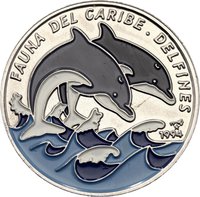
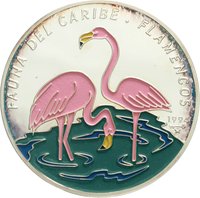
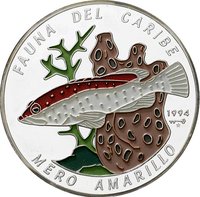
Series: Caribbean Fauna Serie I
⭐ Somewhat Rare