

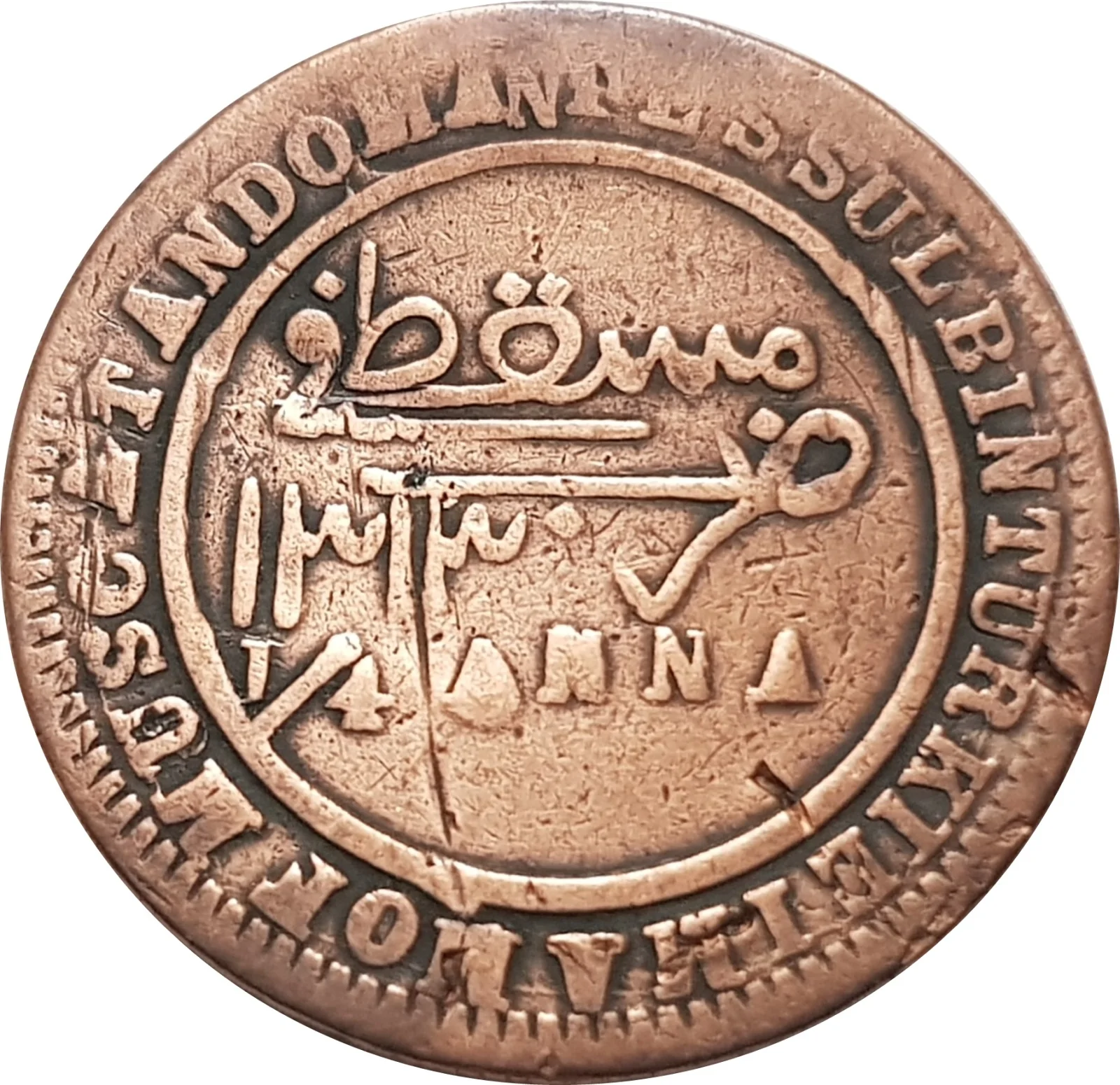
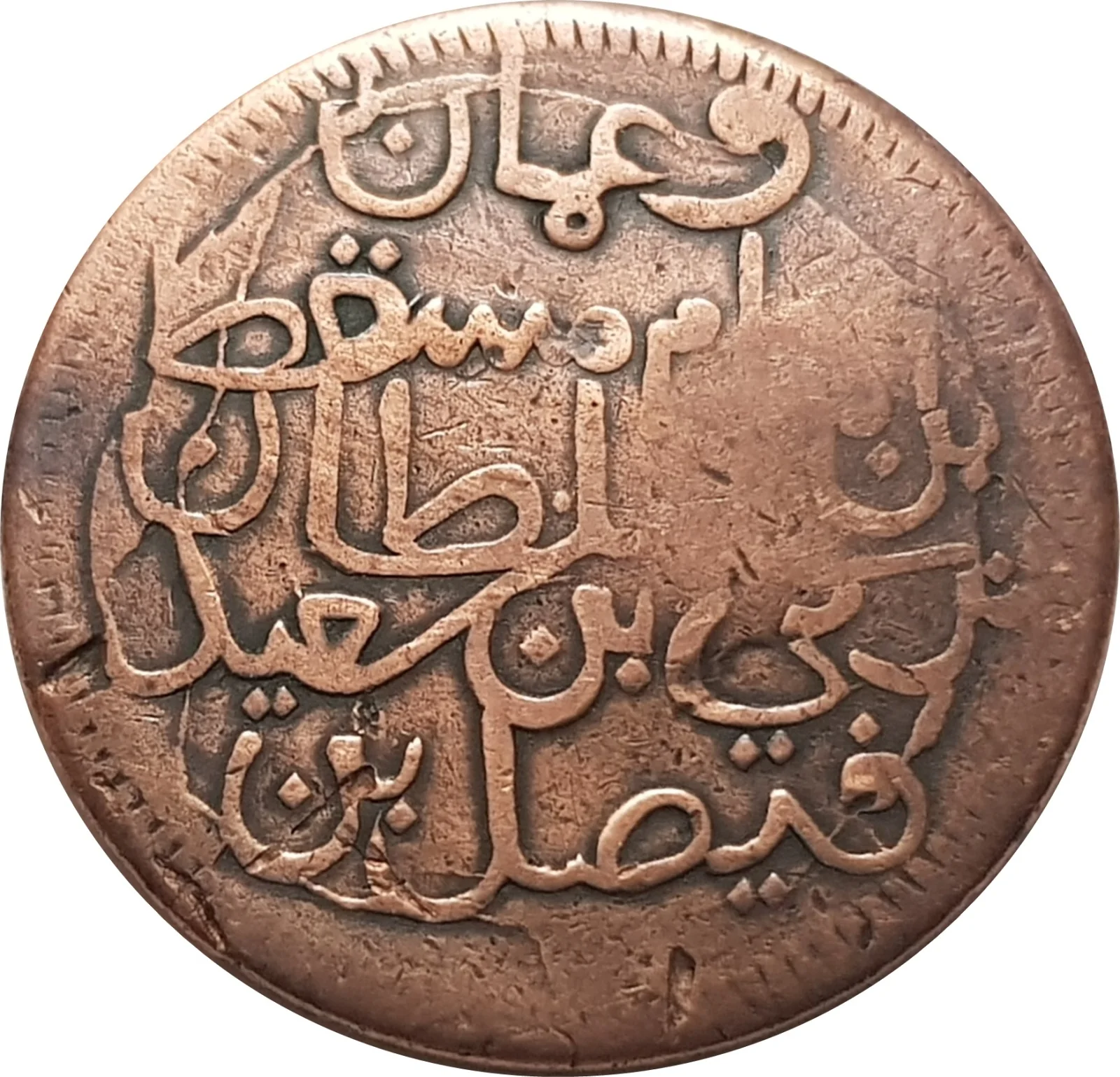
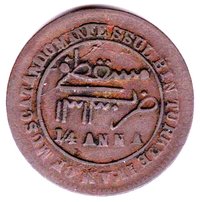
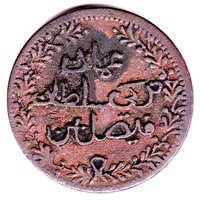
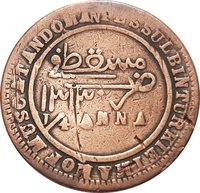
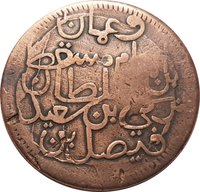
¼ anna – Muscat and Oman
Add to wishlist
Oman
Context
Year: 1896
Islamic (Hijri) Year:: 1313
Country: Oman
Issuer: Muscat and Oman
Ruler: Faisal bin Turki
Currency:
(1891—1959)
Demonetized: Yes
References
KM: #
Numista: #38179
Obverse
Reverse
Edge
Mintings
| Year | Mint Mark | Mintage | Quality | Collection |
|---|---|---|---|---|
| 1896 | — | — |
Historical background
In 1896, the currency situation in Muscat and Oman was a complex reflection of the Sultanate’s position at the crossroads of regional trade and imperial influence. The primary circulating medium was the Maria Theresa thaler (MT$), a silver coin mintued in Austria but ubiquitous throughout the Indian Ocean and Arabian Peninsula. Its high silver content and consistent design made it the preferred unit for large transactions and external trade, particularly with the interior. Alongside the thaler, a variety of other silver coins circulated, including British Indian rupees and Ottoman coins, their values fluctuating based on weight and metallic purity rather than a fixed exchange rate.
Internally, this created a fragmented monetary system. Smaller transactions relied on low-value copper and bronze coins, such as the baiza, but there was no standardized, state-issued coinage for all denominations. The value of coins was often determined by local merchants and money-changers (sarrafs), leading to inconsistencies between coastal ports like Muscat and the interior regions. Furthermore, the decline in the global price of silver in the late 19th century was causing economic strain, as the thaler’s value against the gold-based British sterling was unstable, affecting the Sultanate's purchasing power in international markets.
This monetary heterogeneity was symptomatic of the political realities of the time. While Sultan Faisal bin Turki ruled from Muscat, his authority over the interior was contested, preventing the centralization of economic policy. British political and commercial influence was paramount, and the Indian rupee was increasingly used in government dealings and alongside the thaler in coastal trade. Thus, the currency landscape of 1896 was one of competing foreign coins, with no unified national currency, underscoring Oman’s transitional economy caught between regional traditions and the pressures of global trade and imperialism.
Internally, this created a fragmented monetary system. Smaller transactions relied on low-value copper and bronze coins, such as the baiza, but there was no standardized, state-issued coinage for all denominations. The value of coins was often determined by local merchants and money-changers (sarrafs), leading to inconsistencies between coastal ports like Muscat and the interior regions. Furthermore, the decline in the global price of silver in the late 19th century was causing economic strain, as the thaler’s value against the gold-based British sterling was unstable, affecting the Sultanate's purchasing power in international markets.
This monetary heterogeneity was symptomatic of the political realities of the time. While Sultan Faisal bin Turki ruled from Muscat, his authority over the interior was contested, preventing the centralization of economic policy. British political and commercial influence was paramount, and the Indian rupee was increasingly used in government dealings and alongside the thaler in coastal trade. Thus, the currency landscape of 1896 was one of competing foreign coins, with no unified national currency, underscoring Oman’s transitional economy caught between regional traditions and the pressures of global trade and imperialism.
💎 Very Rare