

1 farthing – Jamaica
Add to wishlist
Jamaica
Context
Material
Diameter: 20.25 mm
Weight: 2.75 g
Thickness: 1.29 mm
Shape: Round
Composition: Nickel brass
Magnetic: No
Technique: Milled
Alignment: Medal alignment
flip
References
KM: #
Numista: #14256
Obverse
Description:
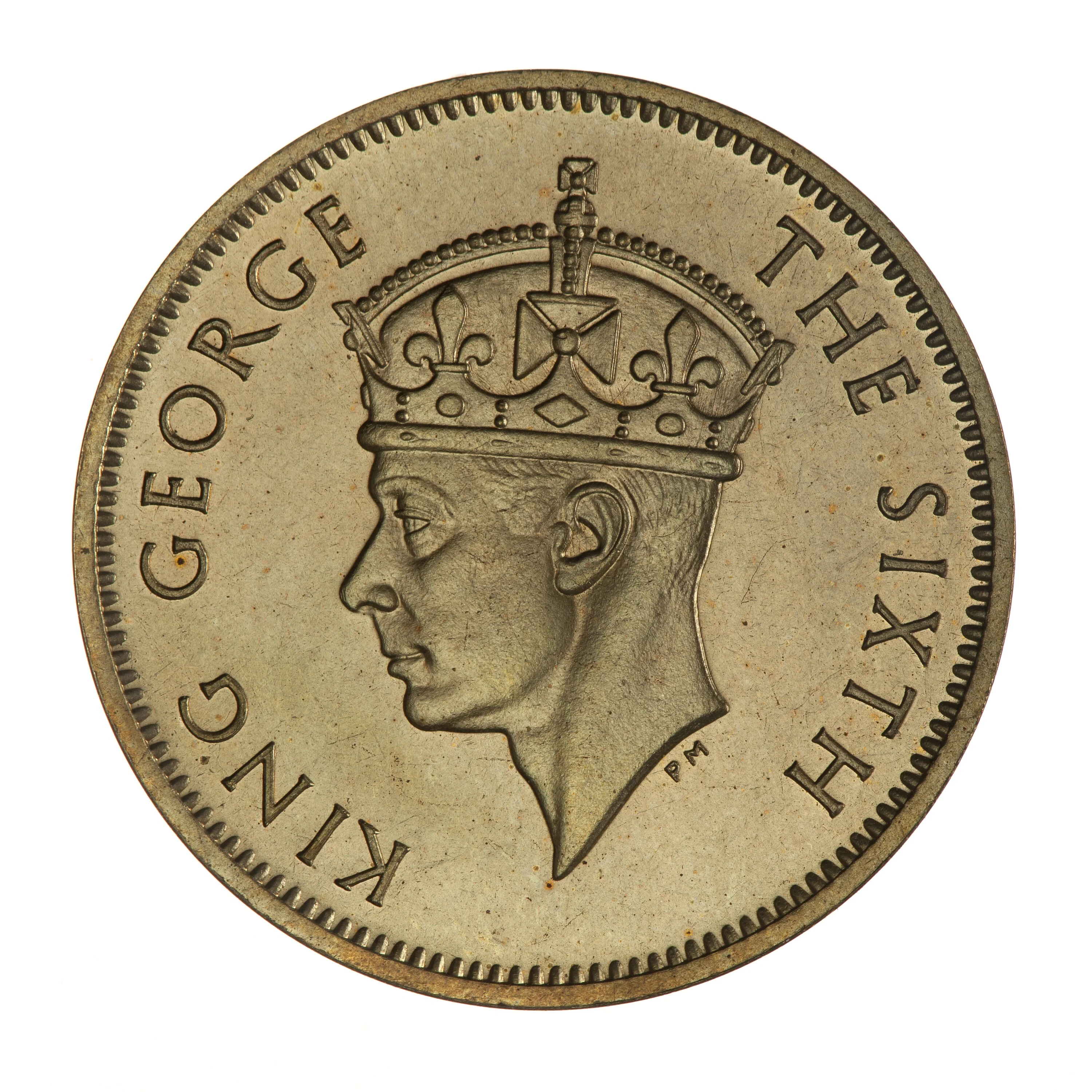
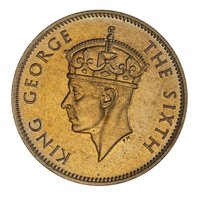
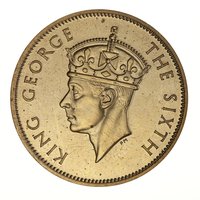
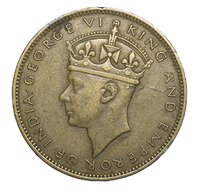
GEORGE VI crowned left. Surrounding legend.
Inscription:
KING GEORGE THE SIXTH
PM
PM
Translation:
KING GEORGE THE SIXTH
BY THE GRACE OF GOD, KING OF ALL THE BRITISH DOMINIONS, DEFENDER OF THE FAITH, EMPEROR OF INDIA
BY THE GRACE OF GOD, KING OF ALL THE BRITISH DOMINIONS, DEFENDER OF THE FAITH, EMPEROR OF INDIA
Script: Latin
Language: English
Engraver: Percy Metcalfe
Reverse
Description:
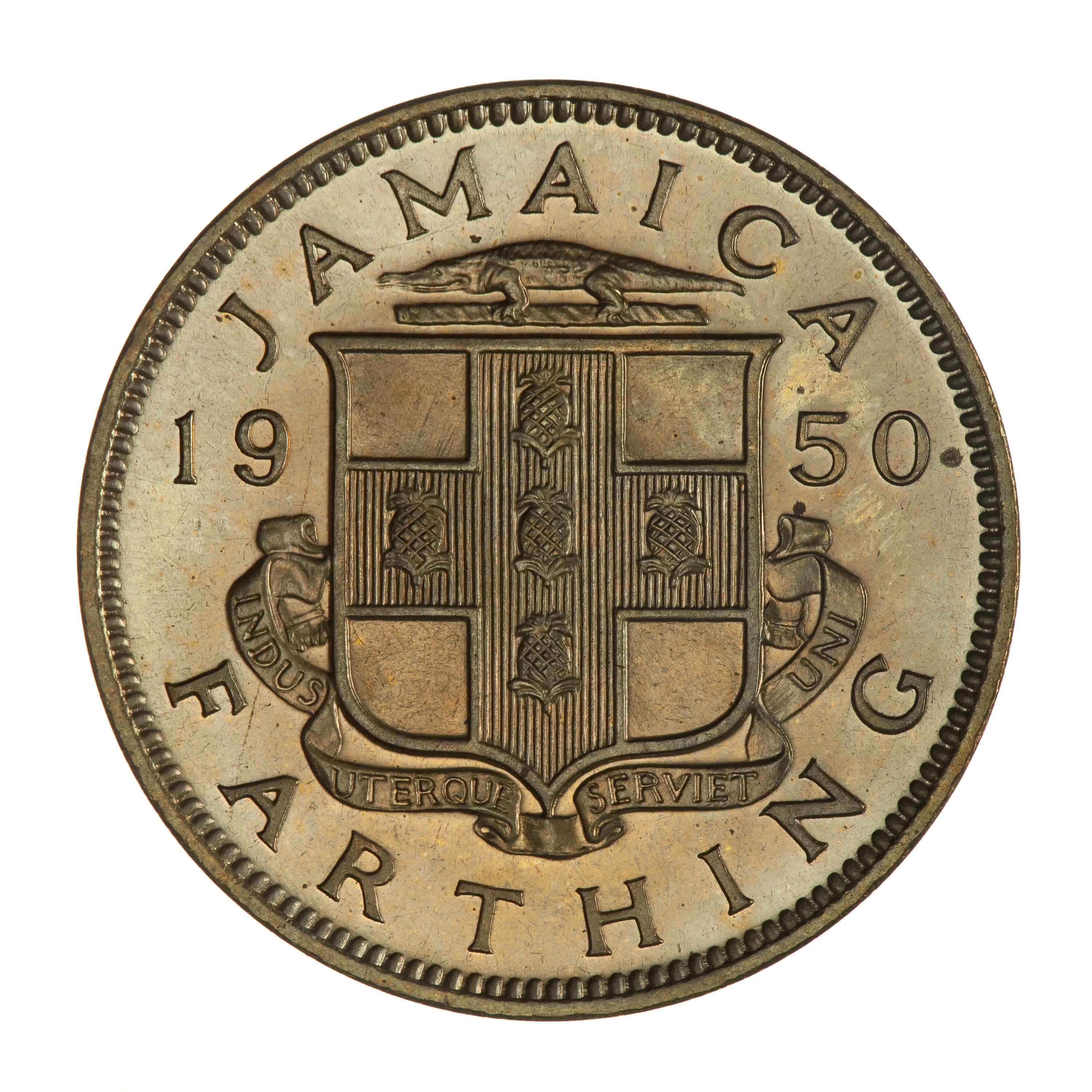
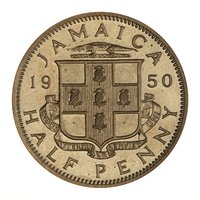
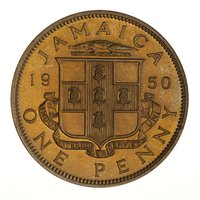
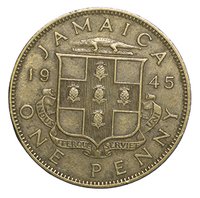
Jamaican coat of arms.
Inscription:
JAMAICA
1950
FARTHING
INDUS UTERQUE SERVIET UNI
1950
FARTHING
INDUS UTERQUE SERVIET UNI
Translation:
JAMAICA
1950
FARTHING
THE TWO INDIES WILL SERVE AS ONE
1950
FARTHING
THE TWO INDIES WILL SERVE AS ONE
Script: Latin
Language: Latin
Engraver: Percy Metcalfe
Edge
Plain
Mints
| Name | Mark |
|---|---|
| Royal Mint (Tower Hill) | — |
Mintings
| Year | Mint Mark | Mintage | Quality | Collection |
|---|---|---|---|---|
| 1950 | — | 288,000 | ||
| 1950 | — | — | Proof | |
| 1952 | — | 288,000 | ||
| 1952 | — | — | Proof |
Historical background
In 1950, Jamaica was a British colony operating under a currency system directly tied to the United Kingdom. The official currency was the Jamaican pound (£J), which was pegged at par with the British pound sterling. This meant that banknotes and coins in circulation were issued by a central board on behalf of the British government, and the colony's monetary policy was effectively set in London. The system was designed to ensure stability and facilitate trade within the Sterling Area, a bloc of countries that linked their currencies to sterling and held their reserves in London.
Economically, the post-World War II period was a time of transition and growing nationalist sentiment. The Jamaican economy was heavily dependent on sugar and banana exports, with the banana industry facing significant challenges from disease. While the currency peg provided stability, it also meant Jamaica had little independent control over its money supply or interest rates, which were aligned with British economic conditions rather than local needs. This period saw the beginnings of political movements advocating for greater self-governance, which would eventually include calls for monetary independence.
The currency situation in 1950, therefore, was one of colonial dependency. It was stable but inflexible, serving as a symbol of Jamaica's political and economic ties to Britain. This system would remain largely unchanged until the early 1960s, when the path to independence accelerated financial reforms, leading to the establishment of the Bank of Jamaica in 1960 and the eventual decimalization and introduction of the Jamaican dollar in 1969.
Economically, the post-World War II period was a time of transition and growing nationalist sentiment. The Jamaican economy was heavily dependent on sugar and banana exports, with the banana industry facing significant challenges from disease. While the currency peg provided stability, it also meant Jamaica had little independent control over its money supply or interest rates, which were aligned with British economic conditions rather than local needs. This period saw the beginnings of political movements advocating for greater self-governance, which would eventually include calls for monetary independence.
The currency situation in 1950, therefore, was one of colonial dependency. It was stable but inflexible, serving as a symbol of Jamaica's political and economic ties to Britain. This system would remain largely unchanged until the early 1960s, when the path to independence accelerated financial reforms, leading to the establishment of the Bank of Jamaica in 1960 and the eventual decimalization and introduction of the Jamaican dollar in 1969.
🌱 Common