

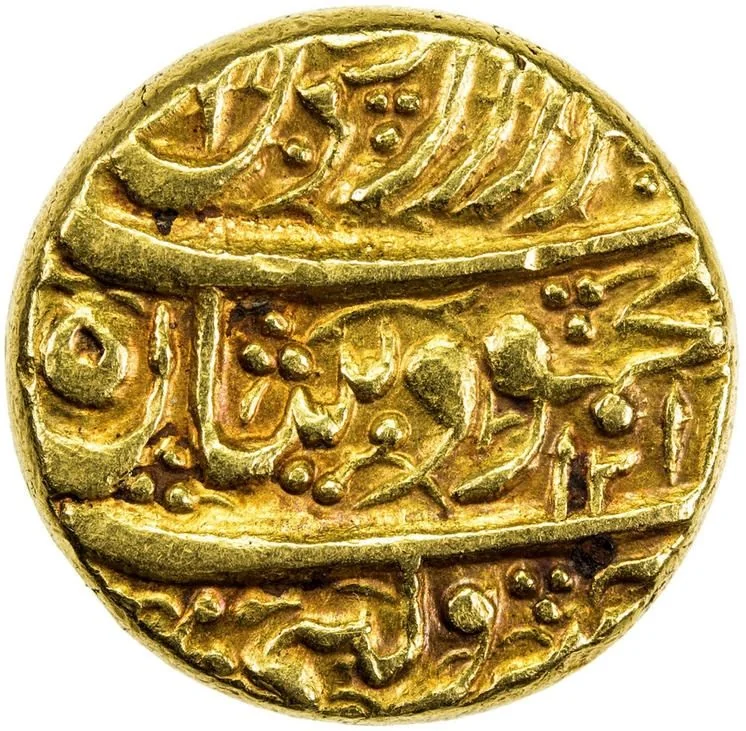
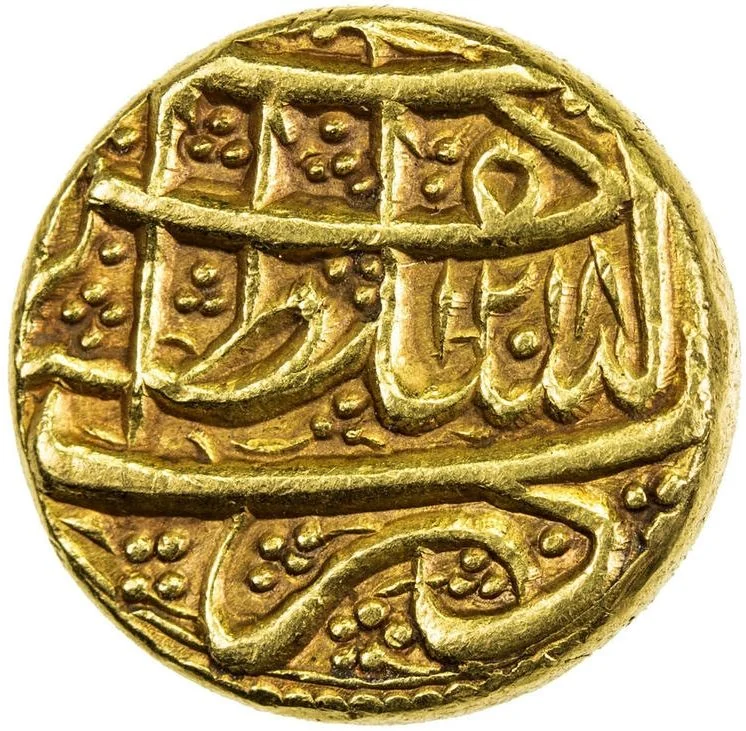
1 Mohur – Afghanistan
Afghanistan
Context
Material
Weight: 10.92 g
Gold weight: 10.92 g
Shape: Irregular round
Composition: Gold
Magnetic: No
Technique: Hammered
References
KM: #Click to copy to clipboard399
Numista: #380010
Value
Bullion value: $1817.96
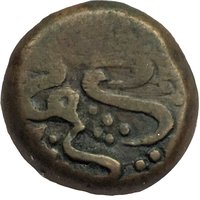
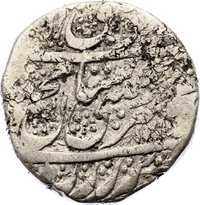
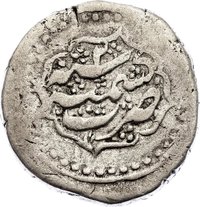
Obverse
Reverse
Edge
Plain.
Mints
| Name | Mark |
|---|---|
| Herat | — |
Mintings
| Year | Mint Mark | Mintage | Quality | Collection |
|---|---|---|---|---|
| 1801 | — | — | ||
| 1802 | — | — | ||
| 1803 | — | — |
Historical background
In 1801, the currency situation in Afghanistan was decentralized and complex, reflecting the fragmented political landscape of the Durrani Empire following the death of Ahmad Shah Durrani in 1772. The empire was divided among rival successors, with Shah Zaman ruling in Kabul but facing significant internal challenges. There was no unified national currency; instead, monetary systems were regional and often tied to the authority of local khans and rulers. The primary circulating coins were silver rupees and gold mohurs, but their weight, purity, and design could vary considerably depending on the mint city, such as Kabul, Kandahar, or Peshawar.
This period was marked by economic instability due to constant internal power struggles and external pressures, particularly from the Sikh Empire in the east and the Qajar dynasty of Persia in the west. The flow of precious metals was erratic, and debasement of coinage was a common practice for rulers needing to finance military campaigns. Alongside official coinage, older Mughal and Persian coins, as well as foreign currencies from neighboring trade regions, remained in circulation, further complicating transactions. The economy was predominantly agrarian and relied heavily on long-distance trade (the famous "Silk Road" caravans), making a reliable and trustworthy currency essential, yet elusive.
Consequently, the monetary environment was one of uncertainty and localization. Merchants and money changers (sarraf) played a crucial role in assessing the value of diverse coins, charging fees for exchange and effectively acting as the period's bankers. The lack of a strong central authority to standardize currency hindered large-scale commerce and was both a symptom and a cause of the empire's decline. The currency situation in 1801, therefore, was not one of system but of adaptation, mirroring a polity in transition and setting the stage for the eventual rise of a new dynasty under Dost Mohammad Khan later in the century.
This period was marked by economic instability due to constant internal power struggles and external pressures, particularly from the Sikh Empire in the east and the Qajar dynasty of Persia in the west. The flow of precious metals was erratic, and debasement of coinage was a common practice for rulers needing to finance military campaigns. Alongside official coinage, older Mughal and Persian coins, as well as foreign currencies from neighboring trade regions, remained in circulation, further complicating transactions. The economy was predominantly agrarian and relied heavily on long-distance trade (the famous "Silk Road" caravans), making a reliable and trustworthy currency essential, yet elusive.
Consequently, the monetary environment was one of uncertainty and localization. Merchants and money changers (sarraf) played a crucial role in assessing the value of diverse coins, charging fees for exchange and effectively acting as the period's bankers. The lack of a strong central authority to standardize currency hindered large-scale commerce and was both a symptom and a cause of the empire's decline. The currency situation in 1801, therefore, was not one of system but of adaptation, mirroring a polity in transition and setting the stage for the eventual rise of a new dynasty under Dost Mohammad Khan later in the century.
✨ Legendary