

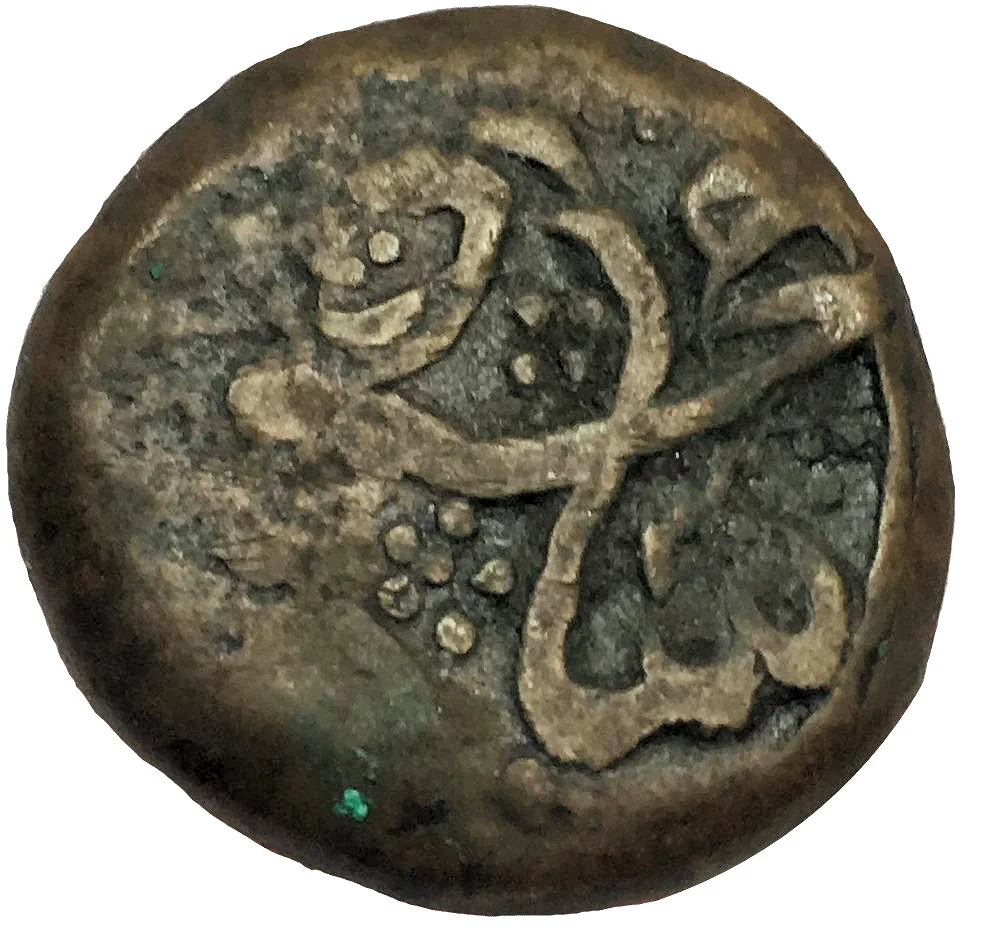
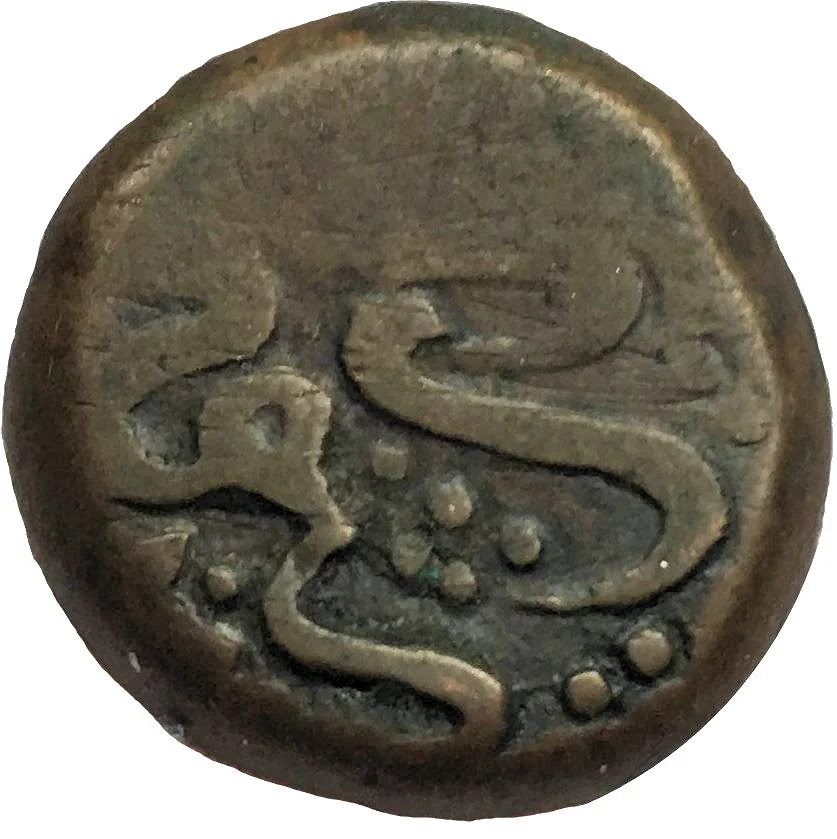
1 Falus – Afghanistan
Afghanistan
Context
Year: 1798
Islamic (Hijri) Year: 1212
Issuer: Afghanistan 
Ruler: Zaman Shah
Currency:
(1747—1891)
Demonetized: Yes
Material
Diameter: 20 mm
Weight: 9.6 g
Thickness: 3.8 mm
Shape: Irregular round
Composition: Copper
Magnetic: No
References
KM: #Click to copy to clipboard572.1
Numista: #108318
Obverse
Description:
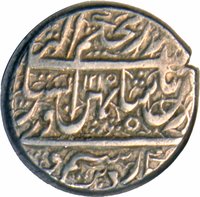
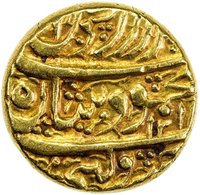
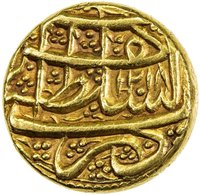
Zaman: [Date]
Script: Arabic
Reverse
Description:
Inscribed.
Script: Arabic
Edge
Mintings
| Year | Mint Mark | Mintage | Quality | Collection |
|---|---|---|---|---|
| 1798 | — | — |
Historical background
In 1798, Afghanistan existed not as a unified nation but as a collection of rival principalities and tribal confederations, most notably the Durrani Empire, which was in a state of severe fragmentation following the death of its founder, Ahmad Shah Durrani, in 1772. The political landscape was dominated by a brutal civil war between Zaman Shah Durrani, who held Kabul and the nominal title of Shah, and his half-brother Mahmud Shah, who controlled Herat. This constant warfare and lack of central authority directly dictated the chaotic monetary situation, as no single entity could enforce a uniform currency system across the region.
The currency in circulation was a complex mix of legacy and emerging coinage. The primary unit was the silver rupee, a continuation of the monetary system established by Ahmad Shah Durrani, often bearing the names and calligraphy of current or previous rulers. However, the purity, weight, and design of these rupees varied dramatically depending on which faction or city mint (sikka) produced them—Kabul, Kandahar, Herat, or Peshawar each issued their own. Alongside these, older Mughal rupees and Persian krans remained in use through trade and hoarding. The most critical economic activity was the flow of trade caravans along the Silk Road, which brought foreign coins, particularly the Spanish silver dollar (8 reales) and the British Indian rupee, into the bazaars, further complicating the monetary environment.
Consequently, the currency situation was one of localized instability and uncertainty. The value of a coin depended heavily on its physical silver content and the perceived authority of its minter, leading to constant discounting and complex exchange rates. Debasement of coinage was a common tactic for warring rulers to finance their armies, eroding public trust. For merchants and the populace, this meant conducting transactions required careful weighing and assaying of coins rather than simply counting them, making commerce cumbersome and risky amidst the overarching climate of political insecurity and economic disruption caused by ongoing dynastic conflict.
The currency in circulation was a complex mix of legacy and emerging coinage. The primary unit was the silver rupee, a continuation of the monetary system established by Ahmad Shah Durrani, often bearing the names and calligraphy of current or previous rulers. However, the purity, weight, and design of these rupees varied dramatically depending on which faction or city mint (sikka) produced them—Kabul, Kandahar, Herat, or Peshawar each issued their own. Alongside these, older Mughal rupees and Persian krans remained in use through trade and hoarding. The most critical economic activity was the flow of trade caravans along the Silk Road, which brought foreign coins, particularly the Spanish silver dollar (8 reales) and the British Indian rupee, into the bazaars, further complicating the monetary environment.
Consequently, the currency situation was one of localized instability and uncertainty. The value of a coin depended heavily on its physical silver content and the perceived authority of its minter, leading to constant discounting and complex exchange rates. Debasement of coinage was a common tactic for warring rulers to finance their armies, eroding public trust. For merchants and the populace, this meant conducting transactions required careful weighing and assaying of coins rather than simply counting them, making commerce cumbersome and risky amidst the overarching climate of political insecurity and economic disruption caused by ongoing dynastic conflict.
💎 Extremely Rare