

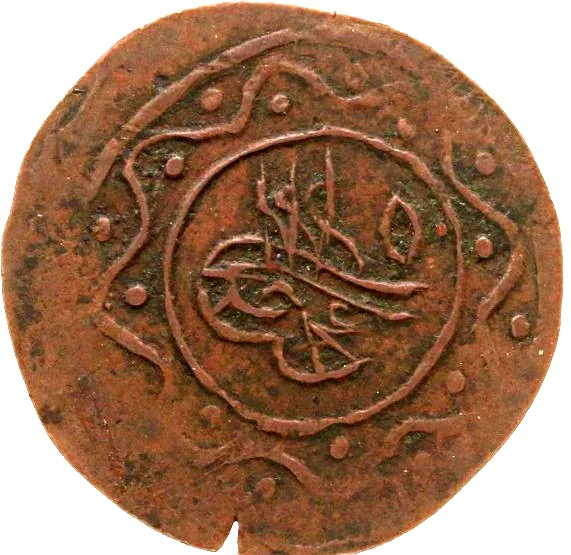
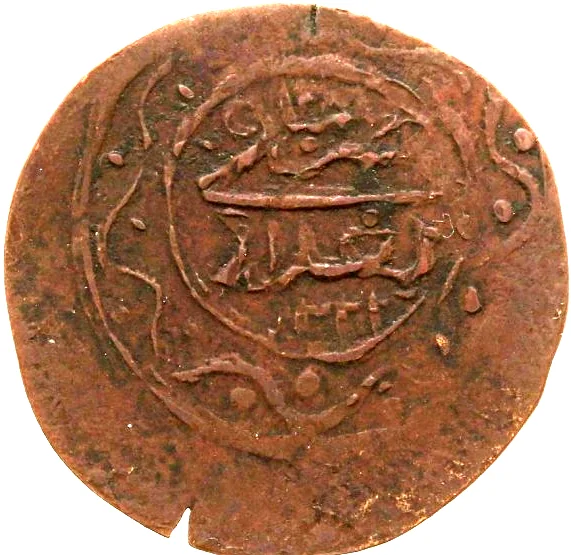
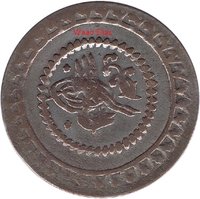
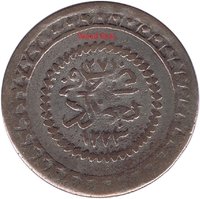
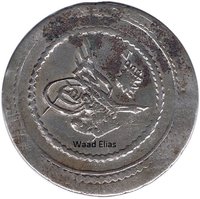
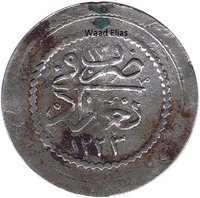
2 Para – Baghdad Eyalet
Iraq
Context
Year: 1808
Islamic (Hijri) Year: 1223
Country: Iraq 
Issuer: Baghdad Eyalet
Ruler: Mahmud II
Currency:
(1688—1844)
Demonetized: Yes
Material
References
KM: #Click to copy to clipboard79
Numista: #142407
Mintings
| Year | Mint Mark | Mintage | Quality | Collection |
|---|---|---|---|---|
| 1808 | — | — |
Historical background
In 1808, the currency situation in Baghdad Eyalet, a vast Ottoman province encompassing much of modern-day Iraq, was characterized by severe instability and complexity. The primary unit of account was the Ottoman kuruş (piastre), but its value and physical presence were undermined by chronic shortages of specie and rampant debasement by the imperial mint in Constantinople. This was exacerbated by the eyalet's geographical and political distance from the capital, which allowed local authorities and money-changers (sarrafs) to wield significant control over the monetary sphere, further fragmenting the currency system.
In practice, daily transactions relied on a bewildering array of physical currencies. Alongside heavily debased Ottoman coins, widely circulated foreign silver coins, most notably the Spanish 8-reales piece (Spanish dollar) and the Maria Theresa thaler, served as major trade currencies due to their reliable silver content. Additionally, a multitude of older and regional coins, including Persian abbasis and even ancient coins, remained in use, each valued by weight and perceived metal purity rather than face value. This heterogeneity made commerce difficult and fostered a powerful class of money-changers who were essential for assessing, exchanging, and often discounting this mosaic of coinage.
The root of this monetary chaos lay in the weak central control from Constantinople and the precarious financial state of the Ottoman Empire, which frequently debased coinage to finance its deficits. For Baghdad Eyalet, this meant price inflation, uncertainty in trade, and a de facto monetary system that operated independently of imperial standards. The situation reflected the broader administrative and economic challenges of the era, where local markets and intermediaries adapted to, but were also victims of, imperial fiscal mismanagement.
In practice, daily transactions relied on a bewildering array of physical currencies. Alongside heavily debased Ottoman coins, widely circulated foreign silver coins, most notably the Spanish 8-reales piece (Spanish dollar) and the Maria Theresa thaler, served as major trade currencies due to their reliable silver content. Additionally, a multitude of older and regional coins, including Persian abbasis and even ancient coins, remained in use, each valued by weight and perceived metal purity rather than face value. This heterogeneity made commerce difficult and fostered a powerful class of money-changers who were essential for assessing, exchanging, and often discounting this mosaic of coinage.
The root of this monetary chaos lay in the weak central control from Constantinople and the precarious financial state of the Ottoman Empire, which frequently debased coinage to finance its deficits. For Baghdad Eyalet, this meant price inflation, uncertainty in trade, and a de facto monetary system that operated independently of imperial standards. The situation reflected the broader administrative and economic challenges of the era, where local markets and intermediaries adapted to, but were also victims of, imperial fiscal mismanagement.

✨ Legendary