

10 cents – Canada
Add to wishlist
Canada
Context
Years: 1990–2000
Issuer: Canada
Ruler: Elizabeth II
Currency:
(since 1858)
Total mintage: 1,239,017,066
Material
References
KM: #
Numista: #380
Value
Exchange value: 0.10 CAD
Inflation-adjusted value: 0.22 CAD
Obverse
Description:
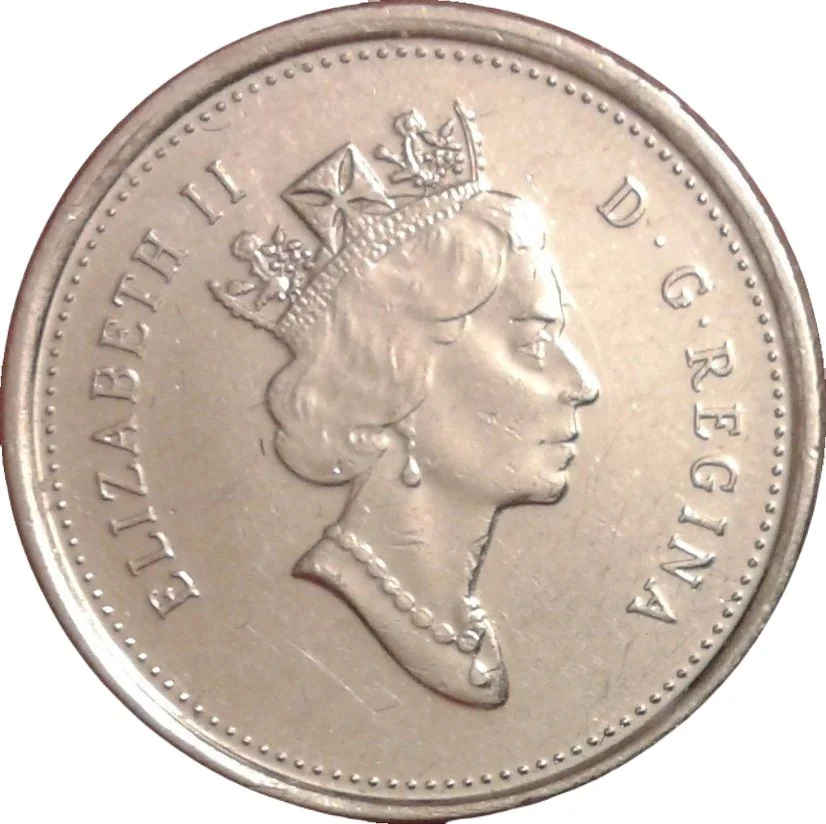
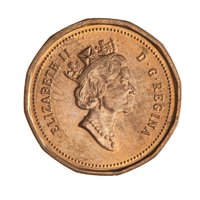
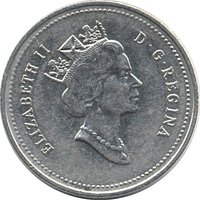
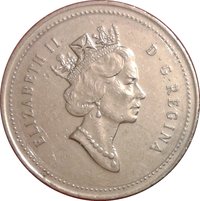
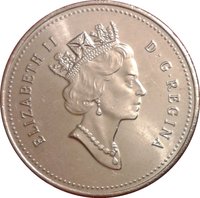
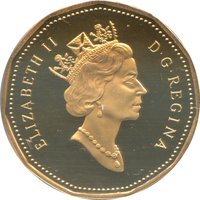
Queen Elizabeth II at 64, wearing the royal diadem and jewels, facing right.
Inscription:
ELIZABETH II D·G·REGINA
Translation:
Elizabeth II, by the Grace of God, Queen
Script: Latin
Language: Latin
Engraver: Ago Aarand
Designer: Dora de Pédery-Hunt
Reverse
Description:
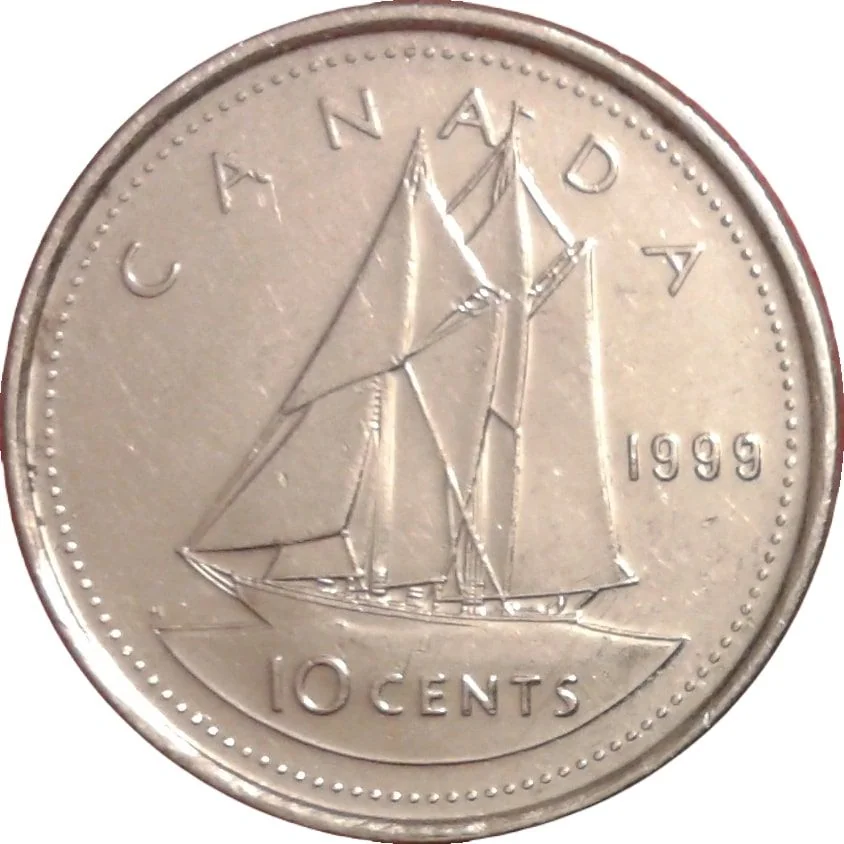
"Bluenose," the celebrated Canadian racing schooner from Nova Scotia, with the value below, date right, and country name above.
Inscription:
CANADA
1999
10 CENTS
H
1999
10 CENTS
H
Script: Latin
Designer: Emanuel Otto Hahn
Edge
Milled
Categories
| Transportation> Watercraft |
Mints
| Name | Mark |
|---|---|
| Royal Canadian Mint of Winnipeg | — |
| Royal Canadian Mint of Winnipeg | W |
Mintings
| Year | Mint Mark | Mintage | Quality | Collection |
|---|---|---|---|---|
| 1990 | — | 65,023,000 | ||
| 1990 | — | — | Prooflike | |
| 1990 | — | 158,068 | Proof | |
| 1991 | — | 50,397,000 | ||
| 1991 | — | 131,888 | Proof | |
| 1991 | — | — | Prooflike | |
| 1993 | — | 143,065 | Proof | |
| 1993 | — | 135,569,000 | ||
| 1993 | — | — | Prooflike | |
| 1994 | — | — | Prooflike | |
| 1994 | — | 104,485 | Proof | |
| 1994 | — | 145,800,000 | ||
| 1994 | — | — | BU | |
| 1995 | — | 123,875,000 | ||
| 1995 | — | — | Prooflike | |
| 1995 | — | 101,560 | Proof | |
| 1995 | — | — | BU | |
| 1996 | — | 51,814,000 | ||
| 1996 | — | — | BU | |
| 1997 | — | 43,126,000 | ||
| 1997 | — | — | Prooflike | |
| 1998 | — | 203,514,000 | ||
| 1998 | — | — | Prooflike | |
| 1998 | W | — | Prooflike | |
| 1998 | W | — | ||
| 1998 | — | — | BU | |
| 1998 | W | — | BU | |
| 1999 | — | 258,462,000 | ||
| 1999 | — | — | Prooflike | |
| 1999 | — | — | BU | |
| 2000 | — | 160,798,000 | ||
| 2000 | — | — | Prooflike | |
| 2000 | W | — | Prooflike | |
| 2000 | W | — | ||
| 2000 | — | — | BU | |
| 2000 | W | — | BU |
Historical background
In 1990, Canada's currency situation was dominated by the lingering effects of the Bank of Canada's aggressive battle against inflation under Governor John Crow. Having officially adopted a policy of price stability as its primary goal in 1988, the central bank maintained a tight monetary policy with high interest rates throughout 1990. This approach successfully reduced inflation from the highs of the previous decade but came at a significant economic cost, contributing to a slowdown that would deepen into a severe recession by the year's end. The high interest rates also attracted foreign capital, which propped up the value of the Canadian dollar, keeping it relatively strong despite weakening economic fundamentals.
The Canadian dollar traded in a range roughly between 85 and 89 cents U.S. for much of the year, a level considered high by historical standards at the time. This strength was a double-edged sword: it helped control inflation by making imports cheaper but simultaneously hurt the crucial export sector, particularly manufacturing and forestry. Businesses struggling to compete internationally due to the high "loonie" added to the growing political and public pressure on the Bank of Canada to ease its restrictive policy. The currency's value became a focal point in the national debate over the trade-offs between conquering inflation and fostering economic growth.
By the close of 1990, the economic landscape was shifting decisively. The recession, compounded by the new Goods and Services Tax (GST) implemented in January 1991, forced a policy pivot. With inflation visibly receding and unemployment rising, the Bank of Canada began a gradual easing of interest rates in late 1990, a process that would accelerate in 1991. This marked the start of a long decline for the Canadian dollar, which would lose substantial ground against the U.S. currency throughout the following years as monetary policy focused on stimulating a stagnant economy rather than defending the currency's value.
The Canadian dollar traded in a range roughly between 85 and 89 cents U.S. for much of the year, a level considered high by historical standards at the time. This strength was a double-edged sword: it helped control inflation by making imports cheaper but simultaneously hurt the crucial export sector, particularly manufacturing and forestry. Businesses struggling to compete internationally due to the high "loonie" added to the growing political and public pressure on the Bank of Canada to ease its restrictive policy. The currency's value became a focal point in the national debate over the trade-offs between conquering inflation and fostering economic growth.
By the close of 1990, the economic landscape was shifting decisively. The recession, compounded by the new Goods and Services Tax (GST) implemented in January 1991, forced a policy pivot. With inflation visibly receding and unemployment rising, the Bank of Canada began a gradual easing of interest rates in late 1990, a process that would accelerate in 1991. This marked the start of a long decline for the Canadian dollar, which would lose substantial ground against the U.S. currency throughout the following years as monetary policy focused on stimulating a stagnant economy rather than defending the currency's value.
Series: 1990 Canada circulation coins
🌱 Very Common