

2000 dinars – Iran
Add to wishlist
Iran
Context
Years: 1912–1913
Issuer: Iran
Ruler: Ahmad Shah
Currency:
(1825—1932)
Demonetized: Yes
Total mintage: 13,412,000
Material
References
KM: #
Numista: #37975
Value
Bullion value: $20.67
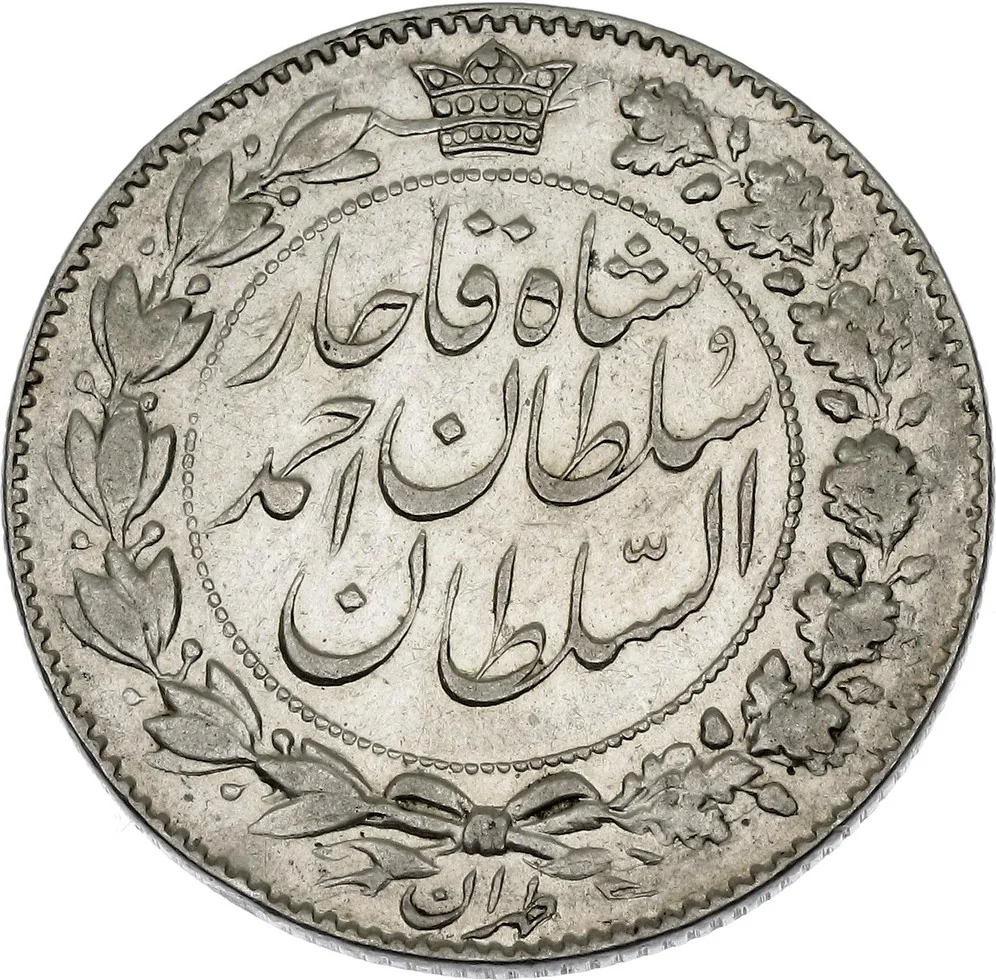
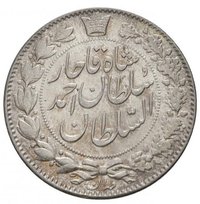
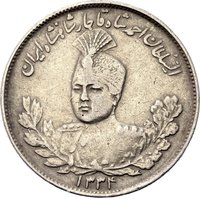
Obverse
Description:
Crowned wreath encircles legend.
Inscription:
السّلطان سلطان احمد شاه قاجار
طهران
طهران
Translation:
The Sultan Sultan Ahmad Shah Qajar
Tehran
Tehran
Language: Arabic
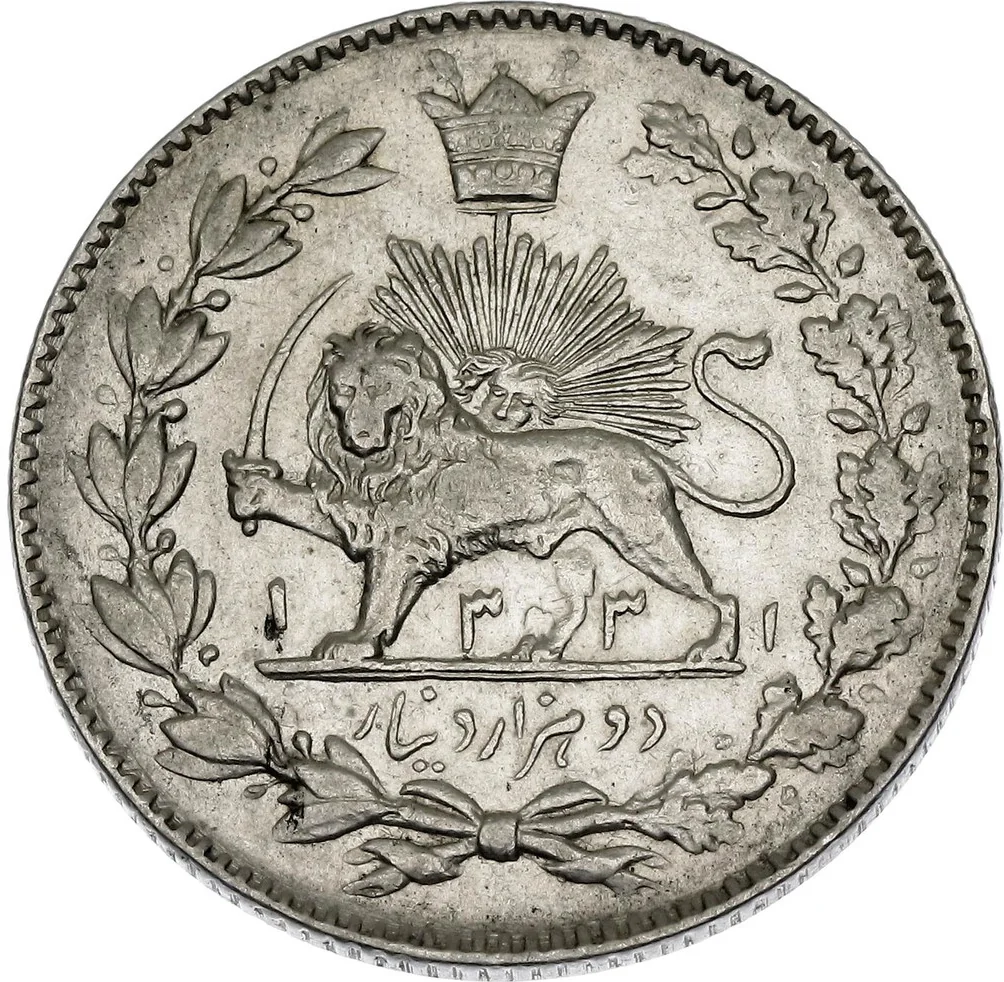
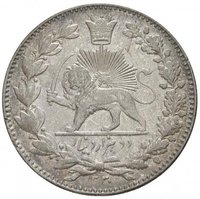
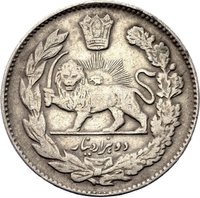
Reverse
Description:
Lion with sword in crowned wreath.
Inscription:
۱۳۳۰
دوهزار دینار
دوهزار دینار
Translation:
One Thousand Three Hundred and Thirty
Two Thousand Dinars
Two Thousand Dinars
Language: Persian
Edge
Reeded
Mintings
| Year | Mint Mark | Mintage | Quality | Collection |
|---|---|---|---|---|
| 1912 | — | — | ||
| 1913 | — | 13,412,000 |
Historical background
In 1912, Iran’s currency system was in a state of profound disarray and transition, a legacy of centuries of debasement and foreign intervention. The primary circulating coin was the silver qiran (also spelled kran), but its value had been severely eroded due to the government's chronic practice of reducing its silver content to finance deficits. Alongside this, the copper shahi and dinar coins were used for small transactions, while the gold toman (equal to 10 qirans) served as a unit of account. The lack of a unified, trusted national currency and the simultaneous circulation of various depreciated and counterfeit coins created a chaotic monetary environment that stifled trade and economic stability.
This instability was exacerbated by intense geopolitical pressure. Russia and Britain, operating within their respective spheres of influence in the north and south of Iran, further complicated the financial landscape. The Imperial Bank of Persia (British) and the Loan Bank of Persia (Russian) issued their own banknotes, which competed with state-issued currency and were often more trusted by merchants. This effectively meant that foreign powers controlled significant portions of the money supply, undermining Iranian sovereignty. The government's reliance on foreign loans, particularly from Russia, often came with conditions that further mortgaged the nation’s revenues and economic independence.
The year 1912 fell within a critical period of attempted reform. Following the Constitutional Revolution (1905-1911), the new government sought to modernize the economy and centralize financial control. Efforts were underway to establish a national bank to issue a stable currency and break the foreign stranglehold. However, these efforts were hampered by political turmoil, empty state coffers, and the looming shadow of World War I. Thus, the currency situation in 1912 was defined by a tense struggle between a decaying traditional system, foreign dominance, and nascent, yet fragile, movements toward national monetary sovereignty.
This instability was exacerbated by intense geopolitical pressure. Russia and Britain, operating within their respective spheres of influence in the north and south of Iran, further complicated the financial landscape. The Imperial Bank of Persia (British) and the Loan Bank of Persia (Russian) issued their own banknotes, which competed with state-issued currency and were often more trusted by merchants. This effectively meant that foreign powers controlled significant portions of the money supply, undermining Iranian sovereignty. The government's reliance on foreign loans, particularly from Russia, often came with conditions that further mortgaged the nation’s revenues and economic independence.
The year 1912 fell within a critical period of attempted reform. Following the Constitutional Revolution (1905-1911), the new government sought to modernize the economy and centralize financial control. Efforts were underway to establish a national bank to issue a stable currency and break the foreign stranglehold. However, these efforts were hampered by political turmoil, empty state coffers, and the looming shadow of World War I. Thus, the currency situation in 1912 was defined by a tense struggle between a decaying traditional system, foreign dominance, and nascent, yet fragile, movements toward national monetary sovereignty.
Series: 1912 Iran circulation coins
💎 Very Rare