

½ Cent – Sultanate of Trengganu
Malaysia
Context
Year: 1907
Islamic (Hijri) Year: 1325
Country: Malaysia 
Issuer: Sultanate of Trengganu
Currency:
(1709—1909)
Demonetized: Yes
Material
References
KM: #Click to copy to clipboard18
Numista: #379531
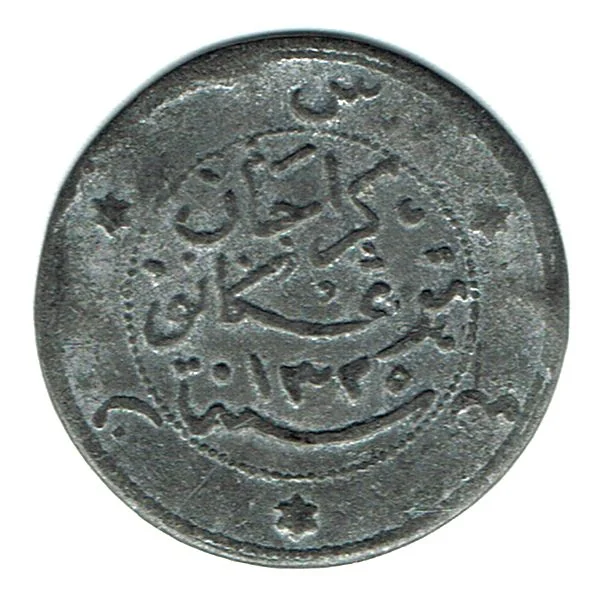
Obverse
Description:
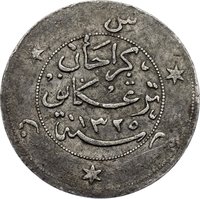
Three-line Arabic inscription within a beaded circle. Three stars separate Arabic letters in the border.
Inscription:
كراجاان
ترڠݢانو
١٣٢٥
س ✶ ز✶ ع
ترڠݢانو
١٣٢٥
س ✶ ز✶ ع
Translation:
Sultan of Terengganu
1325 AH
S · Z · 'A
1325 AH
S · Z · 'A
Script: Arabic
Languages: Jawi, Arabic numerals
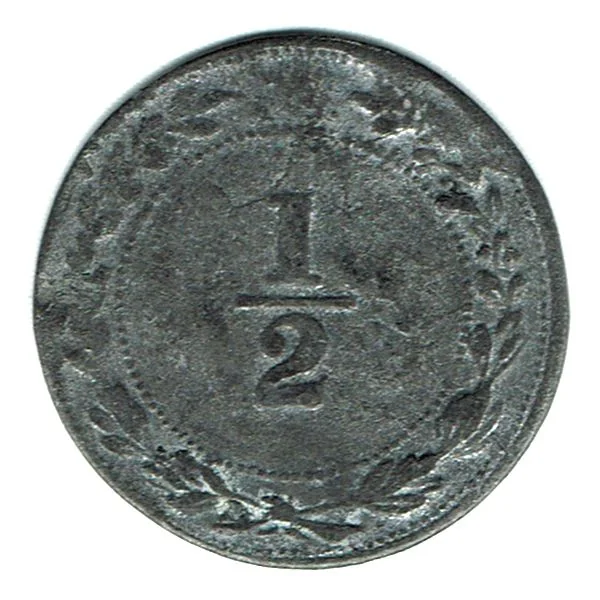
Reverse
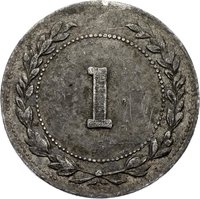
Description:
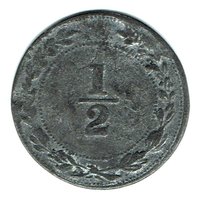
Beaded circle with leaf wreath border.
Inscription:
1/2
Edge
Plain
Mintings
| Year | Mint Mark | Mintage | Quality | Collection |
|---|---|---|---|---|
| 1907 | — | — |
Historical background
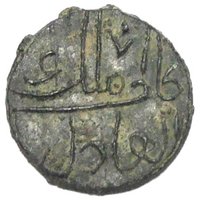
The currency situation in the Sultanate of Trengganu in 1907 was defined by a complex and transitional monetary system, caught between traditional Malay sovereignty and the expanding economic influence of British Malaya. The state's official currency was the Trengganu keping, a small tin coin locally minted under the authority of Sultan Zainal Abidin III. These coins, often holed for stringing, were the backbone of everyday small-scale transactions for the Malay populace. However, the value of the keping was not fixed to external standards and could fluctuate, causing instability in larger trade.
Alongside the keping, the wider regional trade and government finances were heavily influenced by the Straits Settlements dollar, the robust silver currency issued by the British in Singapore, Penang, and Malacca. This created a dual-currency economy where merchants and the state itself had to navigate exchange rates between the two. Furthermore, other silver dollars, such as the Mexican and British trade dollars, also circulated, adding to the complexity. This multiplicity reflected Trengganu's position as a semi-independent state engaged in international trade but not yet fully integrated into the British colonial monetary sphere.
The year 1907 fell within a period of increasing British political pressure following the 1905 Anglo-Siamese Treaty, which made Trengganu a British protectorate. While the Sultanate retained internal autonomy, the currency situation symbolized its diminishing economic sovereignty. The inefficiency of the keping for larger commerce and the state's growing administrative costs made the stability of the Straits dollar increasingly attractive. Thus, 1907 represents the twilight of a purely indigenous currency system, presaging its eventual replacement and the full monetary integration of Trengganu into the colonial economy in the following decades.
Alongside the keping, the wider regional trade and government finances were heavily influenced by the Straits Settlements dollar, the robust silver currency issued by the British in Singapore, Penang, and Malacca. This created a dual-currency economy where merchants and the state itself had to navigate exchange rates between the two. Furthermore, other silver dollars, such as the Mexican and British trade dollars, also circulated, adding to the complexity. This multiplicity reflected Trengganu's position as a semi-independent state engaged in international trade but not yet fully integrated into the British colonial monetary sphere.
The year 1907 fell within a period of increasing British political pressure following the 1905 Anglo-Siamese Treaty, which made Trengganu a British protectorate. While the Sultanate retained internal autonomy, the currency situation symbolized its diminishing economic sovereignty. The inefficiency of the keping for larger commerce and the state's growing administrative costs made the stability of the Straits dollar increasingly attractive. Thus, 1907 represents the twilight of a purely indigenous currency system, presaging its eventual replacement and the full monetary integration of Trengganu into the colonial economy in the following decades.
✨ Legendary