

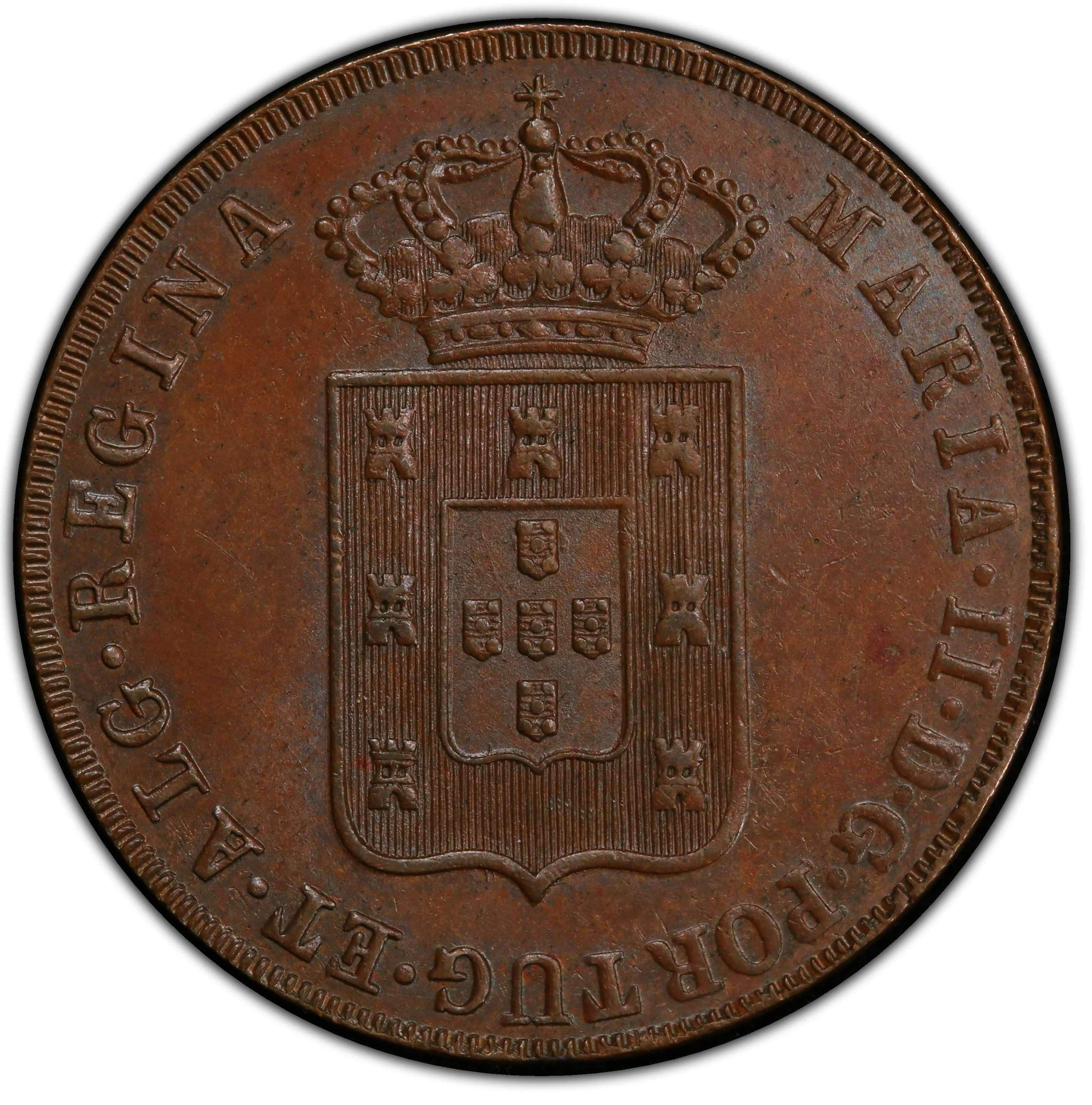
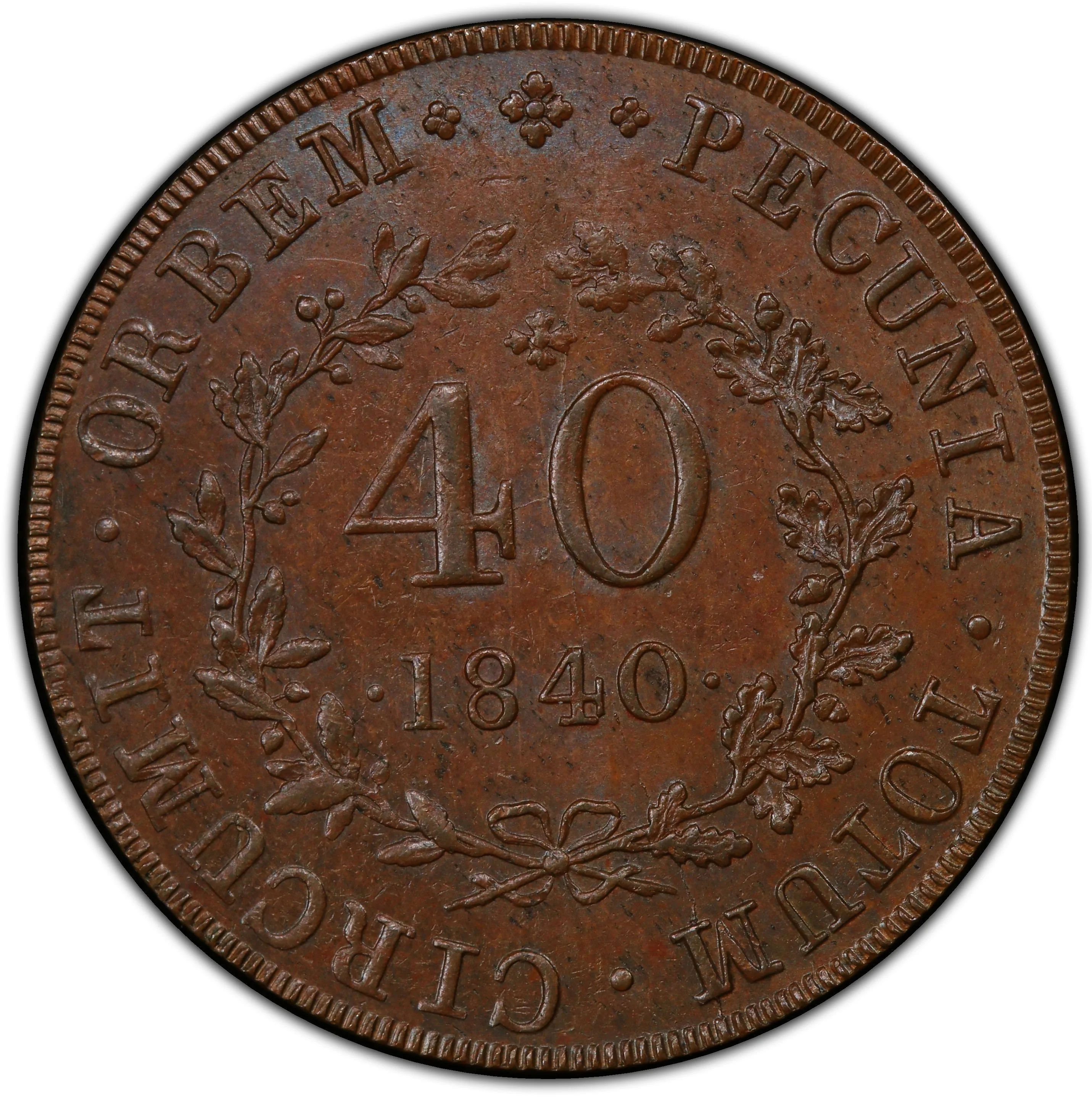
40 réis – Mozambique
Add to wishlist
Mozambique
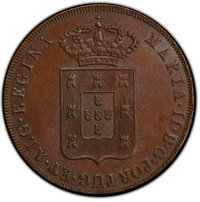
Obverse
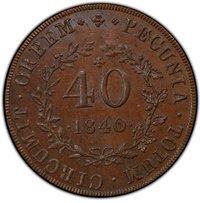
Reverse
Description:
Value and date encircled.
Inscription:
PECUNIA. TOTUM. CIRCUMIT. ORBEM
40
1840
40
1840
Script: Latin
Edge
Mintings
| Year | Mint Mark | Mintage | Quality | Collection |
|---|---|---|---|---|
| 1840 | — | 20,000 |
Historical background
In 1840, Mozambique was not a unified political or economic entity with a single currency. The region was under the nominal control of the Portuguese Empire, but its effective authority was largely limited to a handful of coastal prazo (land grant) settlements and trading posts like Ilha de Moçambique, Sofala, and Quelimane. The interior remained under the dominion of powerful indigenous states, such as the Gaza Empire and various Yao and Makua chieftaincies, each with their own economic systems. Consequently, there was no standardized "Mozambican" currency; instead, the monetary landscape was a complex mosaic of foreign coins, traditional valuables, and barter.
The dominant currency in Portuguese-controlled ports was the Réis, the currency of Portugal itself, often in the form of low-value copper and silver coins. However, due to Portugal's economic weakness and limited trade volume, these coins circulated alongside a plethora of other foreign currencies. Most importantly, the Spanish American silver dollar (known as the piece of eight or pataca) was the principal trade coin for higher-value transactions and long-distance commerce, prized for its consistent silver content. British, French, and Indian coins also circulated due to the region's integration into Indian Ocean trade networks.
Beyond the coastal enclaves, the economy of the vast interior operated on different principles. Barter was widespread, with cloth, beads, and salt acting as key mediums of exchange. For larger transactions and as a store of wealth, people used mitakos (strings of imported cowrie shells) and, most significantly, panos (rolls of cotton cloth, often of specific sizes and weaves). Ivory itself was not just an export commodity but also a high-value unit for major transactions. Thus, in 1840, one's "currency" in Mozambique depended entirely on whether one was in a Portuguese customs house, a Swahili trading town, or the court of an inland African king.
The dominant currency in Portuguese-controlled ports was the Réis, the currency of Portugal itself, often in the form of low-value copper and silver coins. However, due to Portugal's economic weakness and limited trade volume, these coins circulated alongside a plethora of other foreign currencies. Most importantly, the Spanish American silver dollar (known as the piece of eight or pataca) was the principal trade coin for higher-value transactions and long-distance commerce, prized for its consistent silver content. British, French, and Indian coins also circulated due to the region's integration into Indian Ocean trade networks.
Beyond the coastal enclaves, the economy of the vast interior operated on different principles. Barter was widespread, with cloth, beads, and salt acting as key mediums of exchange. For larger transactions and as a store of wealth, people used mitakos (strings of imported cowrie shells) and, most significantly, panos (rolls of cotton cloth, often of specific sizes and weaves). Ivory itself was not just an export commodity but also a high-value unit for major transactions. Thus, in 1840, one's "currency" in Mozambique depended entirely on whether one was in a Portuguese customs house, a Swahili trading town, or the court of an inland African king.
💎 Extremely Rare