

50 Centésimos – Uruguay
Uruguay
Obverse
Description:
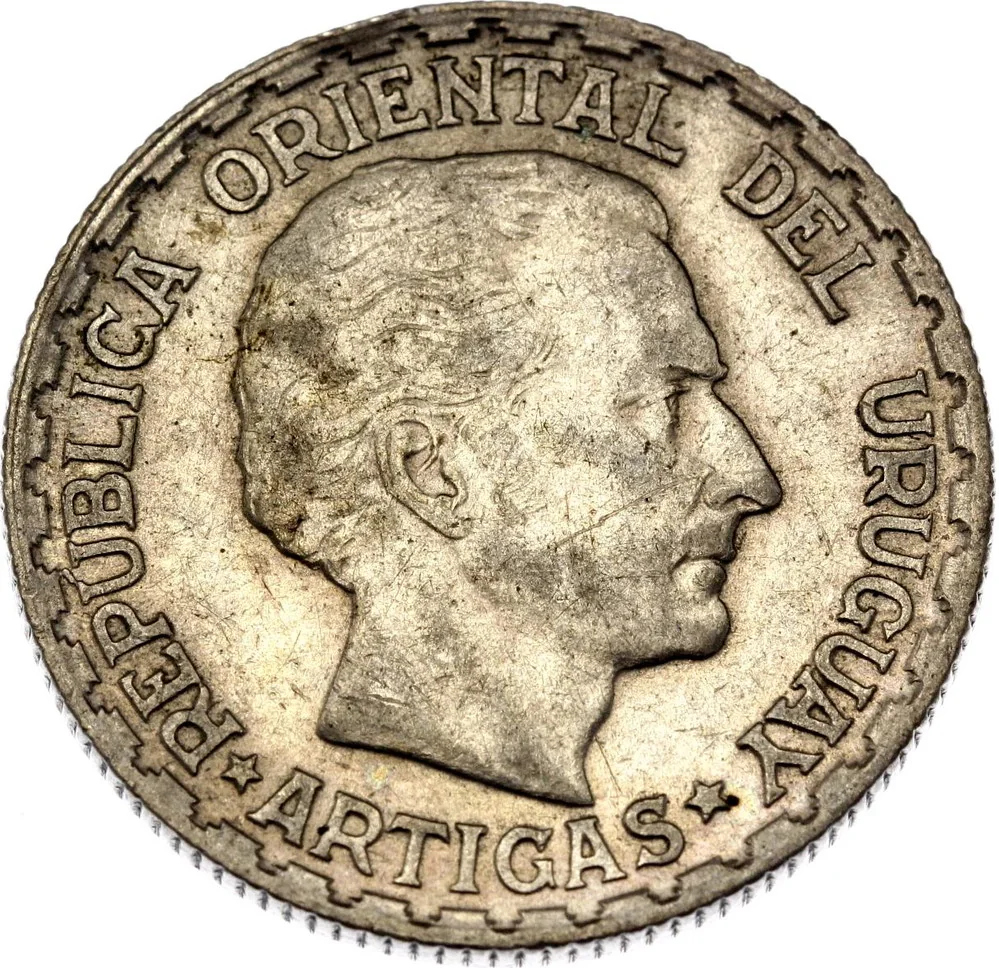
Artigas facing right, country name arched above, geometric rim.
Inscription:
REPÚBLICA ORIENTAL DEL URUGUAY
*ARTIGAS*
*ARTIGAS*
Translation:
Eastern Republic of Uruguay
*ARTIGAS*
*ARTIGAS*
Script: Latin
Language: Spanish
Engraver: Lucien Georges Bazor
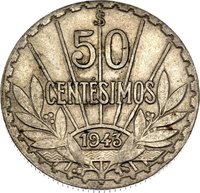
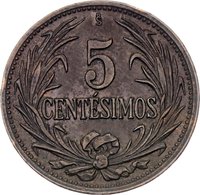
Reverse
Description:
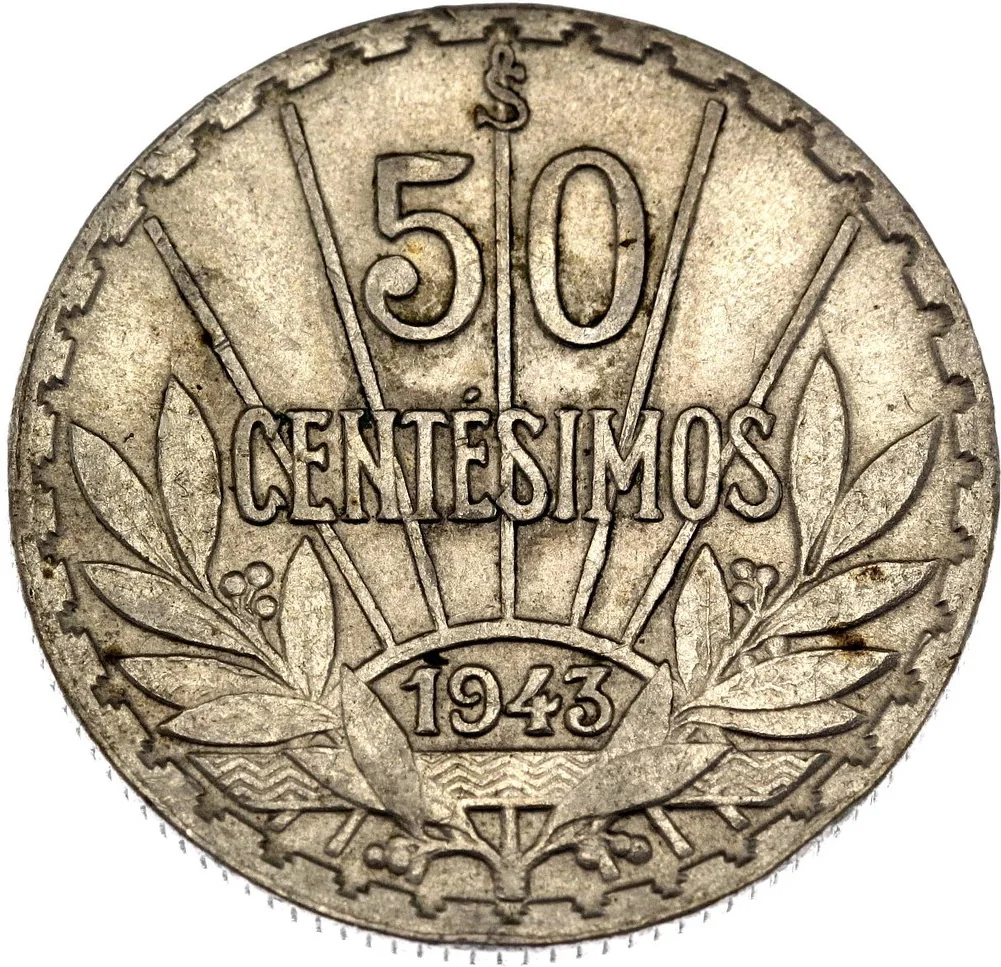
Central stylized sun, face value, and mintmark. Olive wreath sides, date below. Geometric rim.
Inscription:
So
50
CENTÉSIMOS
1943
50
CENTÉSIMOS
1943
Translation:
Fifty Centésimos
1943
1943
Script: Latin
Language: Spanish
Engraver: Lucien Georges Bazor
Edge
Reeded
Categories
| Person> Military leader |
| Person> Politician |
| Symbol> Sun |
Mints
| Name | Mark |
|---|---|
| Casa de Moneda de Chile | So |
Mintings
| Year | Mint Mark | Mintage | Quality | Collection |
|---|---|---|---|---|
| 1943 | So | 10,800,000 |
Historical background
In 1943, Uruguay's currency situation was characterized by a complex system of exchange controls and multiple exchange rates, a legacy of the global economic disruptions caused by the Great Depression and World War II. Like many Latin American nations, Uruguay had abandoned the gold standard in the early 1930s. To manage its balance of payments and conserve vital foreign reserves (primarily US dollars and British pounds), the government instituted strict regulations through the Exchange Control Commission. This body mandated that all foreign currency earnings from Uruguay's crucial agro-export sector (beef, wool, hides) be surrendered to the Central Bank at official rates.
The system created a divergence between the official, preferential rate and a higher, free-market rate. The government used the favorable official rate to finance essential imports of fuel, machinery, and manufactured goods, while less critical transactions faced costlier rates. This period saw the Uruguayan peso under significant pressure due to inflationary trends, a consequence of increased domestic spending, supply shortages from the war, and the monetization of fiscal deficits. The country's traditional export markets in Europe were severely disrupted by the conflict, further straining the currency regime.
Overall, the 1943 currency framework was a tool of economic defense and state intervention, designed to stabilize the economy during a time of profound external uncertainty. It reflected the broader Batllista model of a strong, interventionist state guiding the economy. While effective in preserving reserves and prioritizing essential imports, the multiple-rate system also fostered distortions, encouraged a black market for foreign exchange, and laid the groundwork for persistent inflationary challenges that would continue in the post-war era.
The system created a divergence between the official, preferential rate and a higher, free-market rate. The government used the favorable official rate to finance essential imports of fuel, machinery, and manufactured goods, while less critical transactions faced costlier rates. This period saw the Uruguayan peso under significant pressure due to inflationary trends, a consequence of increased domestic spending, supply shortages from the war, and the monetization of fiscal deficits. The country's traditional export markets in Europe were severely disrupted by the conflict, further straining the currency regime.
Overall, the 1943 currency framework was a tool of economic defense and state intervention, designed to stabilize the economy during a time of profound external uncertainty. It reflected the broader Batllista model of a strong, interventionist state guiding the economy. While effective in preserving reserves and prioritizing essential imports, the multiple-rate system also fostered distortions, encouraged a black market for foreign exchange, and laid the groundwork for persistent inflationary challenges that would continue in the post-war era.
🌱 Common