

100 cents – Suriname
Add to wishlist
Suriname
Context
Material
Diameter: 23.5 mm
Weight: 5.65 g
Thickness: 1.8 mm
Shape: Round
Composition: Copper-nickel
Technique: Milled
Alignment: Coin alignment
flip
References
KM: #
Numista: #3777
Value
Exchange value: 1 SRD
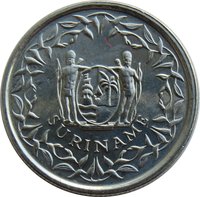
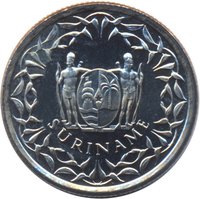
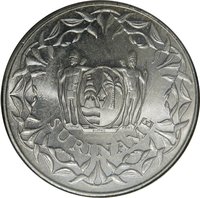
Obverse
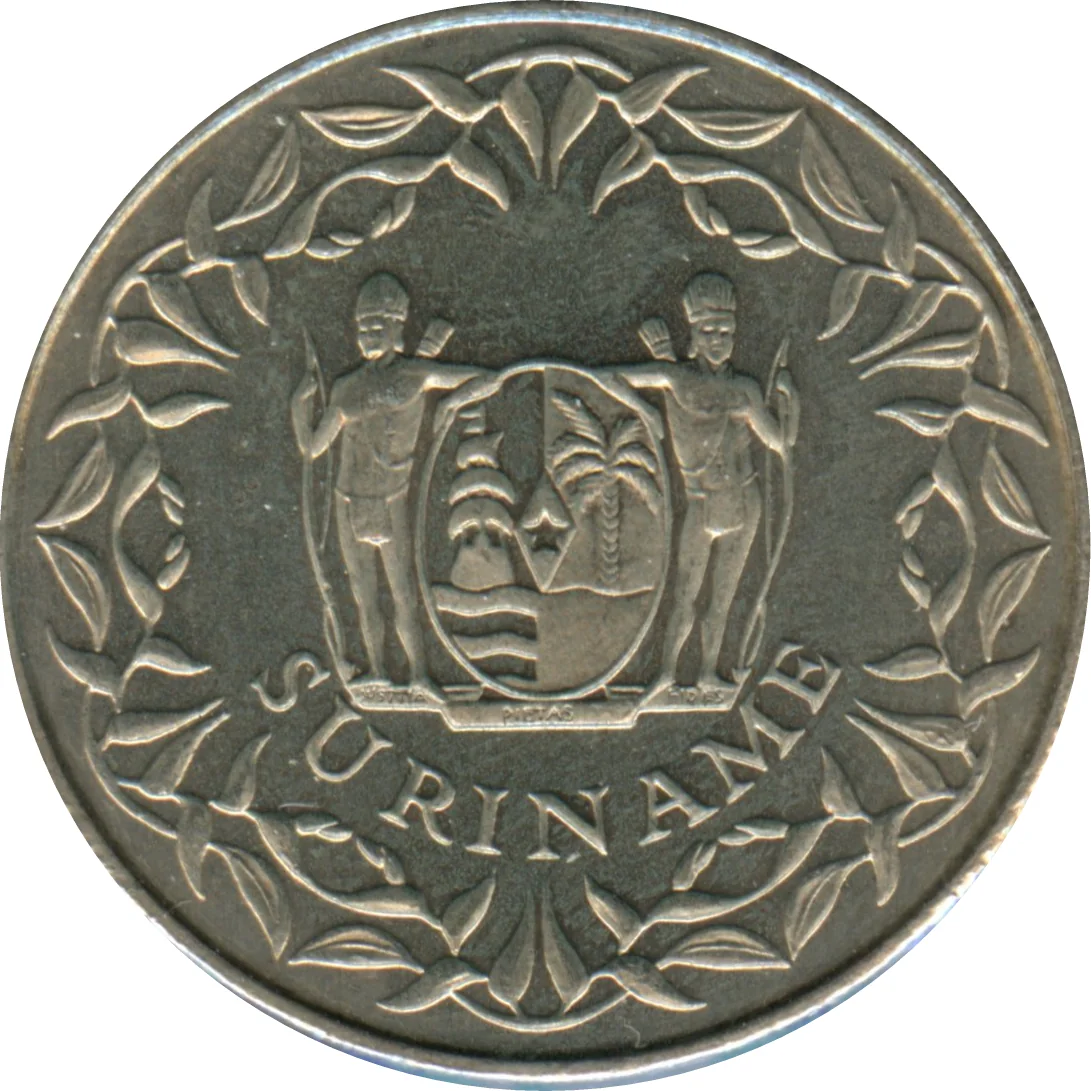
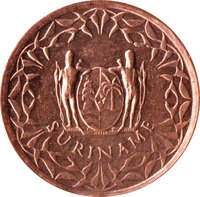
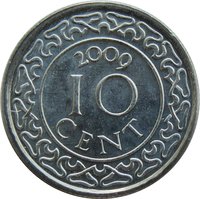
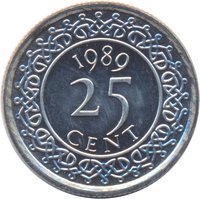
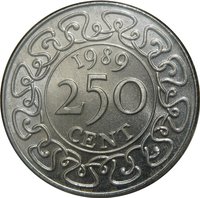
Reverse
Description:
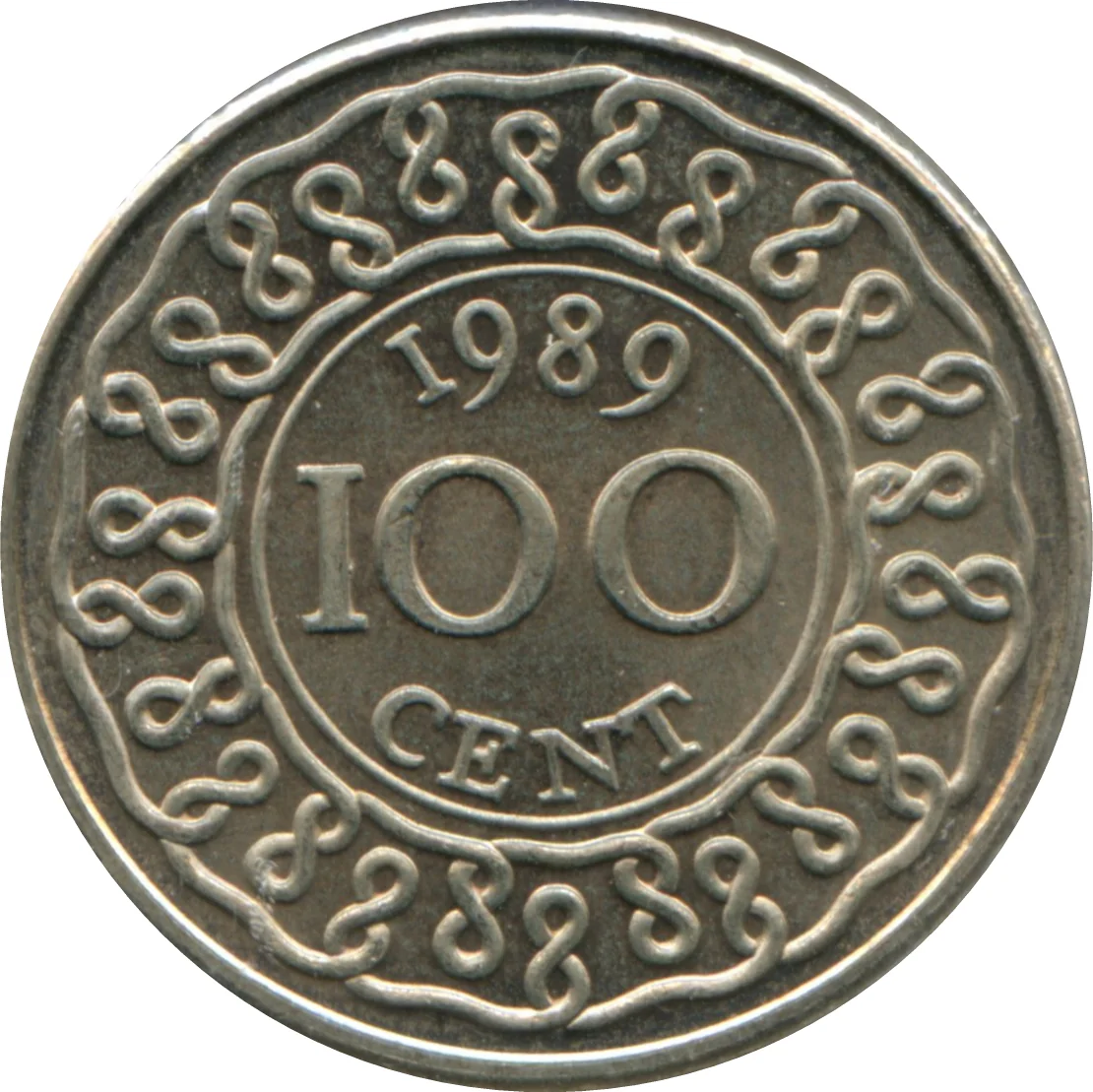
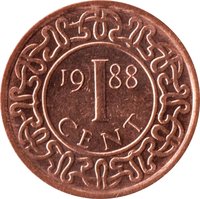
Year and denomination encircled, with privy and mint marks flanking the year, all within an outer design.
Inscription:
1989
100
CENT
100
CENT
Script: Latin
Edge
Reeded
Categories
| Symbols> Coat of Arms |
| Symbol> Wreath |
Mints
| Name | Mark |
|---|---|
| Royal Dutch Mint | — |
| Royal Mint | — |
Mintings
| Year | Mint Mark | Mintage | Quality | Collection |
|---|---|---|---|---|
| — | — | — | ||
| 1987 | — | — | ||
| 1988 | — | 1,500 | Proof | |
| 1988 | — | — | ||
| 1989 | — | — | ||
| 2004 | — | 4,000 | BU | |
| 2005 | — | 1,250 | BU | |
| 2006 | — | 1,500 | BU | |
| 2007 | — | 1,000 | BU | |
| 2008 | — | 1,000 | BU | |
| 2009 | — | 1,000 | BU | |
| 2010 | — | 1,000 | BU | |
| 2011 | — | 1,000 | BU | |
| 2012 | — | — | ||
| 2012 | — | — | BU | |
| 2013 | — | 650 | BU | |
| 2014 | — | — | ||
| 2015 | — | — | ||
| 2017 | — | — |
Historical background
In 1987, Suriname's currency situation was characterized by severe instability and a stark divide between the official and parallel exchange rates, a direct consequence of years of economic mismanagement following the 1980 military coup. The country operated with a heavily overvalued official exchange rate for the Surinamese guilder, which was fixed by the central bank and accessible only for prioritized government imports. This created a critical shortage of foreign exchange, stifling legitimate trade and leading to widespread scarcity of essential goods.
The dysfunction of the official system gave rise to a thriving black market, where the real value of the guilder was determined. By 1987, the parallel market rate was estimated to be three to four times higher than the official rate, reflecting a massive loss of confidence in the currency and the government's fiscal policies. This dual-rate system fostered corruption, encouraged capital flight, and crippled the formal private sector, which could not compete or access dollars at the unrealistic official rate.
This economic crisis unfolded against a turbulent political backdrop. The nation was emerging from the internal conflict of the Surinamese Interior War (1986-1992), which diverted resources and destabilized the productive sectors of the economy. While the civilian government of President Ramsewak Shankar held nominal power, it operated under the considerable influence of military leader Dési Bouterse, whose expansionary spending and lack of fiscal discipline were primary drivers of the monetary turmoil and the severe devaluation pressures facing the guilder.
The dysfunction of the official system gave rise to a thriving black market, where the real value of the guilder was determined. By 1987, the parallel market rate was estimated to be three to four times higher than the official rate, reflecting a massive loss of confidence in the currency and the government's fiscal policies. This dual-rate system fostered corruption, encouraged capital flight, and crippled the formal private sector, which could not compete or access dollars at the unrealistic official rate.
This economic crisis unfolded against a turbulent political backdrop. The nation was emerging from the internal conflict of the Surinamese Interior War (1986-1992), which diverted resources and destabilized the productive sectors of the economy. While the civilian government of President Ramsewak Shankar held nominal power, it operated under the considerable influence of military leader Dési Bouterse, whose expansionary spending and lack of fiscal discipline were primary drivers of the monetary turmoil and the severe devaluation pressures facing the guilder.
Series: 1987 Suriname circulation coins
🌱 Very Common