

25 cents – Suriname
Add to wishlist
Suriname
Context
Material
Diameter: 20 mm
Weight: 3.5 g
Thickness: 1.65 mm
Shape: Round
Composition: Copper-nickel
Technique: Milled
Alignment: Coin alignment
flip
References
KM: #
Numista: #3776
Value
Exchange value: 0.25 SRD
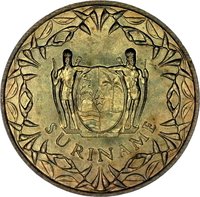
Obverse
Description:
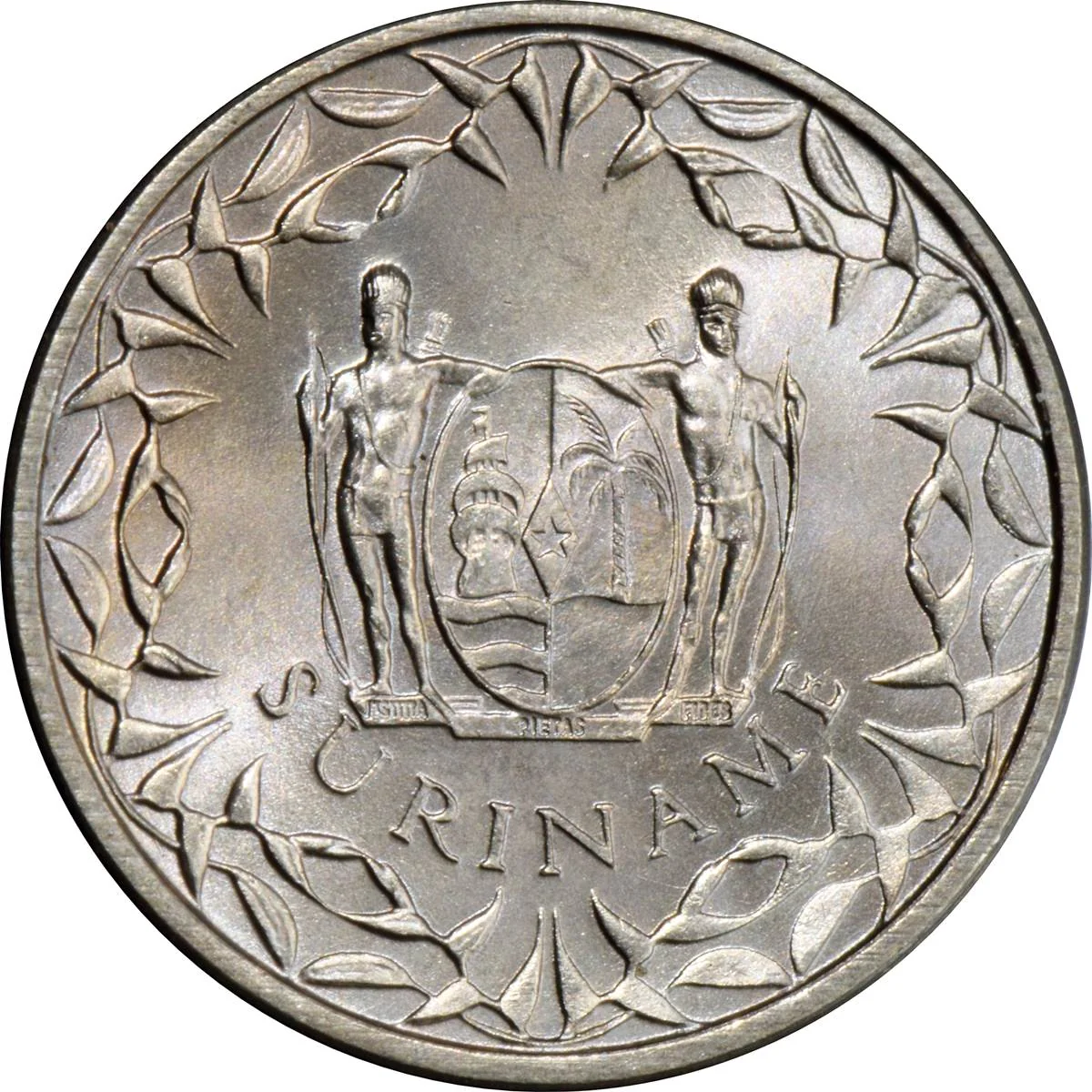
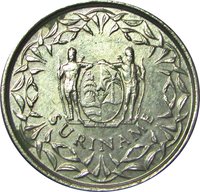
Coat of arms flanked by two natives, encircled by a wreath with a legend below.
Inscription:
JUSTITIA PIETAS FIDES
SURINAME
SURINAME
Translation:
Justice Piety Faith
Script: Latin
Language: Latin
Engraver: Joop Hekman
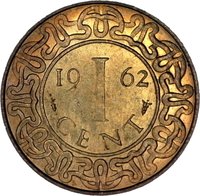
Reverse
Description:
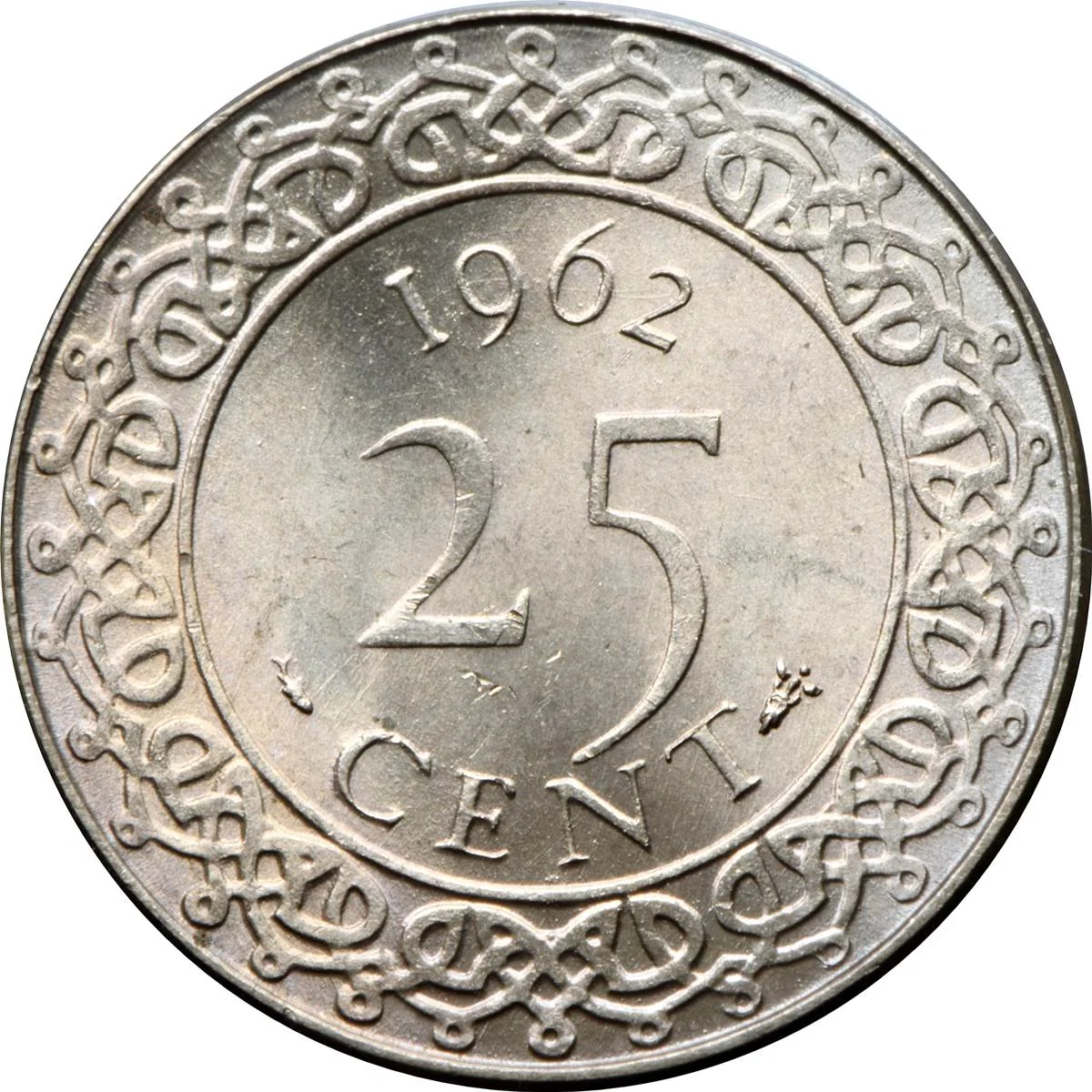
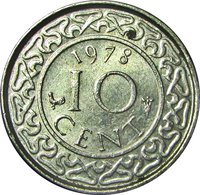
Year above denomination, flanked by mint and privy marks, within a decorative circle.
Inscription:
1962
25
CENT
25
CENT
Script: Latin
Engraver: Joop Hekman
Edge
Reeded
Categories
| Symbols> Coat of Arms |
| Symbol> Wreath |
Mints
| Name | Mark |
|---|---|
| Royal Dutch Mint | — |
Mintings
| Year | Mint Mark | Mintage | Quality | Collection |
|---|---|---|---|---|
| 1962 | — | 2,300,000 | ||
| 1962 | S | 650 | Proof | |
| 1966 | — | — | Proof | |
| 1966 | — | 2,300,000 | ||
| 1972 | — | 1,800,000 | ||
| 1974 | — | 1,500,000 | ||
| 1976 | — | 5,000,000 | ||
| 1976 | — | 10 | Proof | |
| 1979 | — | 2,000,000 | ||
| 1982 | — | 2,000,000 | ||
| 1985 | — | 1,000,000 | ||
| 1986 | — | 1,500,000 |
Historical background
In 1962, Suriname was an autonomous country within the Kingdom of the Netherlands, operating under a currency system directly tied to the Dutch guilder. The official currency was the Surinamese guilder (SRG), which was pegged at par (1:1) to the Netherlands Antillean guilder. This, in turn, was itself firmly pegged to the U.S. dollar at a rate of 1.88585 guilders per dollar, creating a stable and internationally credible monetary framework. This arrangement reflected Suriname's deep economic and political integration with the Netherlands, providing price stability and facilitating trade and investment from the colonial metropole.
The economy underpinning this currency was heavily dependent on a single commodity: bauxite. The mining and export of bauxite (and its derivative, alumina) by the American company Alcoa and the Dutch Billiton Company dominated Suriname's export earnings and government revenues. This mono-economy created prosperity but also vulnerability to global price fluctuations. The currency peg, while ensuring stability, also meant Suriname's monetary policy was effectively set in Amsterdam and Washington, limiting local tools to manage any domestic economic shocks.
This period represented the final phase of colonial monetary stability before significant political change. Suriname would gain full internal self-government in 1954 and was on a path toward independence, which it achieved in 1975. The fixed peg system of 1962 provided a solid foundation but would later be challenged post-independence as the country sought to manage its own economic destiny, eventually facing devaluation pressures and high inflation in subsequent decades as it navigated the complexities of a sovereign monetary policy.
The economy underpinning this currency was heavily dependent on a single commodity: bauxite. The mining and export of bauxite (and its derivative, alumina) by the American company Alcoa and the Dutch Billiton Company dominated Suriname's export earnings and government revenues. This mono-economy created prosperity but also vulnerability to global price fluctuations. The currency peg, while ensuring stability, also meant Suriname's monetary policy was effectively set in Amsterdam and Washington, limiting local tools to manage any domestic economic shocks.
This period represented the final phase of colonial monetary stability before significant political change. Suriname would gain full internal self-government in 1954 and was on a path toward independence, which it achieved in 1975. The fixed peg system of 1962 provided a solid foundation but would later be challenged post-independence as the country sought to manage its own economic destiny, eventually facing devaluation pressures and high inflation in subsequent decades as it navigated the complexities of a sovereign monetary policy.
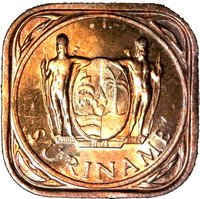
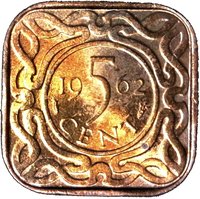
Series: 1962 Suriname circulation coins
🌱 Very Common