

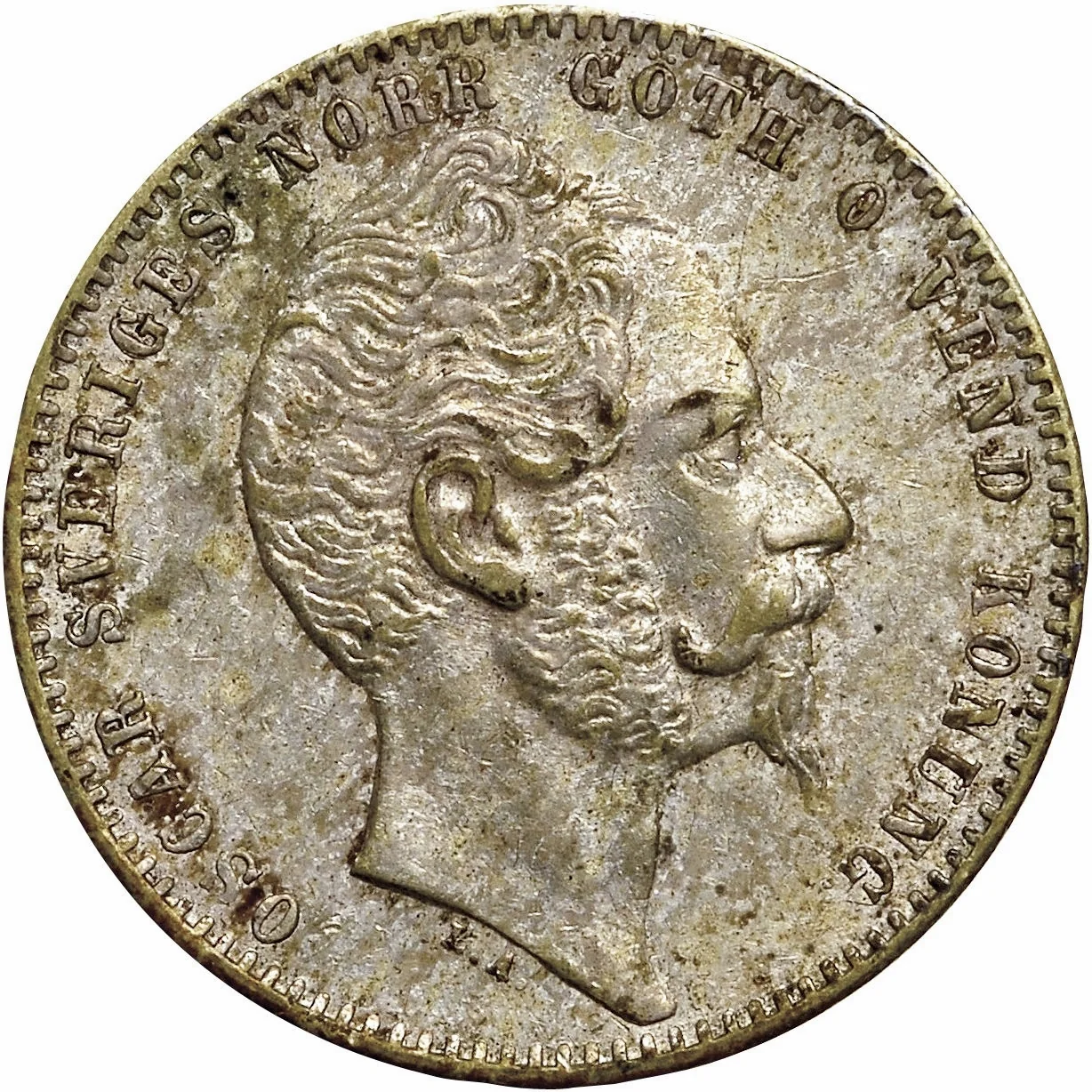
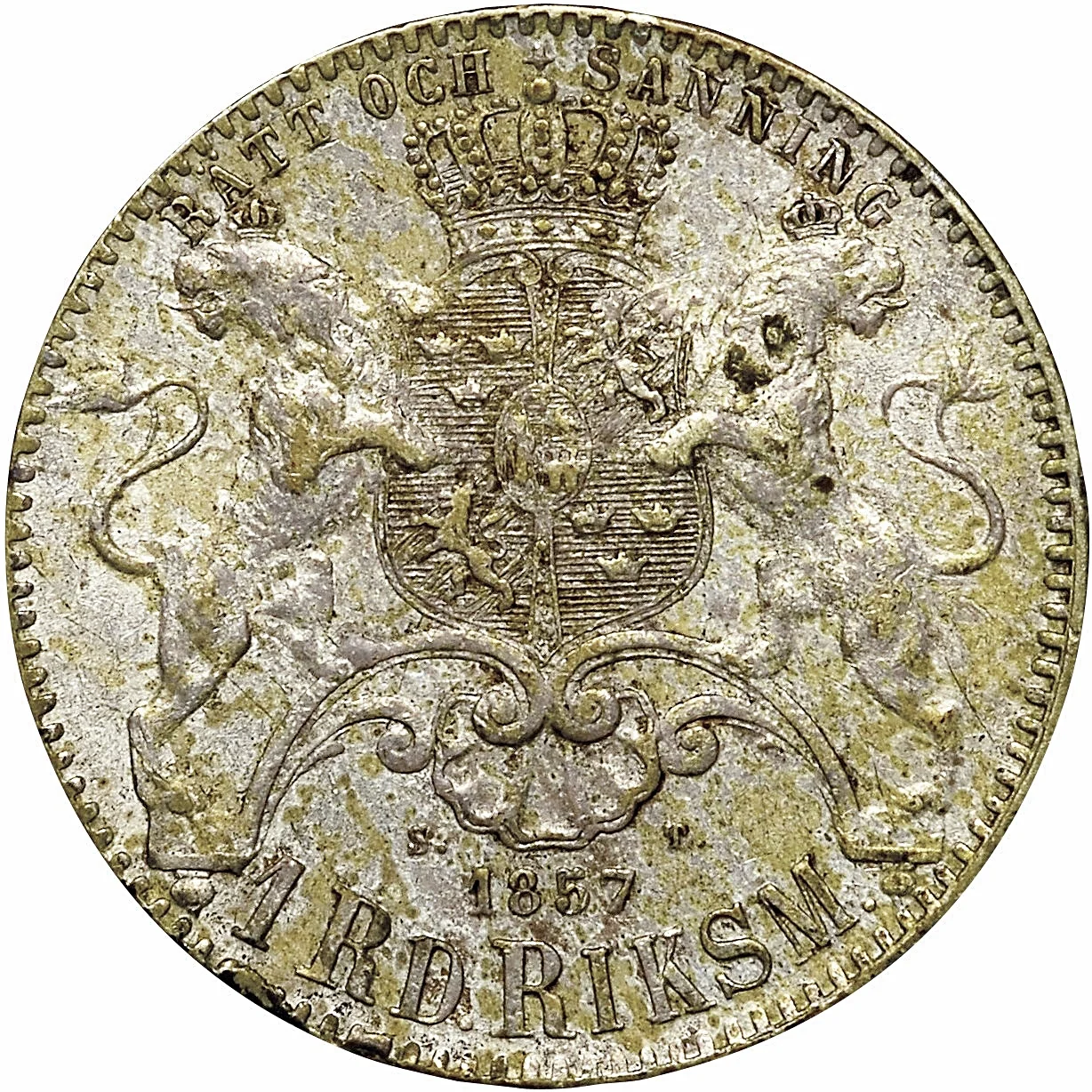
1 Riksdaler Riksmynt – Sweden
Sweden

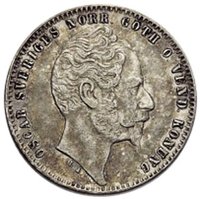
Obverse
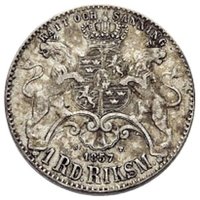
Reverse
Edge
Categories
| Symbols> Coat of Arms |
Mints
| Name | Mark |
|---|---|
| Kungliga Myntet | — |
Mintings
| Year | Mint Mark | Mintage | Quality | Collection |
|---|---|---|---|---|
| 1857 | — | 644,860 |
Historical background
In 1857, Sweden operated under a bimetallic monetary system, formally established by the Riksbank Act of 1834. This system pegged the Swedish riksdaler riksmynt to both silver and gold at a fixed ratio of 1:15.5, meaning one weight unit of gold was valued as 15.5 times the same weight of silver. While the intent was to create stability, the system was inherently fragile. The fixed official rate often diverged from fluctuating global market prices for the metals, leading to the phenomenon described by Gresham's Law, where "bad money drives out good." In practice, this meant the overvalued metal at the mint would circulate domestically, while the undervalued metal would be exported as bullion, causing periodic shortages and disrupting commerce.
The year 1857 itself was a crisis point, not due to domestic policy change, but because of a severe international financial panic. A major speculative boom, fueled by railroad investments and expansive credit, collapsed. This global crisis, originating in the United States and spreading rapidly to London and Hamburg—key trading partners for Sweden—caused a sharp contraction in credit and a wave of bankruptcies. For Sweden, this meant a sudden strain on the banking system, a liquidity crunch, and a painful awareness of its economic vulnerability within the international monetary order. The Riksbank was forced to intervene as a lender of last resort, but the crisis exposed the limitations of its metallic reserves in the face of modern financial shocks.
Consequently, the events of 1857 acted as a powerful catalyst for monetary reform. The crisis underscored the impracticality and rigidity of the bimetallic standard in an increasingly interconnected global economy. It strengthened the arguments of reformers and paved the way for a decisive shift. Just a few years later, in 1873, Sweden would join the Scandinavian Monetary Union with Denmark and Norway, adopting a new gold standard with the krona as its unit, finally abandoning the unstable bimetallic system that had been so severely tested in 1857.
The year 1857 itself was a crisis point, not due to domestic policy change, but because of a severe international financial panic. A major speculative boom, fueled by railroad investments and expansive credit, collapsed. This global crisis, originating in the United States and spreading rapidly to London and Hamburg—key trading partners for Sweden—caused a sharp contraction in credit and a wave of bankruptcies. For Sweden, this meant a sudden strain on the banking system, a liquidity crunch, and a painful awareness of its economic vulnerability within the international monetary order. The Riksbank was forced to intervene as a lender of last resort, but the crisis exposed the limitations of its metallic reserves in the face of modern financial shocks.
Consequently, the events of 1857 acted as a powerful catalyst for monetary reform. The crisis underscored the impracticality and rigidity of the bimetallic standard in an increasingly interconnected global economy. It strengthened the arguments of reformers and paved the way for a decisive shift. Just a few years later, in 1873, Sweden would join the Scandinavian Monetary Union with Denmark and Norway, adopting a new gold standard with the krona as its unit, finally abandoning the unstable bimetallic system that had been so severely tested in 1857.
Series: 1857 Sweden circulation coins
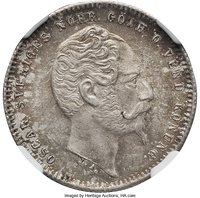
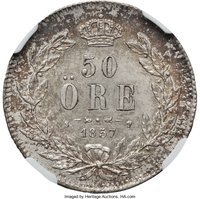
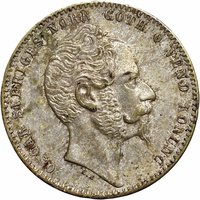
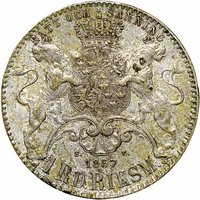
💎 Extremely Rare