

1 Riksdaler Specie – Sweden
Sweden
Context
Years: 1831–1842
Issuer: Sweden 
Ruler: Charles XIV John
Currency:
(1830—1855)
Demonetized: Yes
Total mintage: 2,547,338
Material
References
KM: #Click to copy to clipboard632
Numista: #37682
Value
Bullion value: $72.98
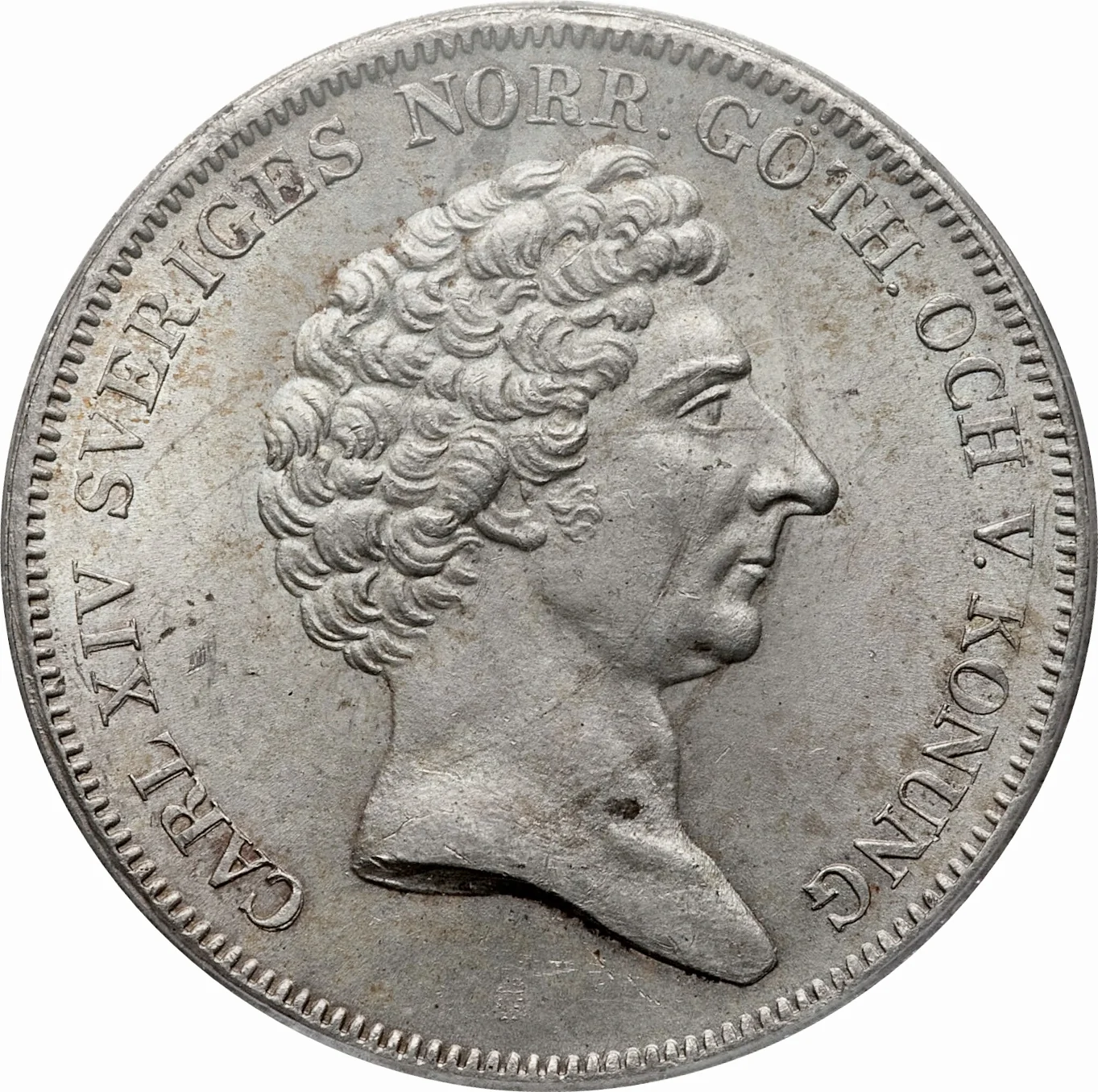
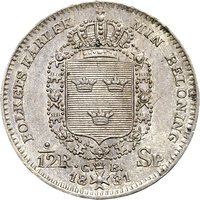
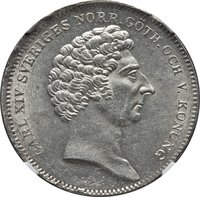
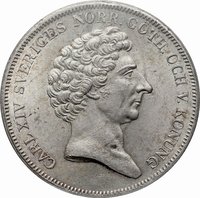
Obverse
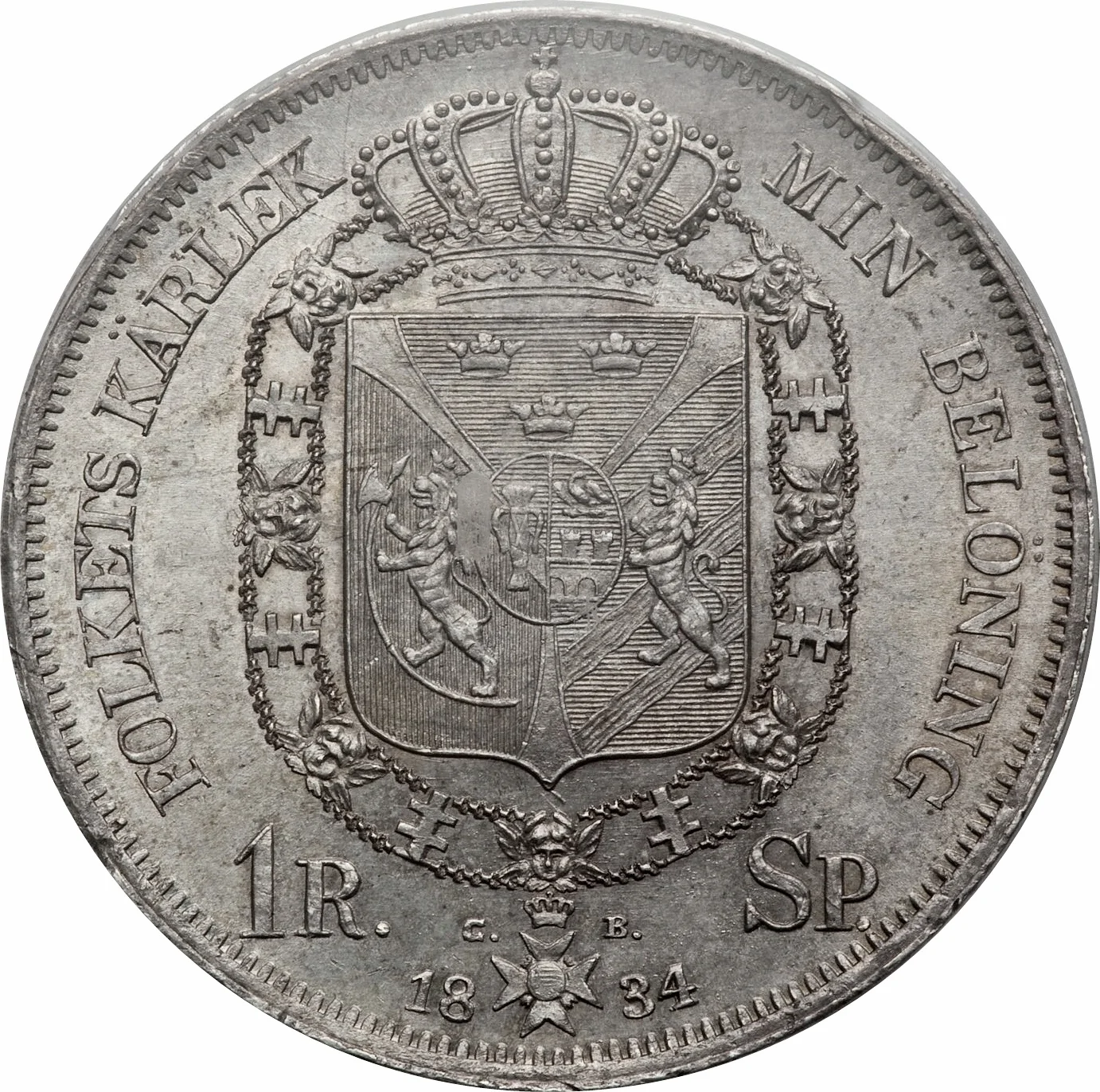
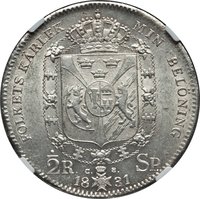
Reverse
Description:
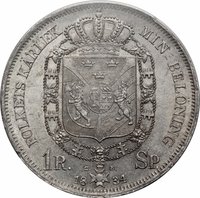
Shield flanked by crowned lions, topped with three crowns. Seraphim chain divides date and mintmark below; motto along rim. Chain features seven angel heads.
Inscription:
FOLKETS KÄRLEK MIN BELÖNING
1R. SP.
C. B.
18 34
1R. SP.
C. B.
18 34
Translation:
THE PEOPLE'S LOVE MY REWARD
CARL JOHAN XIV REX SVECIAE
CARL BOMHARD
18 34
CARL JOHAN XIV REX SVECIAE
CARL BOMHARD
18 34
Script: Latin
Language: Swedish
Edge
Plain with Lettering
Legend:
75/100 DELAR FINSILFVER
Translation:
Seventy-five one-hundredths of a Daler in fine silver.
Language: Swedish
Categories
| Symbols> Coat of Arms |
Mints
| Name | Mark |
|---|---|
| Stockholm | — |
Mintings
| Year | Mint Mark | Mintage | Quality | Collection |
|---|---|---|---|---|
| 1831 | — | 47,303 | ||
| 1832 | — | 2,100 | ||
| 1833 | — | 39,040 | ||
| 1834 | — | — | ||
| 1835 | — | 330,809 | ||
| 1836 | — | — | ||
| 1837 | — | 176,748 | ||
| 1838 | — | 833,801 | ||
| 1839 | — | 212,020 | ||
| 1840 | — | 68,452 | ||
| 1841 | — | 549,188 | ||
| 1842 | — | 287,877 |
Historical background
In 1831, Sweden’s currency system was in a state of transition and practical confusion, operating under the remnants of the Riksdaler Riksmynt. Established in 1776, this system was theoretically based on a silver standard, where one Riksdaler was divided into 48 skillings. However, decades of war financing in the early 19th century had led to the issuance of substantial paper money, the Riksgäldssedlar, by the National Debt Office. These notes were not fully convertible to silver, causing them to trade at a fluctuating discount against the theoretical silver value of the coinage. Consequently, Sweden effectively had a dual-currency system: a silver-based riksdaler for accounting and international trade, and a depreciated paper currency for everyday transactions.
This situation created significant economic inefficiencies and public frustration. The value of the paper money was unstable, eroding savings and complicating trade and contracts. Furthermore, a chronic shortage of small-denomination coins led to a proliferation of privately issued tokens and foreign coins circulating alongside official currency, making everyday commerce cumbersome. The state’s finances were also strained, as the public debt was largely denominated in the depreciating paper currency, creating pressure for monetary reform.
The period around 1831 was thus one of active debate and precursor to change. The Riksdag (parliament) and financial authorities were increasingly aware that the existing system was untenable for a modernizing economy. This culminated, just a few years later, in the Banking Act of 1834, which granted the privately-owned Sveriges Riksbank the exclusive right to issue paper money. This crucial reform aimed to unify the currency, stabilize its value, and restore public confidence, setting the stage for the more formal adoption of the silver standard with the Riksdaler Riksmynt as the sole unit of account in 1835.
This situation created significant economic inefficiencies and public frustration. The value of the paper money was unstable, eroding savings and complicating trade and contracts. Furthermore, a chronic shortage of small-denomination coins led to a proliferation of privately issued tokens and foreign coins circulating alongside official currency, making everyday commerce cumbersome. The state’s finances were also strained, as the public debt was largely denominated in the depreciating paper currency, creating pressure for monetary reform.
The period around 1831 was thus one of active debate and precursor to change. The Riksdag (parliament) and financial authorities were increasingly aware that the existing system was untenable for a modernizing economy. This culminated, just a few years later, in the Banking Act of 1834, which granted the privately-owned Sveriges Riksbank the exclusive right to issue paper money. This crucial reform aimed to unify the currency, stabilize its value, and restore public confidence, setting the stage for the more formal adoption of the silver standard with the Riksdaler Riksmynt as the sole unit of account in 1835.
Series: 1831 Sweden circulation coins
💎 Extremely Rare