

25 Cents – Canada
Canada
Context

Material
References
KM: #Click to copy to clipboard11
Numista: #375
Value
Exchange value: 0.25 CAD = $0.18
Bullion value: $15.62
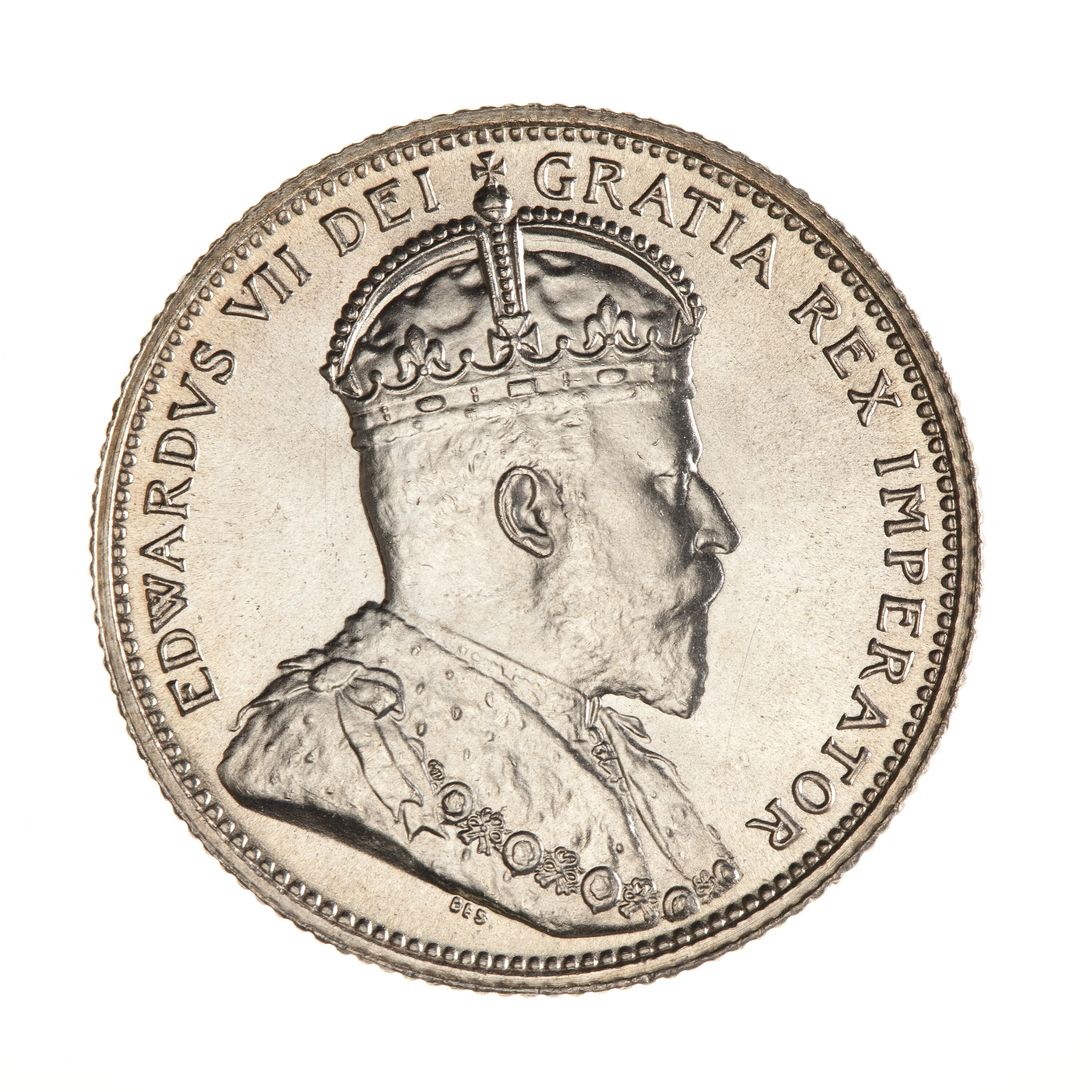
Obverse
Description:
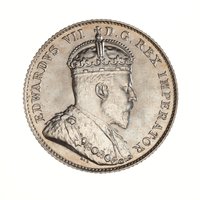
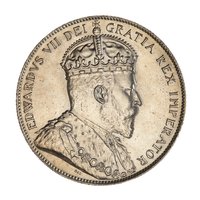
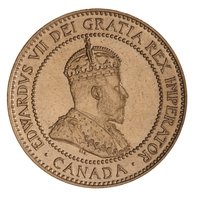
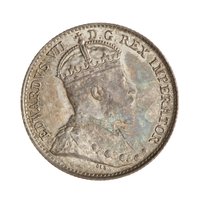
King Edward VII crowned bust right, legend surrounding.
Inscription:
EDWARDVS VII DEI GRATIA REX IMPERATOR
DeS.
DeS.
Translation:
Edward VII by the Grace of God King Emperor
Script: Latin
Language: Latin
Engraver: George William de Saulles
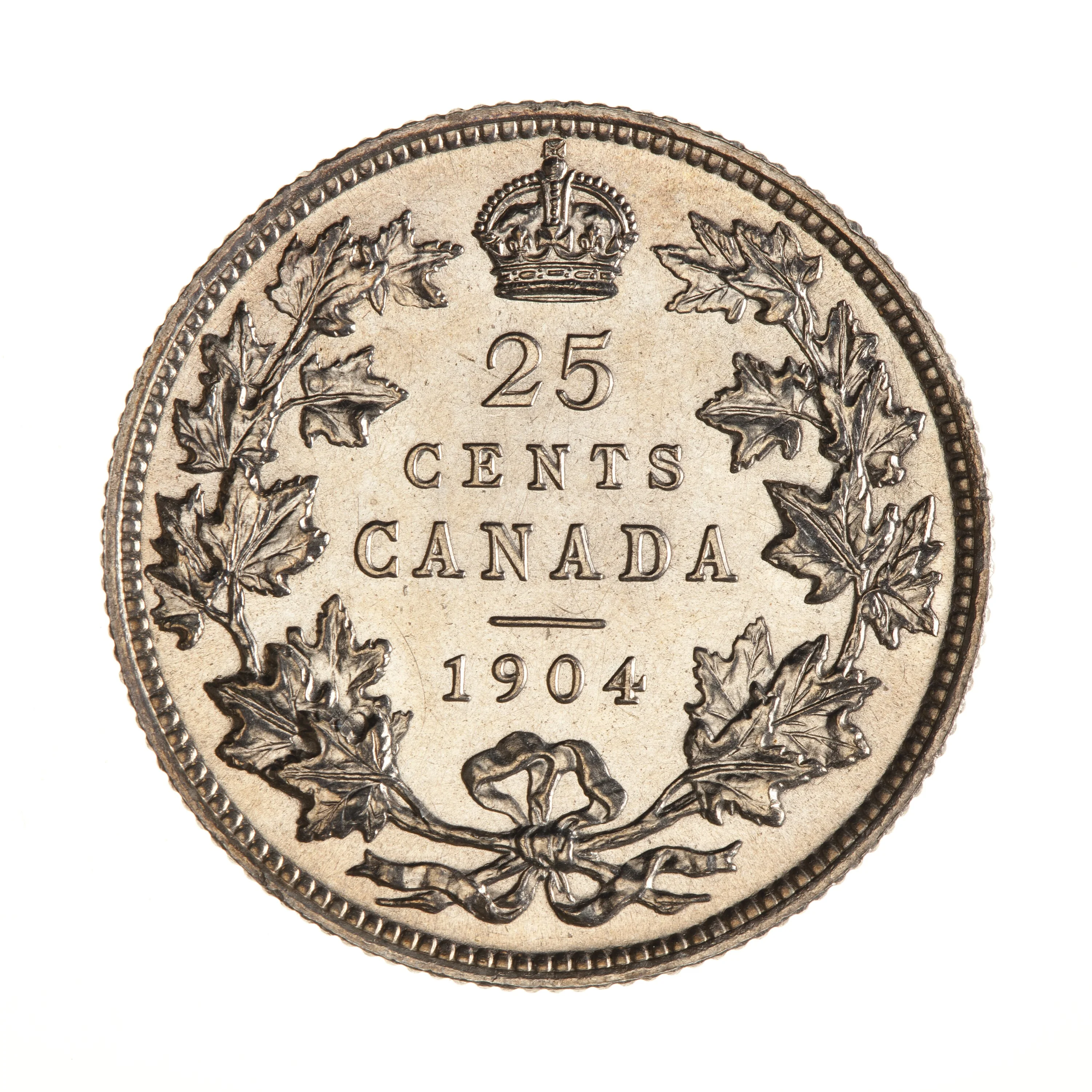
Reverse
Description:
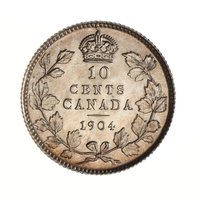
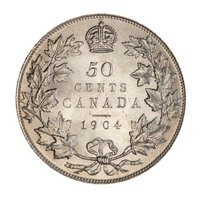
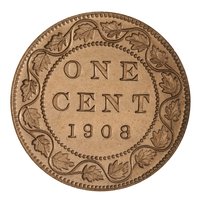
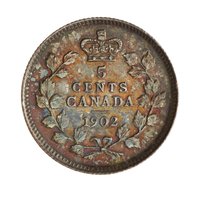
The face value and inscription are encircled by maple boughs and a crown, with wider boughs used from 1908 to 1910.
Inscription:
25
CENTS
CANADA
1906
CENTS
CANADA
1906
Script: Latin
Engraver: William Henry James Blakemore
Edge
Reeded
Mints
| Name | Mark |
|---|---|
| Royal Canadian Mint of Ottawa | — |
| Royal Mint (Tower Hill) | — |
| Heaton and Sons / The Mint Birmingham | H |
Mintings
| Year | Mint Mark | Mintage | Quality | Collection |
|---|---|---|---|---|
| 1902 | — | 464,000 | ||
| 1902 | H | 800,000 | ||
| 1903 | — | 846,150 | ||
| 1904 | — | 400,000 | ||
| 1905 | — | 800,000 | ||
| 1906 | — | 1,237,843 | ||
| 1907 | — | 2,088,000 | ||
| 1908 | — | 495,016 | ||
| 1909 | — | 1,335,929 |
Historical background
In 1902, Canada's currency situation was a complex and transitional system, still deeply influenced by its colonial past. Officially on the gold standard since the Currency Act of 1871, the Canadian dollar was pegged to both British gold sovereigns and American gold dollars, reflecting the nation's dual economic allegiances. However, the physical circulation was a practical jumble: British sovereigns, American eagles, and various other foreign gold and silver coins all remained legal tender alongside the first series of Canadian government-issued coinage. This created a commercially awkward environment where merchants had to constantly calculate exchange values between multiple coin types.
The most significant issue was the chronic shortage of domestically minted specie, particularly in smaller denominations needed for everyday transactions. To fill this void, private bank notes dominated the paper money supply. Chartered banks issued their own distinct notes, which were theoretically redeemable in gold upon demand. While this system facilitated economic growth, it led to a patchwork of designs and occasional instability, as the solvency of each note depended entirely on the health of the issuing bank. Public trust was uneven, and notes from distant or troubled banks often circulated at a discount.
This fragmented system was increasingly seen as an impediment to national unity and economic efficiency. The year 1902 fell within a period of intense political debate that would culminate in the Finance Act of 1903, a precursor to the eventual creation of the Canadian central bank. The federal government was moving assertively to assert greater control over money and credit, setting the stage for the more uniform and state-managed currency system that would emerge in the following decades under the Bank of Canada.
The most significant issue was the chronic shortage of domestically minted specie, particularly in smaller denominations needed for everyday transactions. To fill this void, private bank notes dominated the paper money supply. Chartered banks issued their own distinct notes, which were theoretically redeemable in gold upon demand. While this system facilitated economic growth, it led to a patchwork of designs and occasional instability, as the solvency of each note depended entirely on the health of the issuing bank. Public trust was uneven, and notes from distant or troubled banks often circulated at a discount.
This fragmented system was increasingly seen as an impediment to national unity and economic efficiency. The year 1902 fell within a period of intense political debate that would culminate in the Finance Act of 1903, a precursor to the eventual creation of the Canadian central bank. The federal government was moving assertively to assert greater control over money and credit, setting the stage for the more uniform and state-managed currency system that would emerge in the following decades under the Bank of Canada.
Series: 1902 Canada circulation coins
🌱 Common