

50 pence – Isle of Man
Add to wishlist
Context
Year: 1979
Country: British Crown dependencies
Issuer: Isle of Man
Ruler: Elizabeth II
Currency:
(since 1971)
Material
Diameter: 30 mm
Weight: 13.5 g
Shape: Equilateral curve heptagon
Composition: Copper-nickel
Technique: Milled
Alignment: Medal alignment
flip
References
KM: #
Numista: #37489
Value
Exchange value: 0.50 IMP
Obverse
Description:
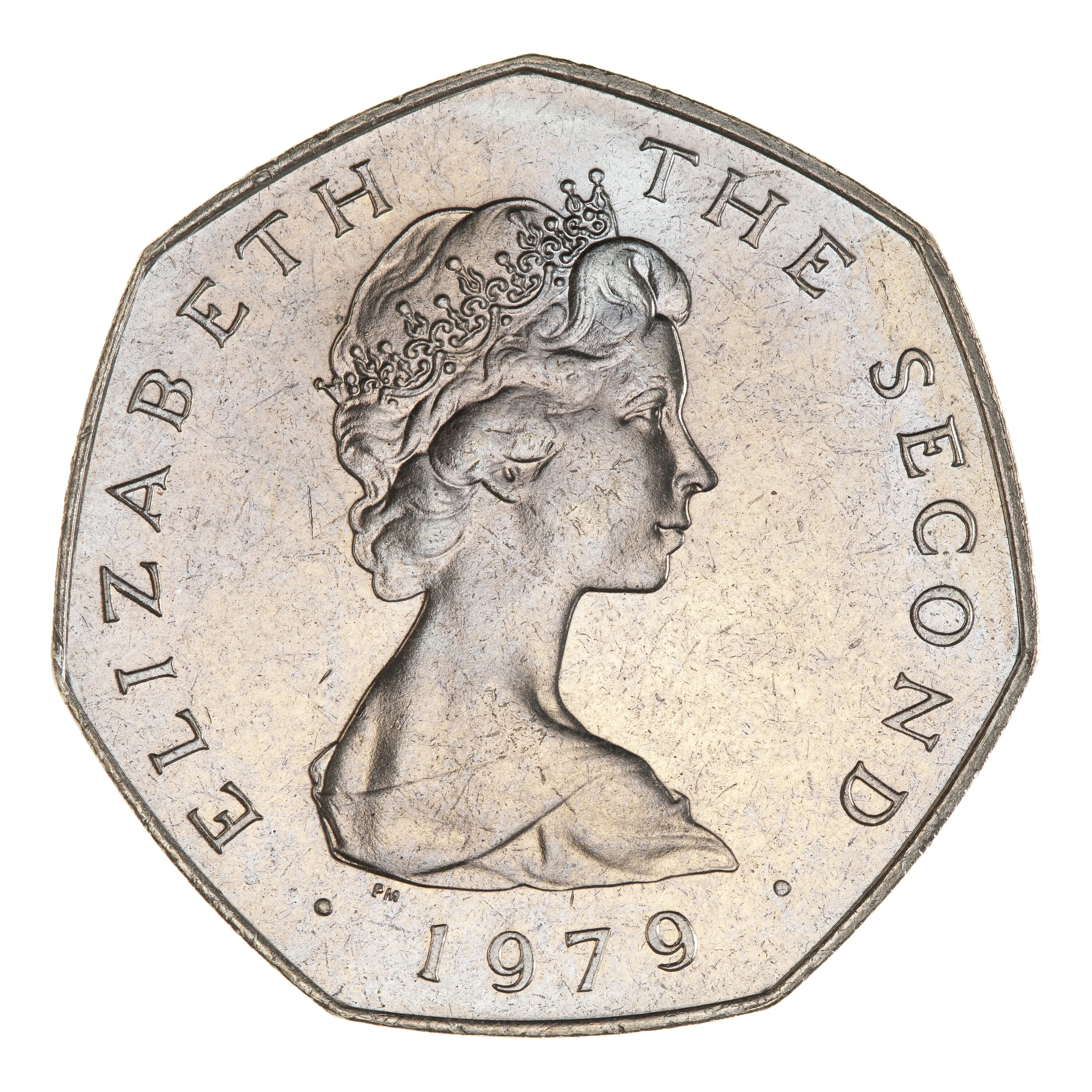
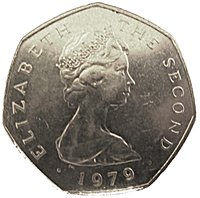
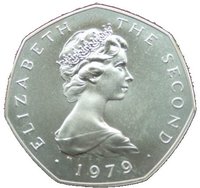
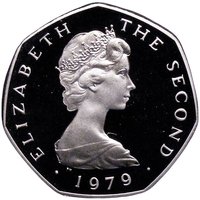
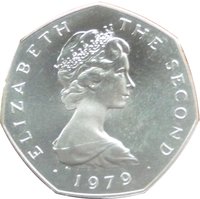
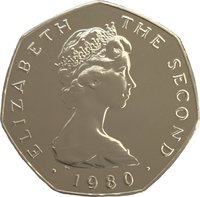
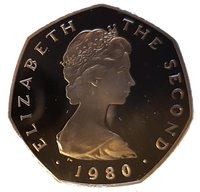
Right-facing bust of Queen Elizabeth II in the "Girls of Great Britain and Ireland" Tiara, with legend around and date below.
Inscription:
ELIZABETH THE SECOND
PM
·1979·
PM
·1979·
Translation:
ELIZABETH THE SECOND
PM
·1979·
PM
·1979·
Script: Latin
Language: English
Engraver: Arnold Machin
Reverse
Description:
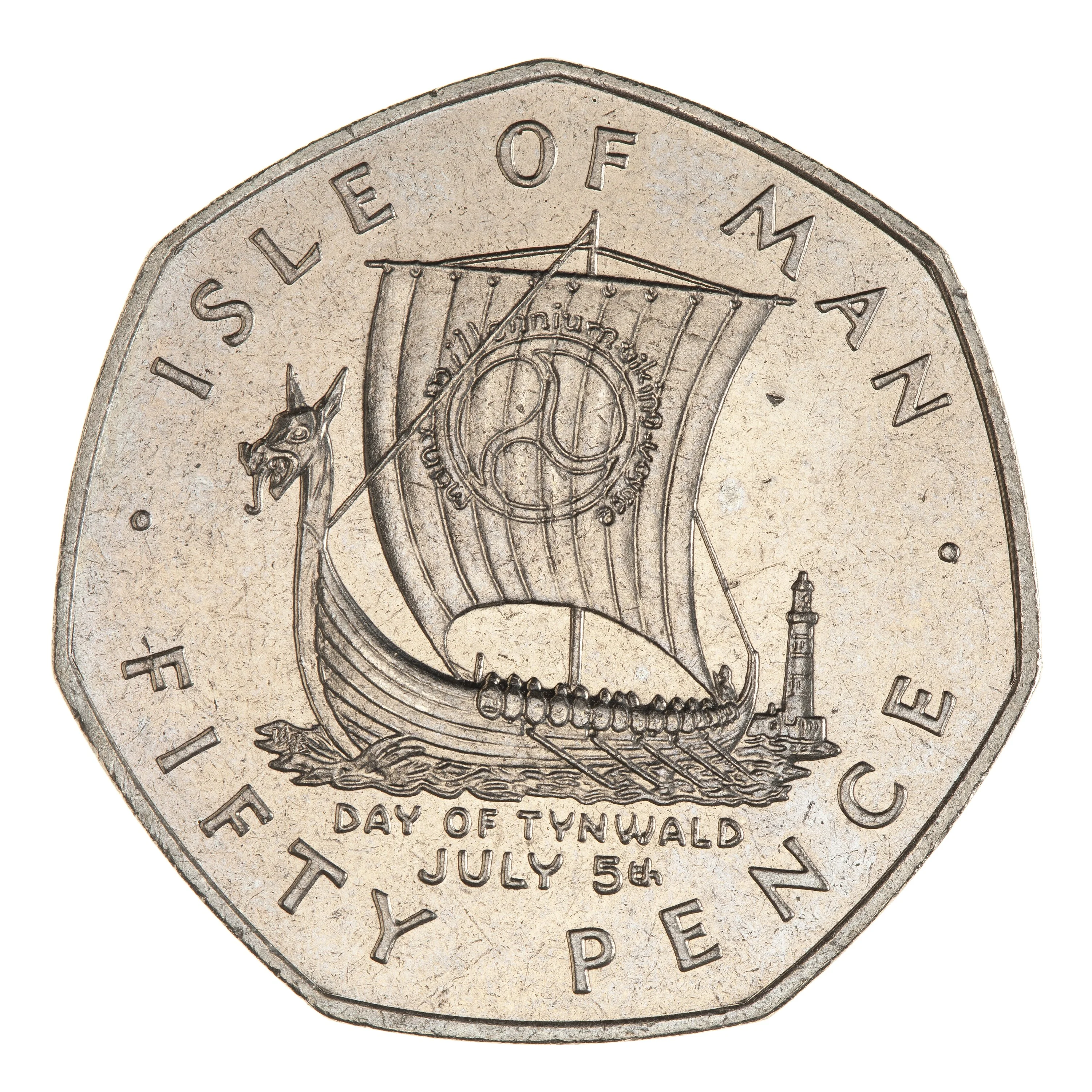
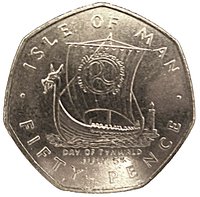
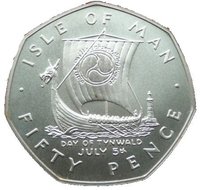
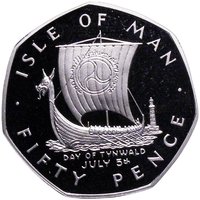
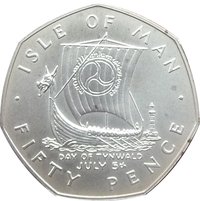
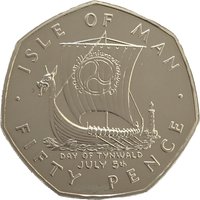
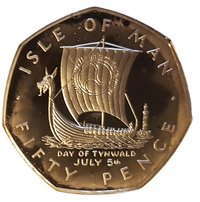
Viking longship with Point of Ayre lighthouse behind.
Inscription:
ISLE OF MAN
AB
DAY OF TYNWALD JULY 5th
FIFTY PENCE
AB
DAY OF TYNWALD JULY 5th
FIFTY PENCE
Script: Latin
Engraver: Barry Stanton
Edge
Plain
Categories
| Building> Lighthouse |
| Transportation> Watercraft |
| Symbol> Triskelion |
Mints
| Name | Mark |
|---|---|
| Pobjoy Mint | (PM) |
Mintings
| Year | Mint Mark | Mintage | Quality | Collection |
|---|---|---|---|---|
| 1979 | PM | — |
Historical background
In 1979, the Isle of Man's currency situation was defined by its unique constitutional position as a British Crown Dependency, which granted it a significant degree of autonomy in issuing its own money. While the UK pound sterling (£) remained the dominant currency in circulation and was legal tender on the island, the Isle of Man government, through its Treasury, had issued its own distinct banknotes and coins since the 18th and 20th centuries, respectively. These Manx issues were denominated in "pounds" and maintained a strict 1:1 parity with sterling, but they served as powerful symbols of national identity and fiscal independence.
The year itself was not one of dramatic monetary reform but of consolidation within this established dual-system framework. The Manx authorities continued their practice of issuing their own currency, which was technically not legal tender in the United Kingdom, though it was often accepted in border regions. The island's economy and currency remained fully integrated with the UK's monetary system, meaning its money supply, interest rates, and broader financial stability were directly tied to the policies of the Bank of England. This arrangement provided economic security but also meant the island was exposed to the high inflation and industrial turbulence affecting the UK economy in the late 1970s.
Therefore, the background to 1979 is one of stable parity and administrative continuity, rather than crisis or change. The key feature was the Isle of Man's successful maintenance of its own currency as a parallel circulation to sterling, a right exercised from its headquarters at Douglas. This system underpinned both its political identity and its growing ambitions as an offshore financial centre, which would expand significantly in the following decades, all while relying on the stability of the sterling peg.
The year itself was not one of dramatic monetary reform but of consolidation within this established dual-system framework. The Manx authorities continued their practice of issuing their own currency, which was technically not legal tender in the United Kingdom, though it was often accepted in border regions. The island's economy and currency remained fully integrated with the UK's monetary system, meaning its money supply, interest rates, and broader financial stability were directly tied to the policies of the Bank of England. This arrangement provided economic security but also meant the island was exposed to the high inflation and industrial turbulence affecting the UK economy in the late 1970s.
Therefore, the background to 1979 is one of stable parity and administrative continuity, rather than crisis or change. The key feature was the Isle of Man's successful maintenance of its own currency as a parallel circulation to sterling, a right exercised from its headquarters at Douglas. This system underpinned both its political identity and its growing ambitions as an offshore financial centre, which would expand significantly in the following decades, all while relying on the stability of the sterling peg.
Series: Day of Tynwald
🌟 Uncommon