

1 Crown – Bermuda
United Kingdom
Context
Year: 1964
Country: United Kingdom 
Issuer: Bermuda 
Ruler: Elizabeth II
Currency:
(1158—1970)
Subdivision: 1 Crown = 5 Shillings
Demonetized: Yes
Total mintage: 500,000
Material
References
KM: #Click to copy to clipboard14
Numista: #14208
Value
Bullion value: $32.35
Obverse
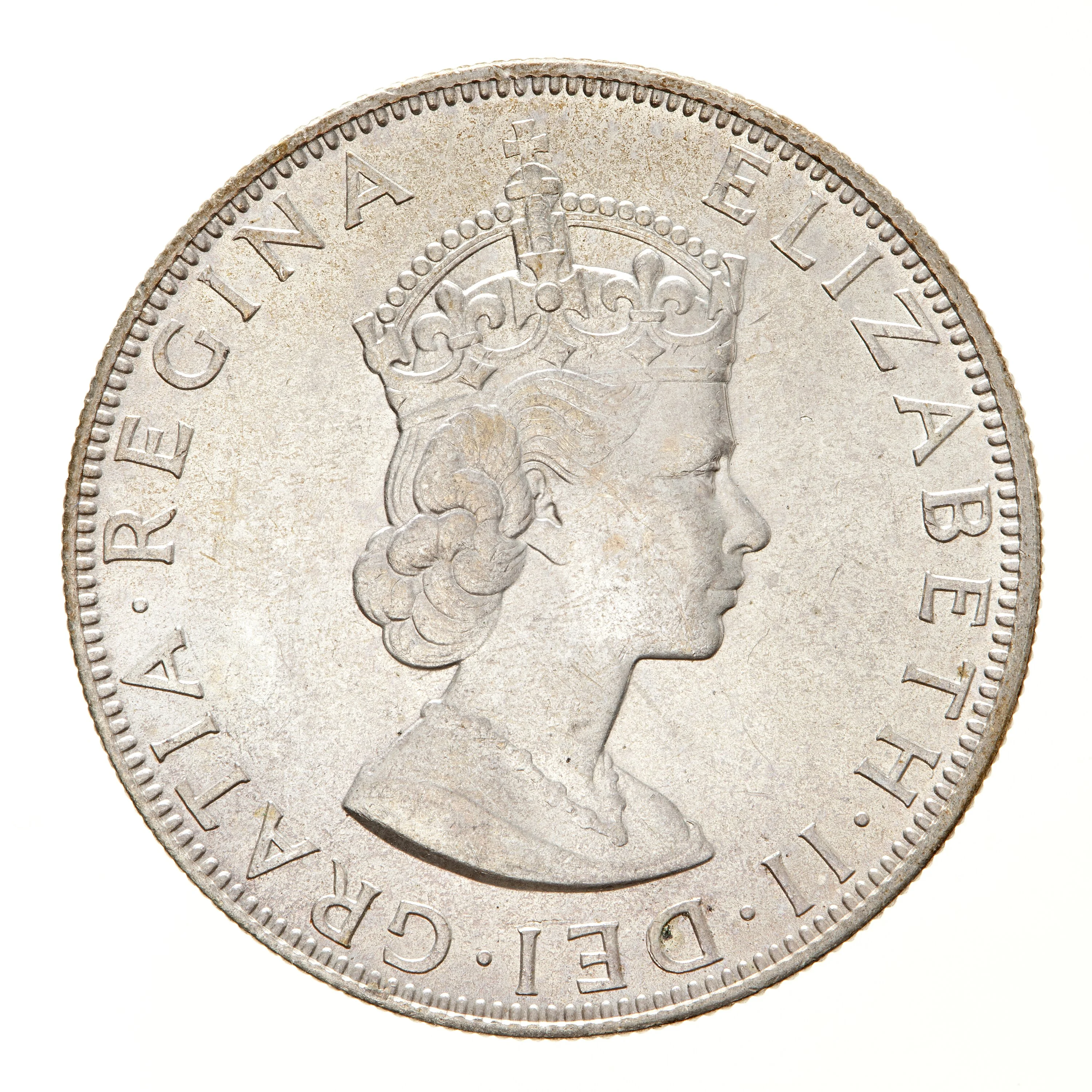
Description:
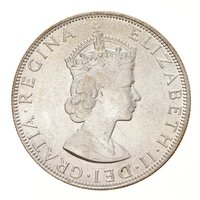
Queen Elizabeth II crowned bust facing right.
Inscription:
ELIZABETH·II·DEI·GRATIA·REGINA
Translation:
Elizabeth II by the Grace of God Queen
Script: Latin
Language: Latin
Engraver: Cecil Thomas
Reverse
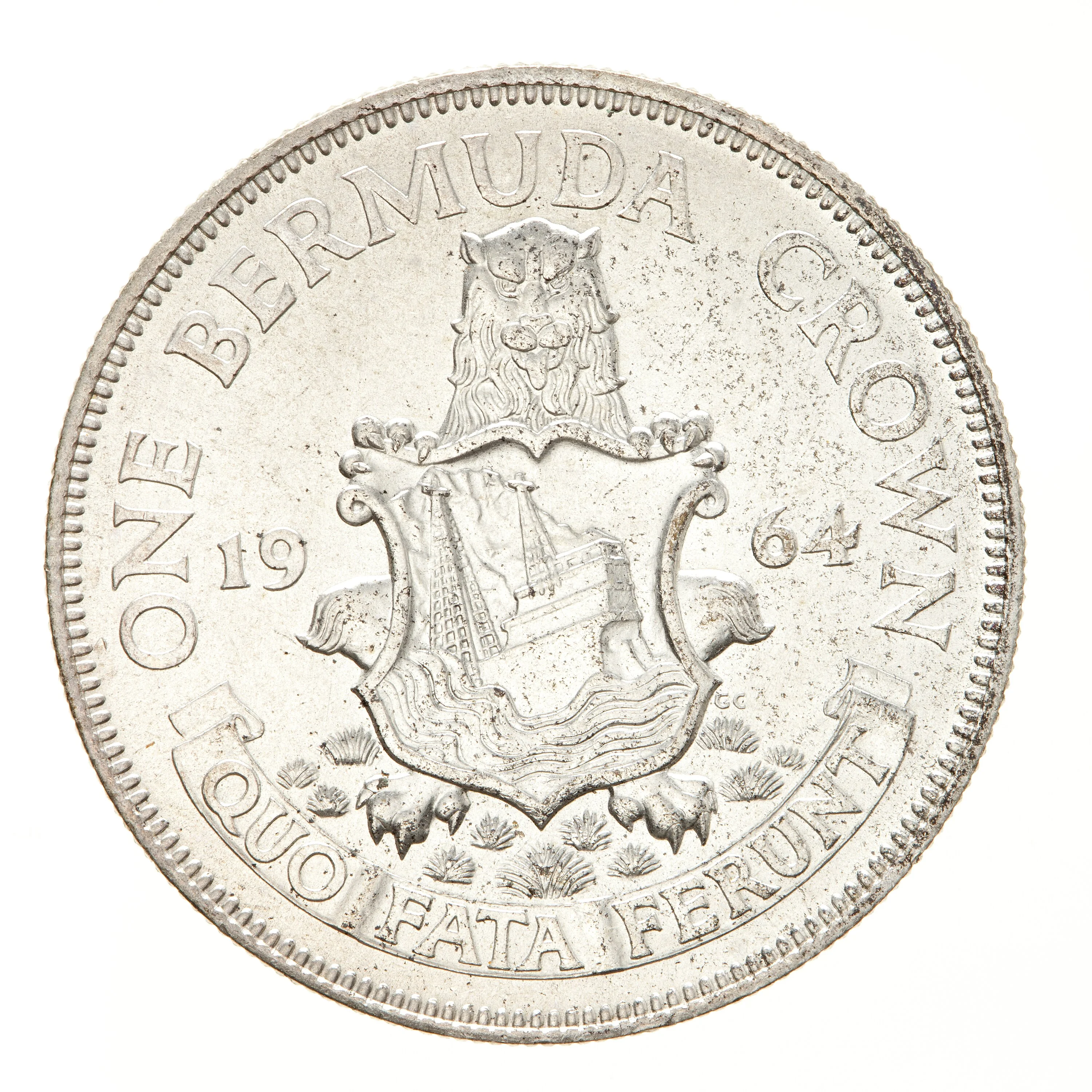
Description:
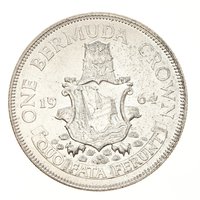
Lion holding Bermuda's shipwreck coat of arms divides the date.
Inscription:
ONE BERMUDA CROWN
19 64
GC
QUO FATA FERUNT
19 64
GC
QUO FATA FERUNT
Translation:
ONE BERMUDA CROWN
19 64
GC
WHITHER THE FATES CARRY [US]
19 64
GC
WHITHER THE FATES CARRY [US]
Script: Latin
Designer: Geoffrey Colley
Edge
Reeded
Categories
| Animal> Feline |
| Transportation> Watercraft |
| Symbols> Coat of Arms |
Mints
| Name | Mark |
|---|---|
| Royal Mint (Tower Hill) | — |
Mintings
| Year | Mint Mark | Mintage | Quality | Collection |
|---|---|---|---|---|
| 1964 | — | 470,000 | ||
| 1964 | — | 30,000 | Proof |
Historical background
In 1964, Bermuda was a British colony operating under a distinctive and somewhat complex currency system. The official currency was the Bermudian pound, which was pegged at par with the British pound sterling. This meant that British coins and banknotes circulated freely alongside locally issued Bermudian government notes. The system was effectively a sterling area currency board arrangement, where the local currency was fully backed by sterling reserves, ensuring stability and confidence in its value.
The year 1964, however, fell within a period of significant monetary transition. Discussions about decimalization and moving away from the pound-shilling-pence system were underway, influenced by broader changes in the British Commonwealth. Furthermore, the existing system faced practical challenges. The reliance on British coinage, which was often in short supply, and the desire for greater monetary identity and control prompted local authorities to consider reform. The Bermuda Monetary Authority had been established just two years prior, in 1962, laying the institutional groundwork for a more autonomous financial system.
Consequently, the currency situation in 1964 was one of stability on the surface but poised for imminent change. The peg to sterling provided economic reliability, which was crucial for Bermuda's growing tourism and international business sectors. Yet, the groundwork was being actively laid for the major reforms that would follow, culminating in the introduction of a decimalized Bermudian dollar in 1970, which was pegged to the US dollar—a reflection of the island's shifting economic ties.
The year 1964, however, fell within a period of significant monetary transition. Discussions about decimalization and moving away from the pound-shilling-pence system were underway, influenced by broader changes in the British Commonwealth. Furthermore, the existing system faced practical challenges. The reliance on British coinage, which was often in short supply, and the desire for greater monetary identity and control prompted local authorities to consider reform. The Bermuda Monetary Authority had been established just two years prior, in 1962, laying the institutional groundwork for a more autonomous financial system.
Consequently, the currency situation in 1964 was one of stability on the surface but poised for imminent change. The peg to sterling provided economic reliability, which was crucial for Bermuda's growing tourism and international business sectors. Yet, the groundwork was being actively laid for the major reforms that would follow, culminating in the introduction of a decimalized Bermudian dollar in 1970, which was pegged to the US dollar—a reflection of the island's shifting economic ties.
🌱 Very Common