

1 Penny – Bermuda
United Kingdom
Context
Year: 1793
Country: United Kingdom 
Issuer: Bermuda 
Ruler: George III
Currency:
(1158—1970)
Demonetized: Yes
Total mintage: 72,000
Material
References
KM: #Click to copy to clipboard5
Numista: #8348
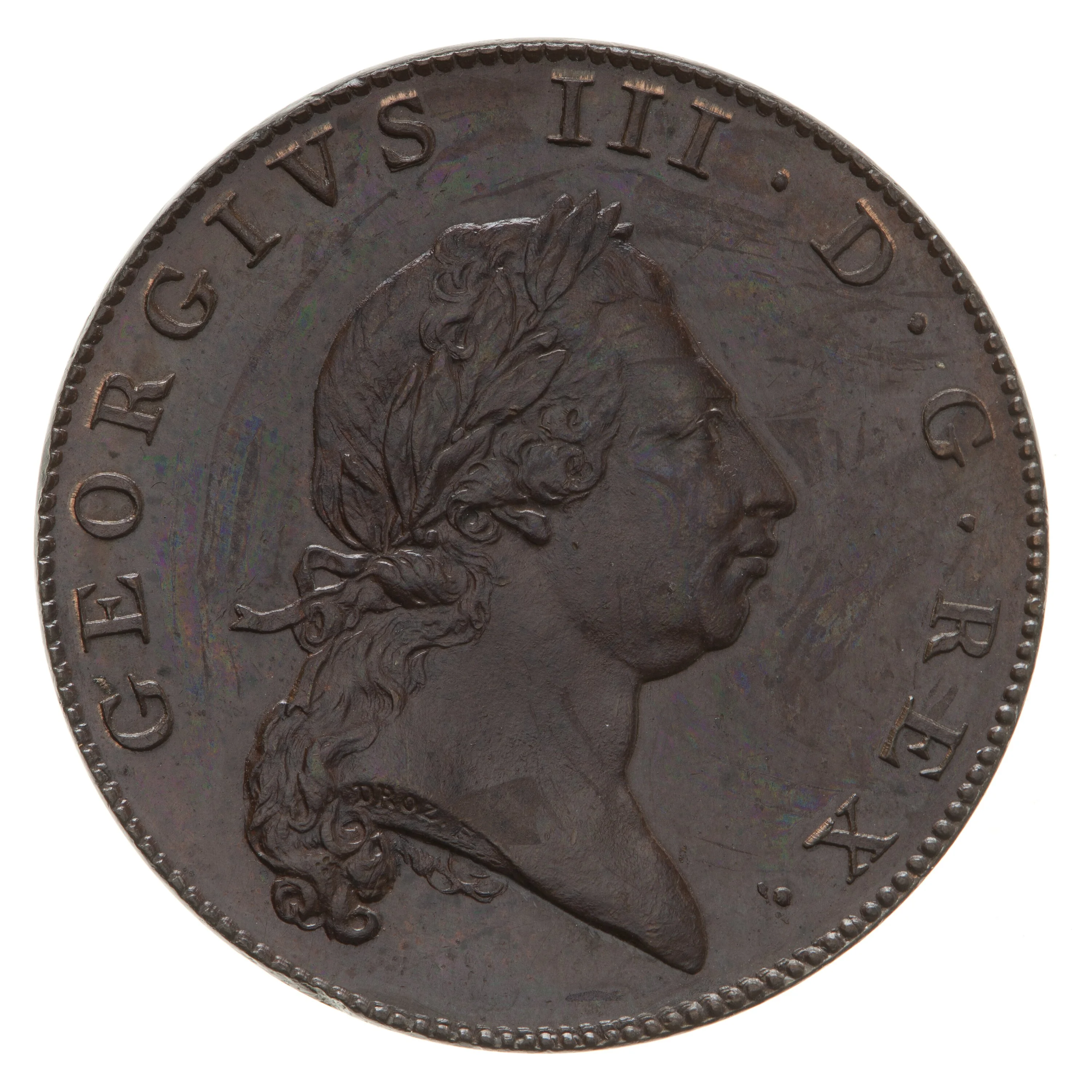
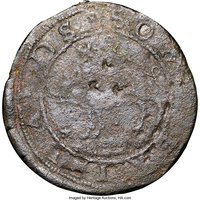
Obverse
Description:
King George III facing right.
Inscription:
GEORGIVS III·D·G·REX·
DROZ.F
DROZ.F
Script: Latin
Engraver: Jean-Pierre Droz
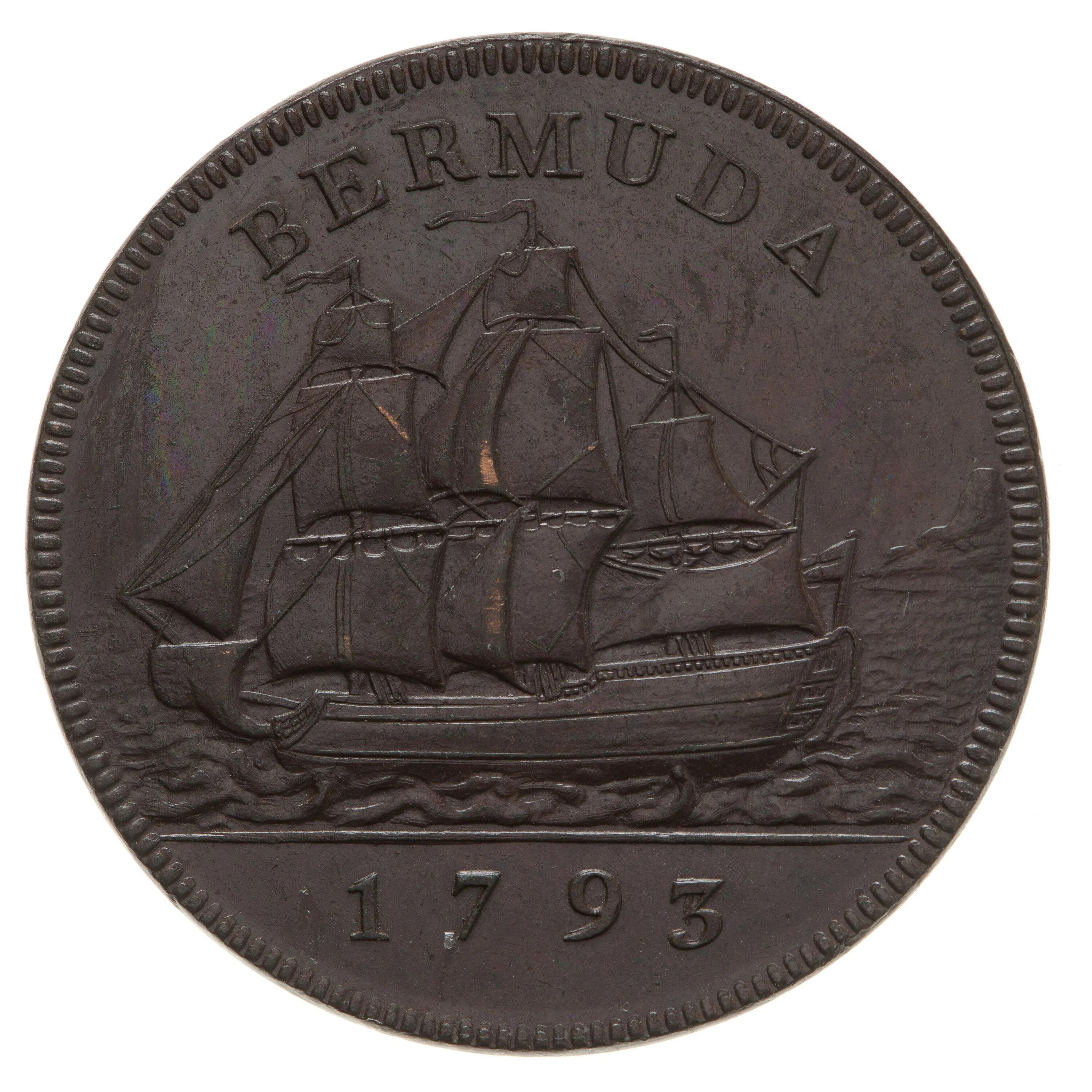
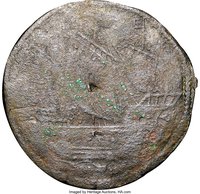
Reverse
Description:
A sailing ship with land on the right horizon and "Bermuda" above. The line behind the third mast is a die clash—the King's neckline from the obverse—indicating it occurred early in production.
Inscription:
BERMUDA
1793
1793
Script: Latin
Edge
Plain
Categories
| Transportation> Watercraft |
Mints
| Name | Mark |
|---|---|
| Soho Mint | — |
Mintings
| Year | Mint Mark | Mintage | Quality | Collection |
|---|---|---|---|---|
| 1793 | — | 72,000 |
Historical background
In 1793, Bermuda’s currency situation was a complex and often chaotic blend of official British sterling, a chronic shortage of physical coin, and a heavy reliance on a diverse array of foreign and substitute currencies. As a British colony, the pound sterling was the official unit of account, but the island's economy, heavily dependent on maritime trade and salt-raking, was deeply integrated with the Atlantic world. This led to the widespread circulation of Spanish dollars (pieces of eight), Portuguese gold joes, and other foreign coins, which were valued by weight and fineness rather than at a fixed sterling rate, creating constant exchange difficulties.
The scarcity of official coinage was a persistent problem, exacerbated by Bermuda's negative balance of trade with Britain. To facilitate local transactions, the colonial government periodically issued "Proclamation Money" rates, setting values for specific foreign coins. More critically, the economy relied on informal credit and paper instruments. Merchants and prominent individuals issued private promissory notes and bills of exchange, which circulated as a necessary but unstable medium of exchange. This system was vulnerable to insolvency and fraud, causing frequent public disputes and eroding trust in the monetary system.
This unstable environment culminated in a significant legislative attempt at reform. In 1793, the Bermuda legislature passed an act to address the currency crisis by authorizing the issue of government paper notes, a bold move for the period. These notes, denominated in pounds, shillings, and pence, were intended to retire the problematic foreign coins and unregulated private paper. However, the success of this initiative was limited; public skepticism and a lack of sufficient specie backing meant that the old, messy system of multiple currencies and private credit persisted alongside the new notes well into the 19th century.
The scarcity of official coinage was a persistent problem, exacerbated by Bermuda's negative balance of trade with Britain. To facilitate local transactions, the colonial government periodically issued "Proclamation Money" rates, setting values for specific foreign coins. More critically, the economy relied on informal credit and paper instruments. Merchants and prominent individuals issued private promissory notes and bills of exchange, which circulated as a necessary but unstable medium of exchange. This system was vulnerable to insolvency and fraud, causing frequent public disputes and eroding trust in the monetary system.
This unstable environment culminated in a significant legislative attempt at reform. In 1793, the Bermuda legislature passed an act to address the currency crisis by authorizing the issue of government paper notes, a bold move for the period. These notes, denominated in pounds, shillings, and pence, were intended to retire the problematic foreign coins and unregulated private paper. However, the success of this initiative was limited; public skepticism and a lack of sufficient specie backing meant that the old, messy system of multiple currencies and private credit persisted alongside the new notes well into the 19th century.
🌟 Limited