

2 pounds – Gibraltar
Add to wishlist
Non-circulating coins
Commemoration: The Labours of Hercules Series - The Cattle of Geryon
Series: The Labours of Hercules
United Kingdom
Context
Year: 2000
Country: United Kingdom
Issuer: Gibraltar
Ruler: Elizabeth II
Currency:
(since 1971)
Total mintage: 7,500
Material
References
KM: #
Numista: #374468
Value
Exchange value: 2 GIP
Inflation-adjusted value: 4.43 GIP
Obverse
Description:
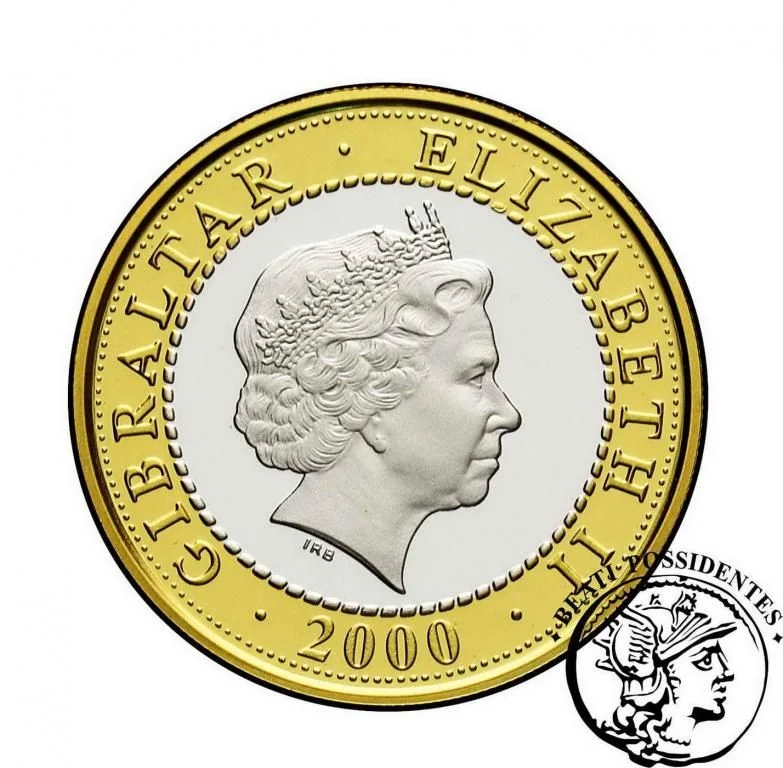
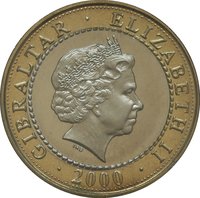
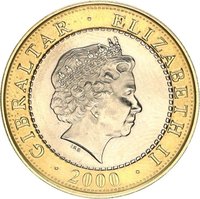
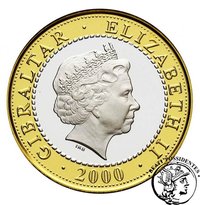
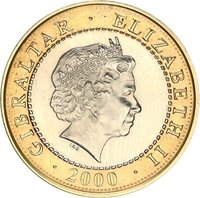
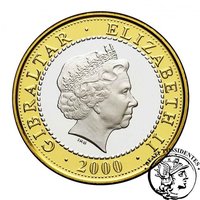
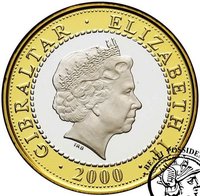
Queen Elizabeth II facing right, wearing the "Girls of Great Britain and Ireland" Tiara. Legend surrounds, date below.
Inscription:
GIBRALTAR · ELIZABETH II
· 2000 ·
· 2000 ·
Script: Latin
Designer: Ian Rank-Broadley
Reverse
Description:
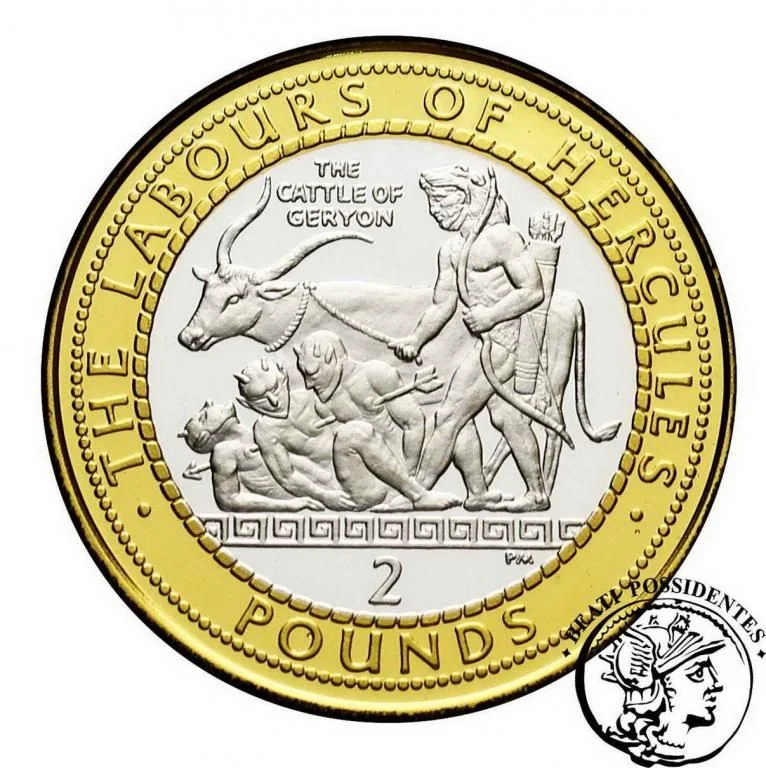
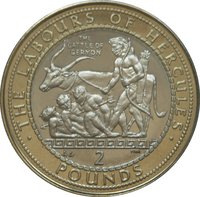
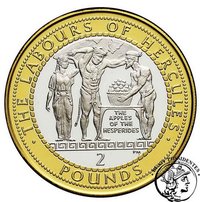
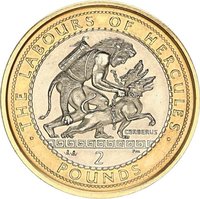
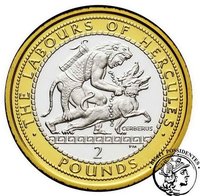
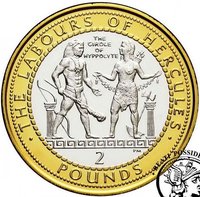
Heracles' tenth labor: steal the cattle of Geryon.
Inscription:
THE LABOURS OF HERCULES
THE
CATTLE OF
GERYON
2
· POUNDS ·
THE
CATTLE OF
GERYON
2
· POUNDS ·
Script: Latin
Edge
Categories
| Mythology |
Mints
| Name | Mark |
|---|---|
| Pobjoy Mint | (PM) |
Mintings
| Year | Mint Mark | Mintage | Quality | Collection |
|---|---|---|---|---|
| 2000 | PM | 7,500 | Proof |
Historical background
In 2000, Gibraltar's currency situation was defined by a formalised dual-currency system, with both the Gibraltar pound (GIP) and the British pound sterling (GBP) circulating as legal tender at par value (1:1). The Gibraltar pound, issued by the Government of Gibraltar, was not a freely convertible international currency but was fully backed by sterling reserves held at the Bank of England. This arrangement provided stability and ensured that the local currency was, for all practical domestic and economic purposes, a sterling clone with distinct banknotes and coins.
This system was underpinned by the 1934 Currency Notes Act, which remained the governing legislation. The local economy operated seamlessly with UK sterling, and most retail transactions accepted both sets of notes interchangeably, though Gibraltar pound notes were generally not accepted in the United Kingdom itself. A key feature of the period was the ongoing transition in coinage; following the 1998 issuance of new Gibraltar pound coins (with the same specifications as new UK "round pound" coins), both old and new designs remained in circulation throughout 2000.
The context of the year 2000 is particularly significant as it fell just two years after the launch of the European single currency, the euro. While the UK had opted out of the eurozone, Gibraltar, as a British Overseas Territory, followed the UK's lead. Consequently, there was no move to adopt the euro, and the territory's monetary policy remained irrevocably pegged to sterling. The period was thus one of monetary stability and continuity, firmly anchoring Gibraltar's financial system to the UK amidst the changing landscape of European currency.
This system was underpinned by the 1934 Currency Notes Act, which remained the governing legislation. The local economy operated seamlessly with UK sterling, and most retail transactions accepted both sets of notes interchangeably, though Gibraltar pound notes were generally not accepted in the United Kingdom itself. A key feature of the period was the ongoing transition in coinage; following the 1998 issuance of new Gibraltar pound coins (with the same specifications as new UK "round pound" coins), both old and new designs remained in circulation throughout 2000.
The context of the year 2000 is particularly significant as it fell just two years after the launch of the European single currency, the euro. While the UK had opted out of the eurozone, Gibraltar, as a British Overseas Territory, followed the UK's lead. Consequently, there was no move to adopt the euro, and the territory's monetary policy remained irrevocably pegged to sterling. The period was thus one of monetary stability and continuity, firmly anchoring Gibraltar's financial system to the UK amidst the changing landscape of European currency.
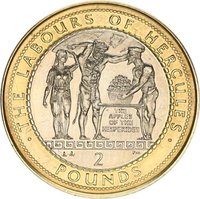
Series: The Labours of Hercules
✨ Legendary