

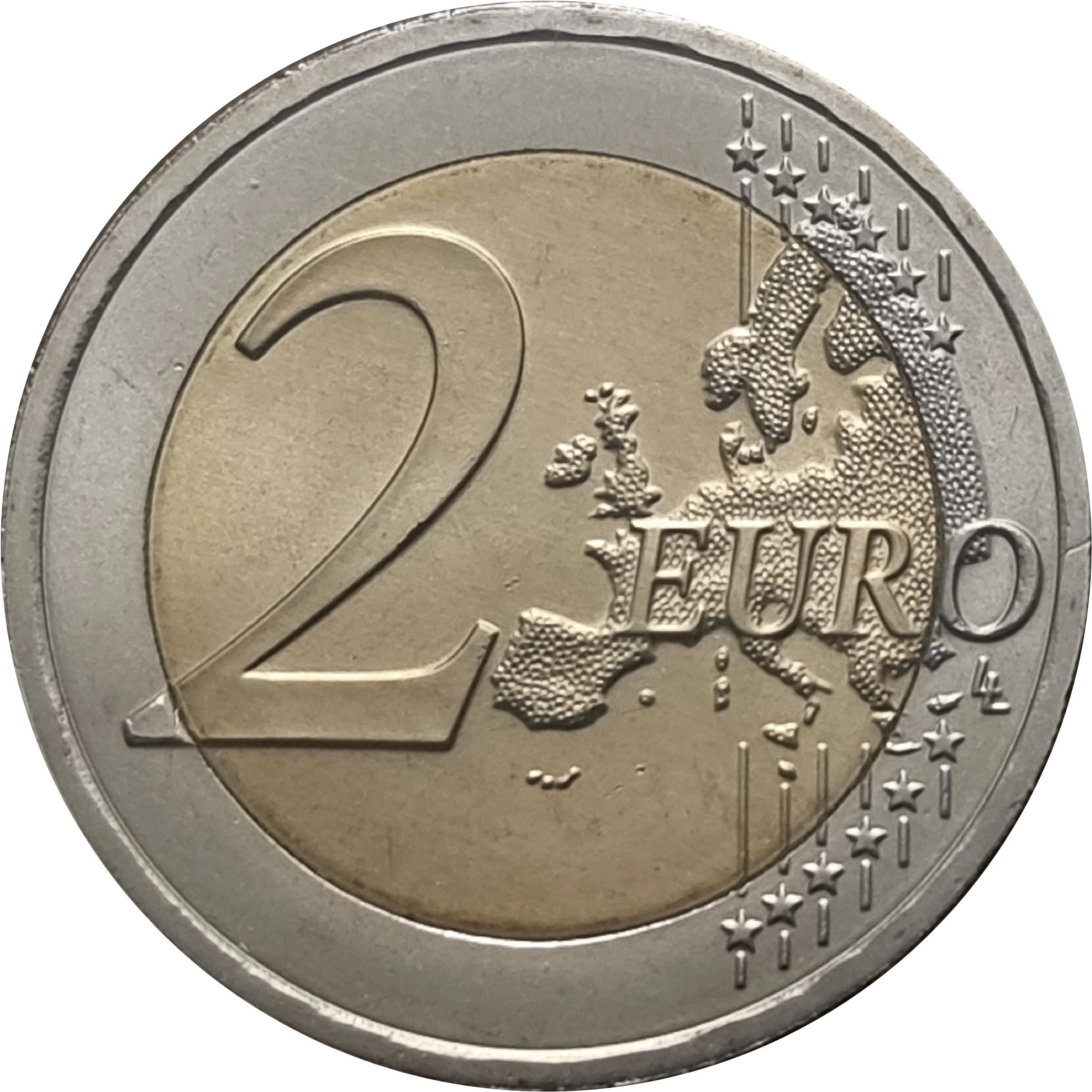
2 euro – Croatia
Add to wishlist
Circulating commemorative coins
Commemoration: The introduction of the euro as the official currency of Croatia on 1 January 2023
Croatia
Obverse
Description:
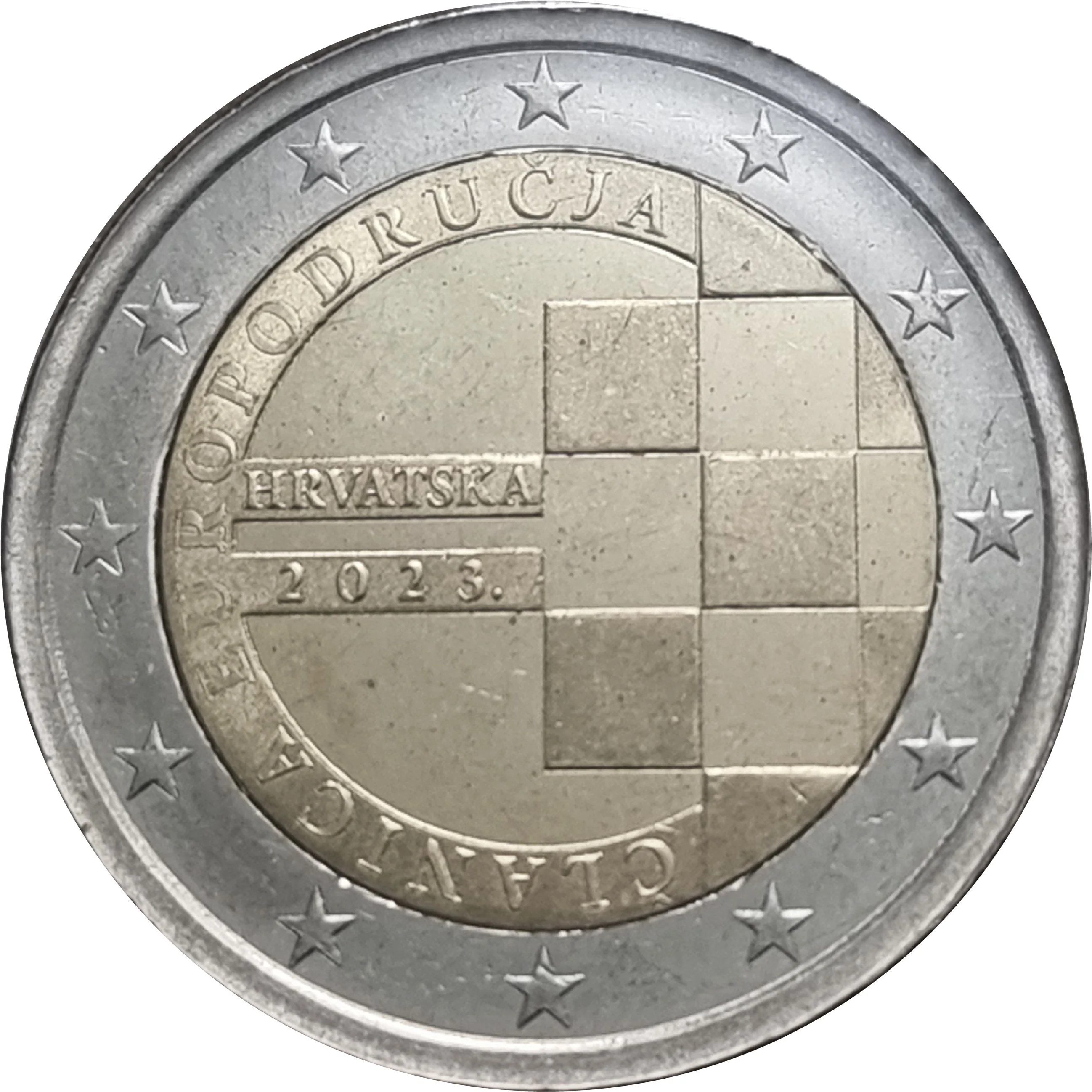
The design features 'HRVATSKA 2023' and, along the core's edge, 'ČLANICA EUROPODRUČJA', forming a stylised '€' symbol. The central motif is the Croatian checkerboard, part of the national coat of arms. The outer ring shows the 12 stars of the European flag.
Inscription:
HRVATSKA
2023.
ČLANICA EUROPODRUČJA
€
2023.
ČLANICA EUROPODRUČJA
€
Translation:
CROATIA
2023.
MEMBER OF THE EURO AREA
€
2023.
MEMBER OF THE EURO AREA
€
Script: Latin
Language: Croatian
Designer: Nikola Vudrag
Reverse
Edge
Fine milled with edge lettering
Legend:
O LIJEPA O DRAGA O SLATKA SLOBODO
Translation:
O beautiful, O dear, O sweet liberty
Language: Croatian
Categories
| Map |
Mints
| Name | Mark |
|---|---|
| Croatian Mint | — |
Mintings
| Year | Mint Mark | Mintage | Quality | Collection |
|---|---|---|---|---|
| 2023 | — | 50,000 | ||
| 2023 | — | 195,000 | BU | |
| 2023 | — | 5,000 | Proof |
Historical background
In 2023, Croatia experienced a landmark monetary transition, entering the Eurozone and adopting the euro as its official currency on January 1st. This move replaced the Croatian kuna (HRK), which had been the national currency since 1994, at a fixed conversion rate of 1 euro = 7.53450 kuna. The changeover was the culmination of a long-term strategic goal following EU accession in 2013 and represented a major step in deeper European integration, aimed at reducing transaction costs, eliminating exchange rate risk, and boosting investor confidence.
The dual circulation period, during which both kuna and euro were accepted, lasted for two weeks. The transition was widely regarded as smooth and well-prepared, with extensive public information campaigns and logistical coordination by the Croatian National Bank and retailers. By mid-January, the euro had become the sole legal tender, with prices displayed in both currencies for a year to aid adjustment. Public acceptance was generally positive, though some concerns about price rounding and inflation ("euronization") were present, as is common in such transitions.
For the Croatian economy in 2023, euro adoption brought immediate benefits in terms of monetary stability and lower interest rates. It simplified trade and tourism within its largest economic partners in the Eurozone. However, the year also presented challenges, as the country, now under the European Central Bank's monetary policy, navigated broader Eurozone inflation pressures and rising interest rates aimed at curbing inflation across the bloc. Thus, Croatia's currency situation in 2023 was defined by a successful technical changeover within a complex European economic climate.
The dual circulation period, during which both kuna and euro were accepted, lasted for two weeks. The transition was widely regarded as smooth and well-prepared, with extensive public information campaigns and logistical coordination by the Croatian National Bank and retailers. By mid-January, the euro had become the sole legal tender, with prices displayed in both currencies for a year to aid adjustment. Public acceptance was generally positive, though some concerns about price rounding and inflation ("euronization") were present, as is common in such transitions.
For the Croatian economy in 2023, euro adoption brought immediate benefits in terms of monetary stability and lower interest rates. It simplified trade and tourism within its largest economic partners in the Eurozone. However, the year also presented challenges, as the country, now under the European Central Bank's monetary policy, navigated broader Eurozone inflation pressures and rising interest rates aimed at curbing inflation across the bloc. Thus, Croatia's currency situation in 2023 was defined by a successful technical changeover within a complex European economic climate.
🌱 Common