

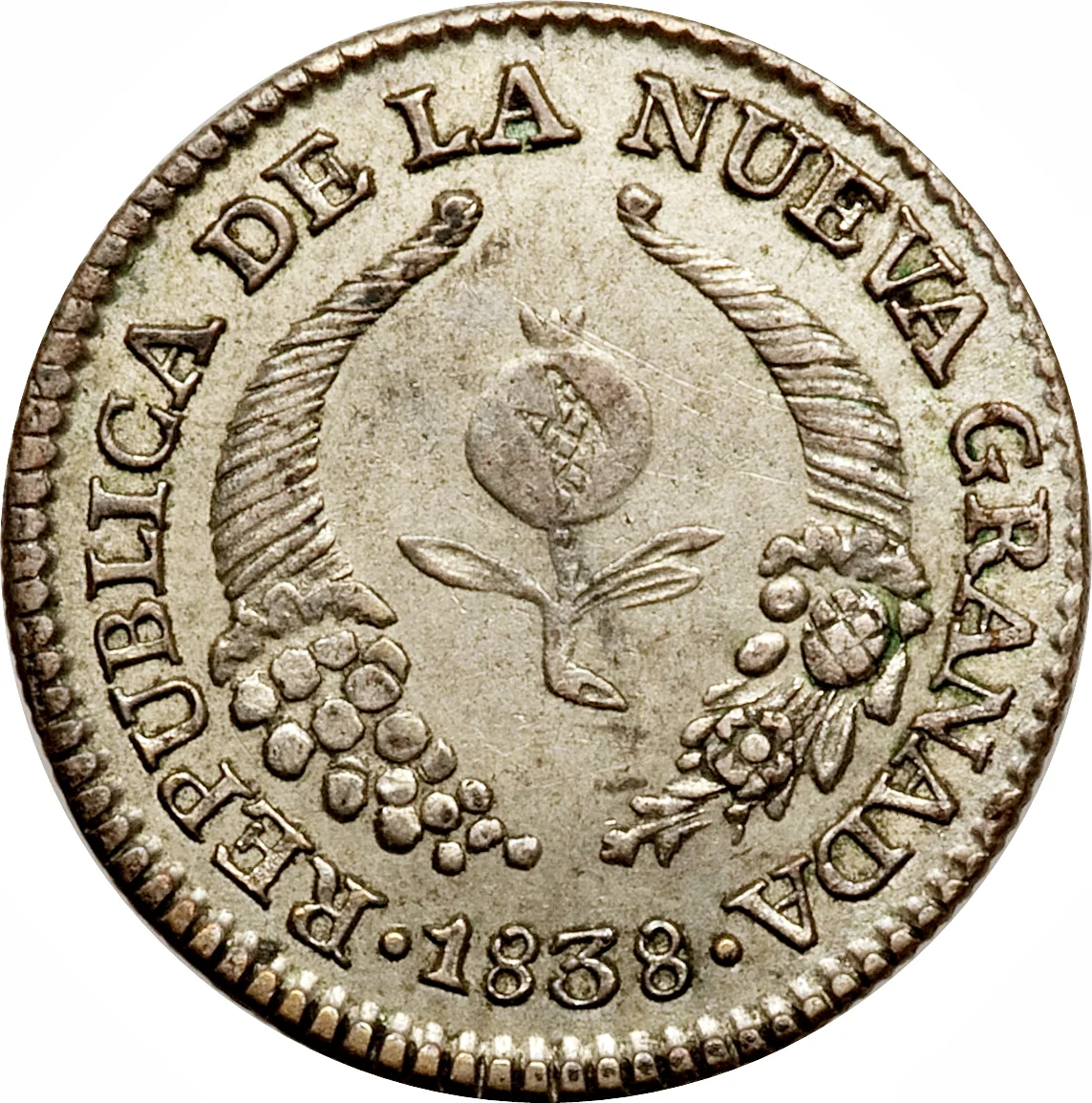
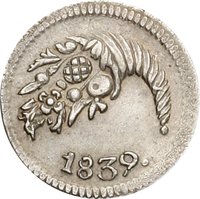
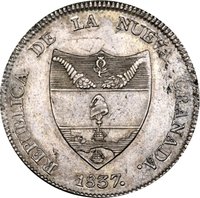
Obverse
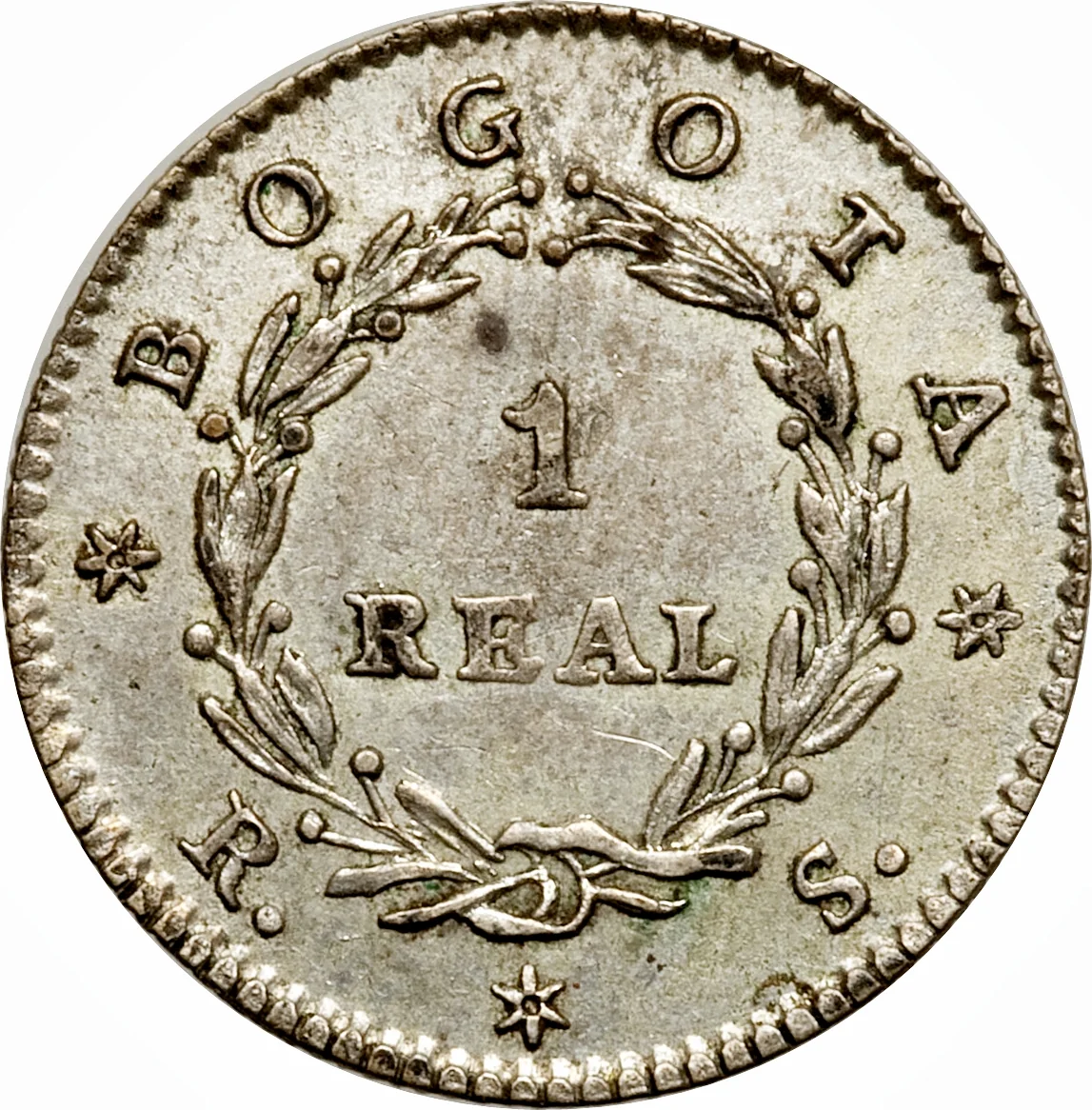
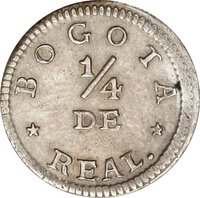
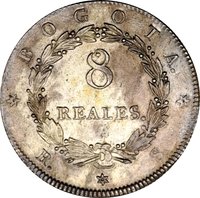
Reverse
Edge
Reeded
Categories
| Symbol> Cornucopia |
Mints
| Name | Mark |
|---|---|
| Bogota Mint | — |
Mintings
| Year | Mint Mark | Mintage | Quality | Collection |
|---|---|---|---|---|
| 1837 | RS | — | ||
| 1838 | RS | — | ||
| 1839 | RS | — | ||
| 1839 | RU | — | ||
| 1840 | RU | — | ||
| 1840 | RS | — | ||
| 1841 | RS | — | ||
| 1841 | VU/RU | — | ||
| 1843 | RS | — | ||
| 1844 | RS | — | ||
| 1844 | UM | — | ||
| 1845 | RS | — | ||
| 1845 | UM | — | ||
| 1846 | RS | — | ||
| 1846 | UM | — |
Historical background
In 1837, Colombia was grappling with the complex monetary legacy of the Spanish colonial era and the turbulent early decades of independence. The nation, then known as the Republic of New Granada following the dissolution of Gran Colombia in 1831, inherited a chaotic currency system featuring a wide array of coins. These included not only official republican mintings but also old Spanish colonial coins, counterstamped foreign coins (like those from Bolivia and Peru), and even cut or clipped pieces of eight (reales). This lack of a uniform, state-controlled currency severely hampered commerce and economic stability, as the value and authenticity of coins varied greatly from region to region.
The primary response to this crisis was the monetary law of June 20, 1837, a landmark piece of legislation that aimed to impose order. The law formally adopted a bimetallic standard, pegging the Colombian peso to both gold and silver at a fixed ratio. It sought to retire the multitude of irregular coins from circulation and replace them with a new, decimal-based national currency. Crucially, the law authorized the minting of new coins—the gold condor and the silver real—at a newly established mint in Bogotá, representing a significant assertion of national sovereignty over the monetary system.
However, the reforms of 1837 faced immediate and profound challenges. The fixed gold-to-silver ratio quickly fell out of alignment with fluctuating global market values, leading to the inevitable disappearance (through hoarding or export) of the undervalued metal, a classic example of Gresham's Law. Furthermore, the government's capacity to recall all old currency and produce sufficient new coinage was limited, meaning the chaotic mix of old and new money persisted in practice for years. Thus, while 1837 marked a critical legislative attempt to create a modern monetary system, its full implementation was hindered by economic realities, leaving Colombia in a transitional phase between colonial monetary anarchy and a stable, unified currency.
The primary response to this crisis was the monetary law of June 20, 1837, a landmark piece of legislation that aimed to impose order. The law formally adopted a bimetallic standard, pegging the Colombian peso to both gold and silver at a fixed ratio. It sought to retire the multitude of irregular coins from circulation and replace them with a new, decimal-based national currency. Crucially, the law authorized the minting of new coins—the gold condor and the silver real—at a newly established mint in Bogotá, representing a significant assertion of national sovereignty over the monetary system.
However, the reforms of 1837 faced immediate and profound challenges. The fixed gold-to-silver ratio quickly fell out of alignment with fluctuating global market values, leading to the inevitable disappearance (through hoarding or export) of the undervalued metal, a classic example of Gresham's Law. Furthermore, the government's capacity to recall all old currency and produce sufficient new coinage was limited, meaning the chaotic mix of old and new money persisted in practice for years. Thus, while 1837 marked a critical legislative attempt to create a modern monetary system, its full implementation was hindered by economic realities, leaving Colombia in a transitional phase between colonial monetary anarchy and a stable, unified currency.
Series: 1837 Colombia circulation coins
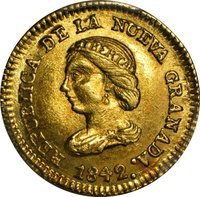
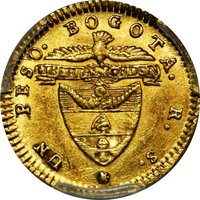
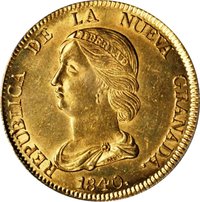
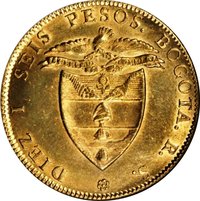
⭐ Somewhat Rare