

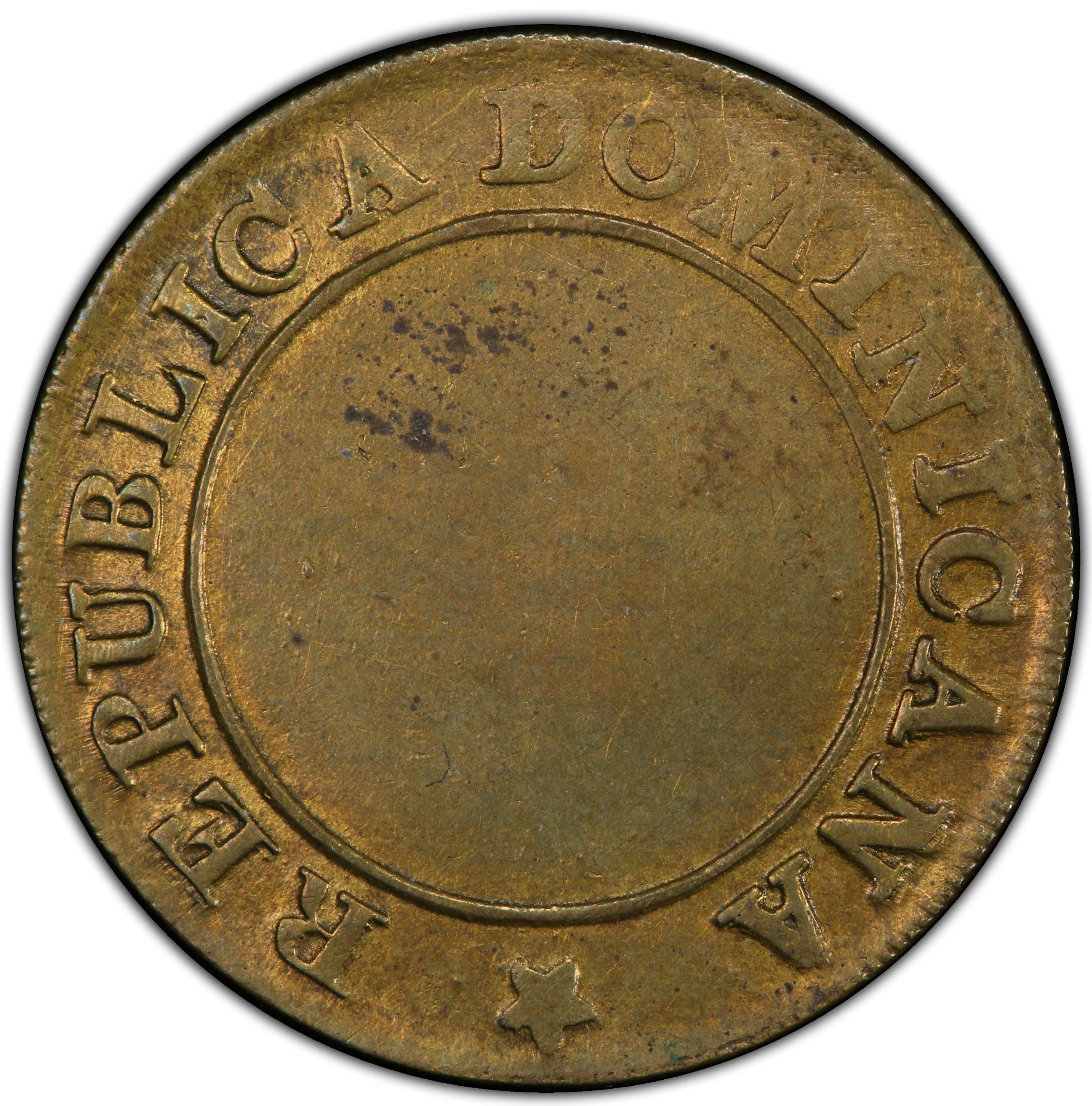
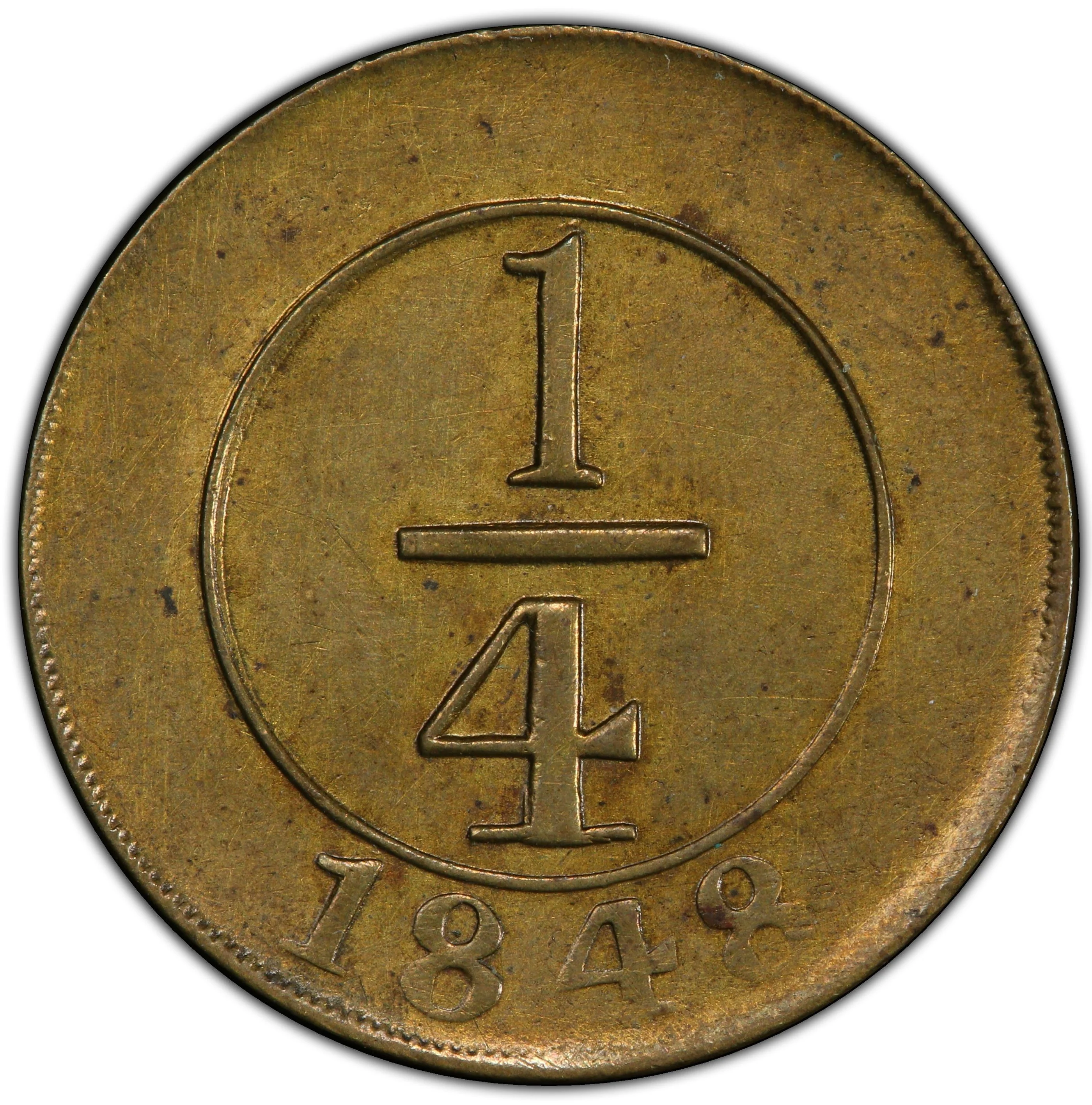
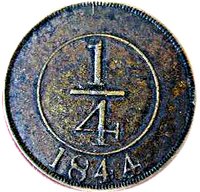
¼ Real – Dominican Republic
Dominican Republic
Context
Years: 1844–1848
Issuer: Dominican Republic 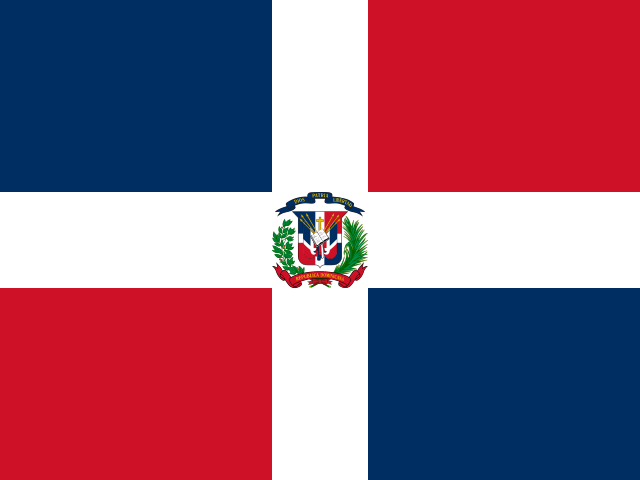
Period:
(1844—1861)
Currency:
(1844—1905)
Demonetized: Yes
Material
References
KM: #Click to copy to clipboard2
Numista: #10260
Obverse
Reverse
Edge
Mintings
| Year | Mint Mark | Mintage | Quality | Collection |
|---|---|---|---|---|
| 1844 | — | — | ||
| 1848 | — | — |
Historical background
Following its declaration of independence from Haiti in February 1844, the newly formed Dominican Republic inherited a chaotic and deficient monetary system that posed an immediate threat to its economic sovereignty and stability. The territory had long suffered from a severe shortage of official coinage, a situation exacerbated by years of conflict. In circulation was a confusing mix of worn Spanish colonial coins, Haitian gourdes, French francs, and other foreign currencies, alongside primitive substitutes like cacao beans and tobacco leaves used in local barter. This monetary anarchy hindered government revenue collection, complicated trade, and symbolized the lack of a unified national economic identity.
The provisional government, led by the Central Governing Board, recognized that establishing a national currency was a fundamental act of sovereignty. Among its very first legislative acts was the issuance of a decree on April 9, 1844, which created the first Dominican peso. This decree aimed to simplify the system by defining the peso's value in relation to the existing, more trusted Spanish coins, specifically pegging it to the silver peso fuerte. However, this was largely a symbolic and administrative measure; the state lacked the precious metals, minting facilities, and international credit to physically produce significant quantities of new coinage immediately.
Consequently, the currency situation in 1844 remained one of declared policy clashing with harsh reality. While the government had successfully laid the legal foundation for a national monetary system, the practical circulation continued to be dominated by the same patchwork of foreign coins and commodities. The primary achievement was the establishment of a unit of account for government finances and contracts, setting a crucial precedent. The real struggle to unify the currency in practice, control inflation, and attract foreign investment would define the economic challenges of the Republic's fragile first decade, making monetary reform a persistent and urgent priority for subsequent leaders.
The provisional government, led by the Central Governing Board, recognized that establishing a national currency was a fundamental act of sovereignty. Among its very first legislative acts was the issuance of a decree on April 9, 1844, which created the first Dominican peso. This decree aimed to simplify the system by defining the peso's value in relation to the existing, more trusted Spanish coins, specifically pegging it to the silver peso fuerte. However, this was largely a symbolic and administrative measure; the state lacked the precious metals, minting facilities, and international credit to physically produce significant quantities of new coinage immediately.
Consequently, the currency situation in 1844 remained one of declared policy clashing with harsh reality. While the government had successfully laid the legal foundation for a national monetary system, the practical circulation continued to be dominated by the same patchwork of foreign coins and commodities. The primary achievement was the establishment of a unit of account for government finances and contracts, setting a crucial precedent. The real struggle to unify the currency in practice, control inflation, and attract foreign investment would define the economic challenges of the Republic's fragile first decade, making monetary reform a persistent and urgent priority for subsequent leaders.
🌟 Limited